
The 9 Critical Phases of a Long-Term Relationship
Navigating the Journey of Love, Growth, and Partnership Together

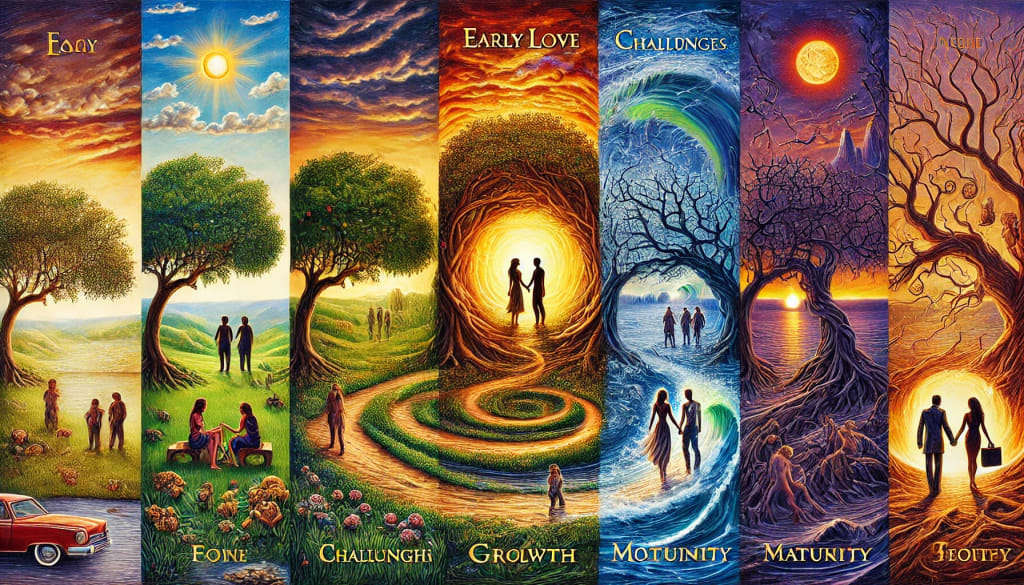
Long-term relationships in many ways are very complex. They change over time; it asks of both people involved in the relationship to grow in different facets. From the thrilling early days to the more challenging phases that test the strength of the bond, each stage offers its unique challenges and rewards. Understanding these stages can help couples survive the ups and downs of their relationship and truly build a life together. In this article, we will explore the nine crucial stages of a long-term relationship; these will be explained in what each stage consists of and how couples can successfully navigate through them.
1. The Honeymoon Phase
The honeymoon period is the exhilarating beginning of a romantic relationship. It is that time when all of it seems new, interesting, and exciting, and one is simply infatuated with the other person. This seems to be the time of highest attraction, deep emotional bonding, and euphoria. Couples at this stage often view each other idealistically. Every second spent together becomes magic, and you may tend to ignore small differences and flaws.
The honeymoon phase is when both partners usually believe they have found "the one" and that nothing can go wrong. It usually lasts from a few months to about two years. It is very important because this period lays the foundation for the emotional attachment that will develop over time. But, of course, this is the passion for the first time and cannot last forever, while the deeper and more enduring connection comes a little later.
2. Experimentation and Discovery
As the honeymoon begins to wear off, the honeymooners enter the explorative/discovery stage. At this point, the honeymoon converts into a more realistic knowledge of one another. Partners get to discover each other's personalities, habits, and values, and maybe even some individual quirks. The relationship is no longer about fantasy but rather proving compatible.
During this phase, both partners may finally realize their differences. They might be in the way they approach conflict, handle their emotions, or give importance to things. The discovery process can be exciting and difficult at the same time because it makes the couples understand if they can even build a future together or not. The couple's willingness to be open-minded and flexible while both of them attempt to find common ground is what matters.
3. Deepening (The Bliss Stage)
Once you both have gotten to know each other, the relationship enters into the bliss stage. Here, the bond between the partners deepens emotionally and physically. One can feel extremely close due to the companions' vulnerability and sharing of deep secrets and feelings. There is an intense bonding, and the love and affection seem to grow even stronger.
This stage is characterized by trust, love, and security. At this point, partners feel more comfortable being themselves around each other as the emotional connection deepens. You are also now able to discuss long-term plans, such as cohabitation or even marriage. The bliss stage is one where partners are emotionally satisfied and content with the relationship, which forms a more solid foundation for their future.
4. Integration
The integration stage is the point where the couple starts to live together more seriously. The couples usually move in with each other, combine their finances, or commit themselves for long-term relationships in the form of marriage or having children. The couple graduates from being a romantic relationship to becoming partners in every aspect.
During this stage, couples begin to settle and build routines and rituals around one another. Social circles may become combined, and both people begin to take more responsibility in the relationship. Integration requires a deeper level of commitment on the part of both partners as it requires them to compromise, listen to one another, and work together toward shared goals. Strengthening the bond at the integration stage comes when both see a future together and are willing to make sacrifices in order for the relationship to flourish.
5. Bonding with Your Partner
The bonding stage is intensifying your emotional connection even further. The intention here is that both partners may consolidate their sense of security and trust in each other through the relationship. Generally, couples in this stage of bonding feel that their lives are also necessarily intertwined, both emotionally and practically.
The bonding phase can be particularly rewarding, as it allows couples to create shared experiences and memories. Many couples establish personal traditions, such as annual trips or special celebrations, that reinforce their connection. Emotional support is at its peak during this stage. Partners may experience greater empathy for each other’s struggles and provide unconditional support during difficult times.
6. Differentiating (Taking Action)
Of course, with the maturing of relationships, couples are bound to face problems. The differentiating phase is when the differences are realized and fought against more evidently by the couple. It is that time when you realize that, though there is love and respect, you are still two people, each with different needs, desires, and values.
As a result of this stage, contradictions can occur because both personalities are trying to claim independence. At this time, does not indicate that the relationship is crumbling, but is a normal part of any relationship when it lasts this long. The two individuals must clearly communicate their needs while being accepting of each other's differences during this stage. Conflict management with maturity and understanding will be one of the important aspects of negotiating at this stage.
7. Communication
For sure, it is during this stage that the importance of communication becomes more noticeable. Through this stage, couples would have encountered their fair share of conflicts, misunderstandings, and challenges for which effective communication plays an essential role in overcoming them.
At this point, couples learn better communication skills—whether it is active listening, open expression of feelings, or direct resolution of problems. The healthy application of communication skills helps the couple to understand each other's ideas and resolve any misunderstandings that may cause conflicts between them; building their connection emotionally. A lack of proper open, respectful dialogue with trust leads to frustration and ultimately failure for long-term survival.
8. Rebuilding the Relationship
The rebuilding phase is often sparked by some crisis or major challenge in the relationship. This can be a betrayal of trust, an emotional distance from each other, or just some life event that puts stress on the partnership. Through this phase, the two have to make conscious efforts to rebuild the relationship and heal the wounds they have experienced.
Rebuilding does not mean that the relationship will be as it was initially; rather, it often involves learning from past mistakes and forging a stronger, more resilient bond. Both must have the effort to rebuild trust, communicate, and support each other through healing. However, it is a trying phase; when it is successfully negotiated, it is indeed a renewed commitment and deeper connection.
9. Fulfillment
The fulfillment stage is the peak of a long-term relationship. By this time, the couple has been through many challenges and has enhanced their emotional bonding with one another and built a life together. Here, the partners feel secure, contented, and supported. It means that the relationship has reached the strong unison where both couples are committed to each other's well-being and happiness.
This stage is characterized by deep respect and fulfillment of mutual goals, as each partner feels that they have both achieved their individual and shared goals. The relationship becomes a source of emotional strength, joy, and stability. Couples in this stage often feel that they are at peace, for they have reached a place from which they can grow together and support one another through life's many challenges.
Conclusion
The nine stages of a relationship are not linear. Couples may cycle through various phases or experience them in a different order. What matters most is how partners navigate that stage with respect, understanding, and a commitment to growing. From the honeymoon phase to the fulfillment stage, each stage is an opportunity for deeper connection and mutual growth. Unless couples embrace each stage and its challenges and joys, a lasting and strong partnership would not stand the test of life.
About the Creator
Keep reading
More stories from Kishan bind and writers in Education and other communities.
Making Long-Distance Love Last: Proven Ways to Reinforce Your Relish Across Miles
1. Be Open About Your Communication Needs Open, honest communication is what holds any successful relationship together, but even more so for a long-distance relationship. Discuss with your partner how you want to communicate. Do you like good morning and goodnight texts every day? Or are long, in-depth conversations a few times a week?
By Kishan bindabout a year ago in Education
How to Create Secure Passwords: Guide
Every day, millions of people log in to email accounts, social networks, banking apps, and work platforms without giving much thought to what protects their digital lives. The password, a simple string of characters, stands between personal data and potential intruders. Yet despite its importance, weak password practices remain one of the leading causes of account breaches worldwide.
By News Trends Go2 days ago in Education
Casie Hynes and the Future of Math Education Reform
Mathematics has always been a cornerstone of formal education. It strengthens reasoning, supports problem solving, and underpins critical fields such as science, technology, engineering, and economics. Yet despite its importance, math remains one of the most challenging subjects for students across the globe. Many learners struggle not because they lack ability, but because the way math is taught no longer aligns with how students learn or how the world now functions.
By Casie Hynes5 days ago in Education




Comments
There are no comments for this story
Be the first to respond and start the conversation.