
The 70-20-10 Rule: A Simple Path to Financial Freedom
Master Your Money by Spending Wisely, Saving Smartly, and Giving Generously

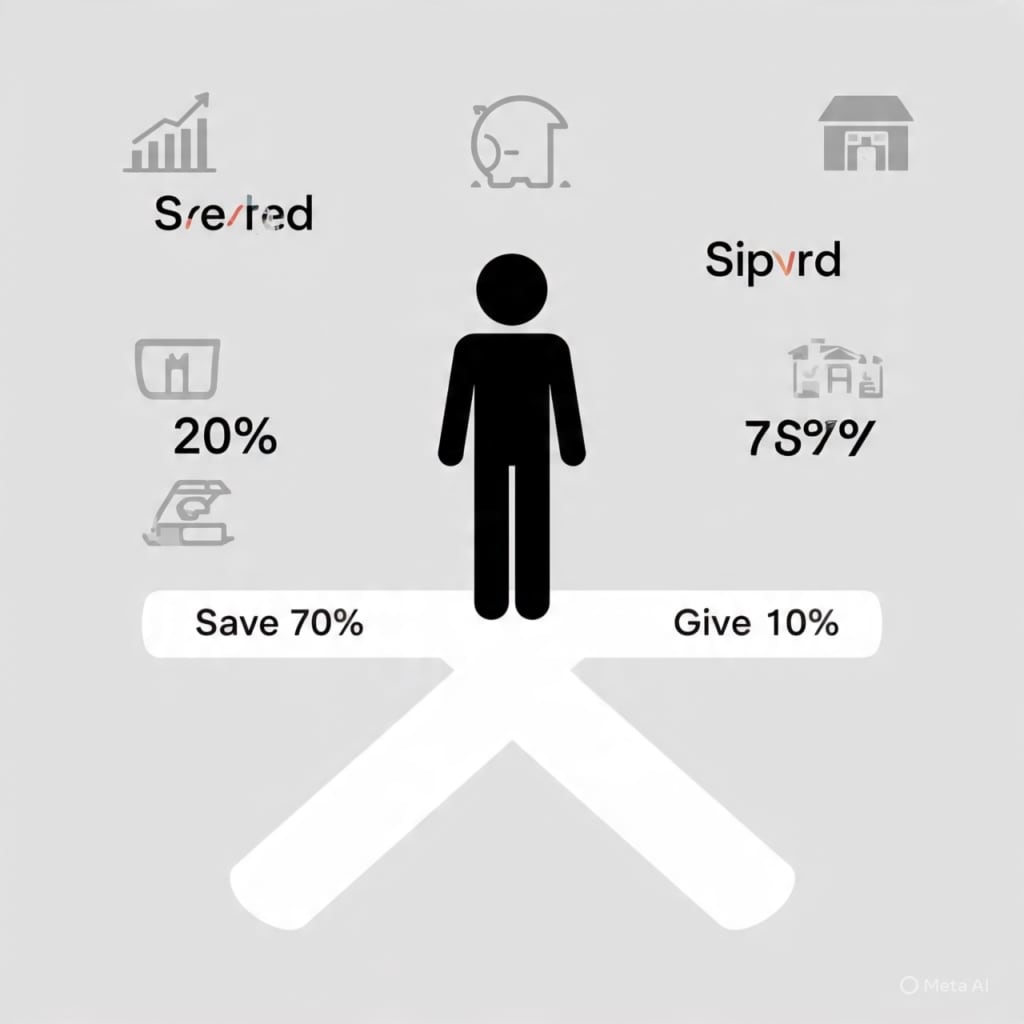
The 70-20-10 Rule: A Simple Formula for Earning, Saving, and Spending Money Wisely
When it comes to earning and managing money, most people feel overwhelmed. With all the advice out there — budgeting apps, investing strategies, saving goals — it’s hard to know where to begin. But there's a simple financial rule that can help almost anyone build wealth, stay out of debt, and live comfortably without complicated math: the 70-20-10 Rule.
This rule is a straightforward way to divide your income so that you can live well today and build a secure future. Let’s break it down and see how it works.
What Is the 70-20-10 Rule?
The 70-20-10 rule is a basic financial guideline for dividing your after-tax income into three parts:
70% for Living Expenses
20% for Savings & Investments
10% for Giving or Charity
This rule helps you control spending, grow your wealth, and support others or causes you care about — all at the same time.
1. Spend 70% on Living Expenses
The biggest portion of your income — 70% — goes toward your day-to-day living. This includes:
Rent or mortgage
Utilities (electricity, water, internet)
Transportation (gas, car payment, public transit)
Groceries
Insurance
Clothing
Entertainment
Personal care
This is your “life” money — it allows you to enjoy life today while staying within your means. The key is to keep your lifestyle within this 70% limit. If you're spending more than 70%, you're probably living above your means, which can lead to debt or financial stress.

Tips for managing this:
Track your expenses with an app or spreadsheet.
Cut back on non-essentials (e.g., subscriptions, eating out).
Live in a place that fits your budget, not just your taste.
Drive a car you can afford — not one you’re trying to impress with.
2. Save and Invest 20% of Your Income
This 20% is your “future” money. It should go toward:
Emergency fund (3–6 months of expenses)
Retirement accounts (401(k), IRA, etc.)
Investments (stocks, mutual funds, real estate)
Major future goals (home, travel, business)
This portion builds your financial freedom. Saving and investing early gives your money time to grow through compound interest — one of the most powerful wealth-building tools in finance.
Tips for building this habit:
Automate savings right when your paycheck arrives.
Open high-yield savings or investment accounts.
Increase your savings rate as your income grows.
Don’t wait for the “perfect time” — start small if needed.
If you're in debt, part of this 20% should go toward paying it off — especially high-interest debt like credit cards. Once the debt is gone, redirect that money into investments.
3. Give 10% to Charity or a Cause
This last 10% is your “heart” money. It’s not just about wealth — it’s about purpose. Giving to others builds character, strengthens communities, and creates a sense of fulfillment that money alone can’t buy.
You can give to:
Charities or non-profits
Religious organizations
Friends or family in need
Local causes
Volunteering (if not monetary, give time)
You don’t have to be wealthy to give. Consistent giving, even in small amounts, can make a huge impact. Plus, giving keeps your mindset focused on abundance rather than scarcity.
Why This Rule Works
The 70-20-10 rule is popular because it’s:
Simple – No complicated calculations or spreadsheets.
Flexible – You can adjust percentages slightly to fit your life stage (e.g., 60-30-10 or 75-15-10).
Balanced – It covers your present, future, and your community.
Whether you're making $2,000 or $20,000 a month, this rule helps you make intentional decisions with your money.
Final Thoughts: Start Where You Are
Not everyone can apply the 70-20-10 rule right away, and that’s okay. The goal is progress, not perfection. If you’re living paycheck to paycheck, start by saving 5% and work your way up. If you're behind on retirement, bump your savings to 30%. The rule is a guide, not a prison.
The most important thing is to be intentional. When you earn money, tell it where to go — don’t let it disappear without a plan. The 70-20-10 rule gives you a clear, actionable strategy to build wealth, live freely, and give generously.
About the Creator
Keep reading
More stories from MoneyOrbit and writers in Education and other communities.
Seeds of Wealth
Shining Money Falling Into the Ground It started with a glint in the sky. A golden shimmer, barely visible at first, floated gently through the air like snowflakes in sunlight. But this wasn’t snow, nor was it rain. This was something far more precious. The skies above had opened, and from them fell coins—not just ordinary coins, but shining, glowing pieces of possibility.
By MoneyOrbit5 months ago in Education
US Urges Its Citizens to Flee Venezuela Amid Reports of Paramilitaries
The United States has issued a strong warning urging its citizens to immediately leave Venezuela, citing growing security risks and alarming reports of armed paramilitary groups operating across the country. The advisory, released by the US State Department, reflects escalating concern over the deteriorating safety situation as political instability, armed violence, and lawlessness intensify.
By Aarif Lashari5 days ago in Education




Comments
There are no comments for this story
Be the first to respond and start the conversation.