
The 5 Types Of Physics That Will Take You To Another World
Have you ever wondered what the different branches of physics are? You're not alone; we all feel a bit lost in the world of physics.
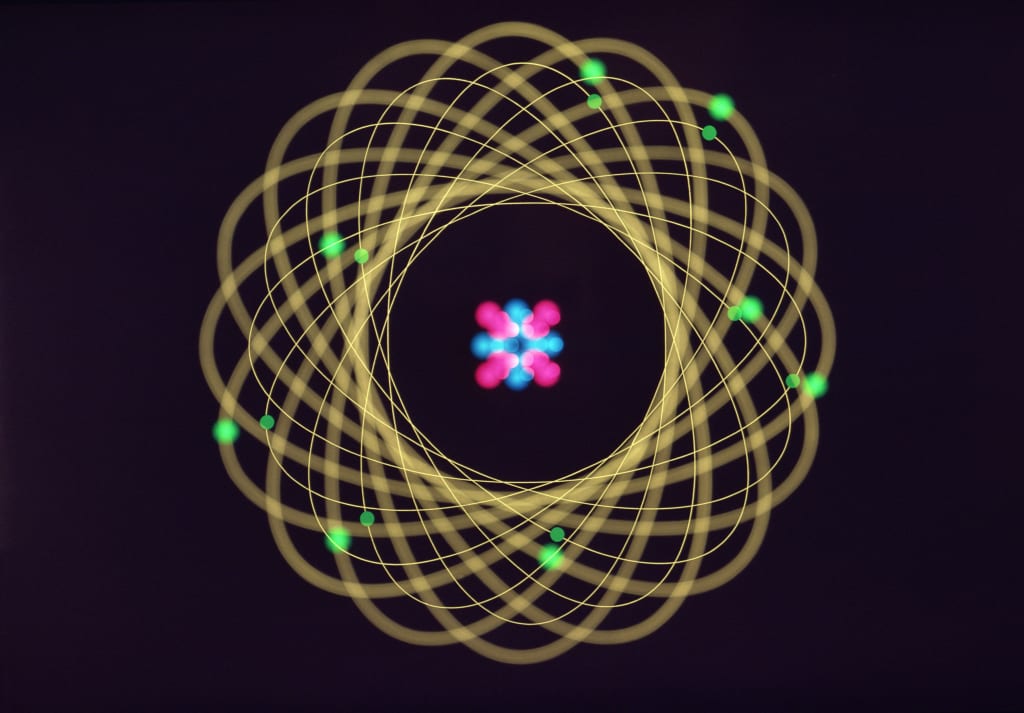
Welcome to the wonderful world of physics! If you're a self-professed science geek like me, then you're probably already well aware of the fascinating and endlessly intriguing topics that physics covers. Whether you're considering pursuing a master's in physics or are just curious about the subject, you're in for a real treat.
Physics is a broad and diverse field that encompasses a wide range of topics, from the smallest subatomic particles to the largest structures in the universe. It is the study of the natural laws and properties of matter and energy, and it seeks to explain how and why things work the way they do.
In this "The 5 Types Of Physics That Will Take You To Another World," we'll take a closer look at some of the most exciting areas of the field. From classical mechanics and electromagnetism to quantum mechanics and thermodynamics, each type of physics offers its unique insights and challenges. Whether you're a seasoned physicist or just starting to explore the subject, this guide will help you gain a deeper understanding of the different types of physics and what they each entail.
So, grab a notebook and a cup of coffee, and let's get started on this journey through the exciting world of physics. I promise you won't be disappointed!
Types of Physics
There are many types of physics, and they each offer a different perspective on the world around us. To get an idea of what each area entails, let's take a look at some of the most important subfields in science:
Nuclear Physics
Nuclear physics is the study of the powerhouse of the atom. Imagine each atom as a small city with its own set of rules and structures. In this city, there's a central core, called the nucleus, which is home to the city's most important residents: the protons and neutrons. These tiny particles hold the key to understanding the inner workings of the atom, and they play a vital role in shaping the behavior of the entire city.
In the field of nuclear physics, scientists study the behavior of these protons and neutrons, as well as other particles that live in the nucleus. They investigate how these particles interact with each other, and how they respond to different types of energy. By learning about these interactions, nuclear physicists can gain insight into the fundamental nature of matter, and they use this knowledge to develop new technologies, from medical imaging devices to nuclear reactors.
You can also think of nuclear physics as the study of an atom's most exciting—and sometimes dangerous—part. It takes us inside that central core and lets us explore everything from people to processes, so we can better understand how our world works!
Atomic Physics
Atomic physics is the branch of physics that focuses on the smallest building blocks of matter: atoms. Atoms are made up of even tinier particles like electrons, protons, and neutrons, and it is the behavior of these particles that atomic physicists study.
Atomic physics is concerned with understanding the behavior of electrons in an atom and how they interact with light and other forms of electromagnetic radiation. This interaction gives rise to phenomena like spectra (the colors of light emitted by an atom) and atomic spectroscopy (the study of these spectra).
Atomic physicists also study the way atoms interact with each other and how they can be manipulated to form molecules. This has many practical applications, such as in the fields of chemistry and engineering, where atoms and molecules are combined in specific ways to create new materials with desired properties.
So, in short, atomic physics is about looking at the behavior of matter's smallest building blocks and figuring out how they work. This knowledge is essential for many areas of science and technology—and it continues to be an important area of research today.
Quantum Mechanics
Quantum mechanics is often described as the weird and wacky side of physics, and for good reason. It defies our everyday understanding of how the world works and can seem like pure magic. But, at its core, quantum mechanics is a scientific theory that provides a precise and mathematical explanation of the behavior of matter and energy on the smallest scales.
Imagine that you're playing a game of hide and seek with a group of friends. In the classical world of physics, you can think of each friend as a classical particle, and you know exactly where they are and what they're doing at all times. But in the quantum world, things are different. Each friend is now a quantum particle, and they can exist in multiple locations at the same time! This strange phenomenon is known as "superposition."
As if that weren't strange enough, quantum particles can also become "entangled." This means that the state of one particle is linked to the state of another, no matter how far apart they are. It's like if you and your friend were playing rock-paper-scissors, and you always knew what move your friend was going to make before they made it.
Quantum mechanics provides a precise and accurate explanation of the behavior of matter and energy on the smallest scales, and it has been confirmed by countless experiments. While it may seem strange and counterintuitive, it is an essential theory for understanding the world around us.
So, the next time someone tells you that quantum mechanics is pure magic, you can nod your head and say, "Well, yes, it's a little bit magical, but it's also based on solid science!"
Mathematical Physics

Mathematical physics can be described as the marriage between mathematics and physics, where the power of mathematical tools and techniques is applied to understand and solve physical phenomena. It's like a secret decoder ring for the universe. With mathematical physics, you can take the complex and abstract concepts of physics and translate them into a language that's more tangible and easier to understand: mathematics.
Think of it this way: imagine you're trying to solve a Rubik's cube. The cube represents a physical problem, and each twist and turn you make is like using a mathematical formula to solve it. Eventually, with enough twists and turns, you'll arrive at the solution to the problem. That's the power of mathematical physics in action.
It's like a magic wand for physics, allowing scientists and researchers to make predictions, model systems, and uncover previously unknown phenomena. From describing the motion of celestial bodies to explaining the behavior of subatomic particles, mathematical physics plays a crucial role in our understanding of the physical world.
So, if you're fascinated by both mathematics and physics—as well as how they come together to explain the workings of the universe—then mathematical physics is your calling!
Astrophysics
Astrophysics is like solving a cosmic mystery story, where instead of clues and motives, you have stars, galaxies, black holes, and other celestial bodies. It's the detective work of unraveling the secrets of the universe through a combination of observation and theory. It's like being a universe detective who uses math and science to solve cosmic mysteries.
Imagine looking through a telescope, observing distant stars and galaxies, and trying to understand how they were formed and what they're made of. That's astrophysics in a nutshell. This branch of physics deals with the study of the physical and chemical properties of astronomical objects, as well as their origins, evolution, and behavior.
Think of it as piecing together a cosmic puzzle, where each new discovery brings us one step closer to understanding the big picture. From the birth of stars and the formation of planetary systems to the behavior of black holes and the mysteries of dark matter and energy, astrophysics offers a never-ending stream of exciting puzzles to solve.
So if you're looking for a field of study that combines wonder, curiosity, and intellectual challenge, astrophysics is it!
It's All Done
To wrap things up, let's think of physics as a treasure hunt, where every discovery leads to new questions and even greater mysteries. If you're someone who loves a good puzzle and relishes the thrill of uncovering the unknown, then physics is the perfect field for you.
It's like being a detective in the world of science, where each clue leads to a deeper understanding of how our universe works. Whether you're interested in classical mechanics, astrophysics, or any other branch of physics, there are endless opportunities to expand your knowledge and explore new frontiers.
So, if you're ready to embark on a journey of intellectual discovery, now is the time to consider pursuing a degree in physics or a related field. Don't miss out on this chance to explore the world of physics and unlock its secrets!
About the Creator
Bryan Smith
Bryan Smith is a content writer who helps companies tell their unique stories. An experienced writer who delivers content that solves problems for audiences.
Keep reading
More stories from Bryan Smith and writers in Education and other communities.
Unlock the Power of Physics: The Advantages of Earning an Online Master's Degree
Physics plays a significant role in our everyday lives by providing a scientific explanation for the world we live in. From how our bodies move to the laws that govern the universe, physics is an essential part of our comprehension of the world.
By Bryan Smith3 years ago in Education
Managing Anxiety During Exams: A Student’s Guide
Exams are one of the most common sources of stress for students at every level. Even the most prepared individuals often feel nervous before or during a test. Exam anxiety is natural — it’s the body’s way of preparing for a challenge — but excessive stress can interfere with focus, memory recall, and overall performance. Understanding the causes of anxiety and learning effective coping strategies can make a significant difference. This guide provides practical, evidence-based techniques to manage stress before, during, and after exams.
By Games Mode Onabout 9 hours ago in Education
Best Tools and Tips for Project Managers to Manage Projects Effectively
Project management plays a critical role in ensuring that business goals are achieved on time and within budget. In today’s fast-paced and competitive environment, project managers must balance multiple responsibilities, manage diverse teams, and adapt to constant changes. Using the right tools along with proven management techniques can significantly improve project efficiency and success.
By Muhammad Hussainabout 10 hours ago in Education




Comments
There are no comments for this story
Be the first to respond and start the conversation.