
The 2025 China–U.S. Trade War: Global Business Risks and Strategic Shifts
How Rising Tariffs and Global Tensions Are Reshaping Trade, Technology, and Supply Chains Worldwide
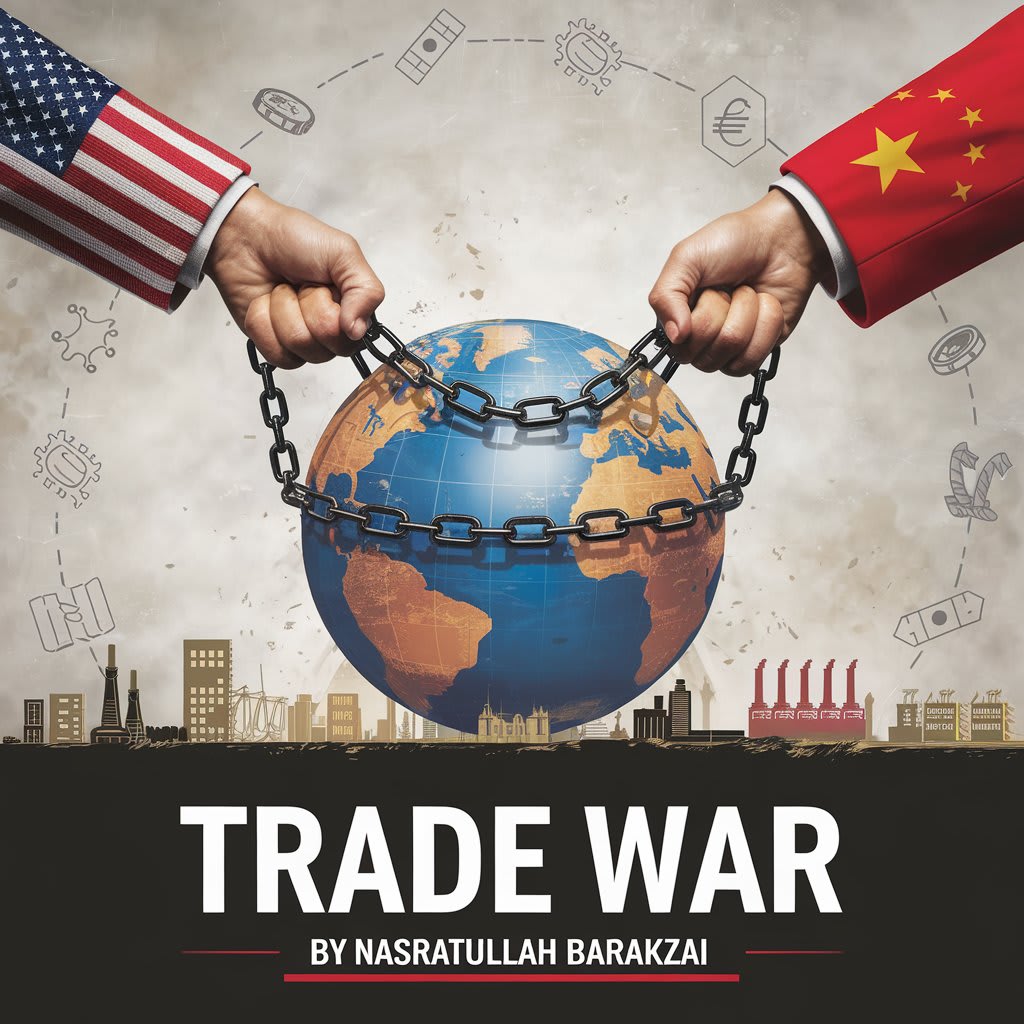
In 2025, the China–U.S. trade war has entered a new and more intense phase, marked by sharp tariff escalations, tightened regulations, and rising geopolitical friction. The renewed conflict is not only reshaping the economic relationship between the world’s two largest economies but is also sending ripples across global markets, supply chains, and business strategies. As businesses around the world brace for long-term uncertainty, the need to adapt to a rapidly changing trade environment has never been more urgent.
Escalation of Tariffs and the Return of Economic Nationalism
The latest wave of trade tensions began with the United States announcing a series of new tariffs on Chinese goods in early 2025. These include significant increases in duties on critical imports such as electronics, automotive components, rare earth materials, and consumer technology. The U.S. government, citing national security and the protection of domestic industries, raised tariffs on certain Chinese products up to 145%.
China responded swiftly with its own countermeasures—raising import taxes on American agricultural goods, high-end machinery, and semiconductors. This tit-for-tat escalation has disrupted trade flows and reignited debates over economic nationalism, protectionism, and the future of globalization.
Businesses that had once benefited from relatively open trade between the two superpowers are now confronted with higher operational costs, limited market access, and regulatory obstacles. These policy shifts have cast a shadow of uncertainty, leading to a cautious approach to investments and long-term planning in many sectors.
Global Supply Chains Under Pressure
Perhaps the most visible consequence of the trade war has been the strain placed on global supply chains. Companies that relied heavily on Chinese manufacturing—particularly in technology, automotive, and consumer electronics—are being forced to reconsider their sourcing and production strategies.
This shift is driving a wave of “supply chain diversification,” where businesses are moving operations to other Asian countries such as Vietnam, India, and Indonesia. In some cases, manufacturers are reshoring operations back to the United States or other Western nations, despite higher labor and production costs, in order to ensure greater stability and reduce geopolitical risk.
However, such transitions are not simple or quick. Establishing new supplier relationships, adapting to different regulatory environments, and maintaining quality and efficiency remain major challenges. Moreover, logistical costs and shipping times have increased due to longer and more complex supply routes.
The supply chain disruptions triggered by the pandemic in recent years had already exposed vulnerabilities in the global trade network. The renewed China–U.S. trade war further underscores the importance of building resilient, flexible, and regionally balanced supply chains that can withstand political shocks.
Technology and Strategic Self-Sufficiency
Technology is at the heart of the trade conflict. The United States has placed tighter restrictions on Chinese access to advanced semiconductor technologies, artificial intelligence tools, and defense-related components. Meanwhile, China has accelerated efforts to become self-reliant in key technological sectors through its “Made in China 2025” initiative.
Beijing is heavily investing in domestic chip manufacturing, AI research, and clean energy development. The strategic goal is to reduce dependence on foreign technologies that may be restricted in times of geopolitical tension. This has led to massive government subsidies for Chinese tech firms and the rise of new national champions in various innovation-driven industries.
The United States, for its part, is also promoting domestic research and production through policies such as the CHIPS Act and other industrial incentives. It has encouraged American companies to partner with allies in Europe and Asia to develop "friendly" and secure supply chains—an approach referred to as “friendshoring.”
This division is leading to the formation of two parallel tech ecosystems, each with its own standards, platforms, and alliances. For global businesses, this split means navigating complex regulatory landscapes, managing technology transfer risks, and choosing sides in a growing tech Cold War.
The Global Ripple Effect
While the China–U.S. trade war is bilateral in nature, its impact is global. Emerging economies that are part of the extended supply chain ecosystem are feeling both the burden and opportunity of the trade shift. Countries like Mexico, Malaysia, and Thailand are witnessing increased investment as companies seek to establish “China plus one” strategies.
At the same time, global financial markets have become more volatile. Currency fluctuations, inflationary pressures, and weakened consumer confidence in trade-exposed sectors are affecting growth prospects in many parts of the world. The International Monetary Fund has already revised down global growth projections for 2025, citing trade-related risks among the key factors.
Multinational corporations with a global footprint are reassessing risk management strategies. They are focusing more on geopolitical risk analysis, digital transformation to support supply chain visibility, and forming strategic partnerships to mitigate exposure in uncertain markets.
Strategic Outlook for Global Businesses
The key lesson for businesses in 2025 is that geopolitical risk is no longer a marginal concern—it is central to long-term planning. The trade war between China and the United States is unlikely to be resolved quickly, as it stems not only from trade imbalances but also from deep-rooted strategic competition over technology, influence, and national security.
To remain competitive, businesses must:
Diversify sourcing and markets.
Invest in supply chain resilience.
Monitor policy changes in real time.
Strengthen compliance and risk assessment frameworks.
Prioritize innovation and adaptability in uncertain environments.
About the Creator
Keep reading
More stories from Nasratulllah Barakzai and writers in Education and other communities.
Mastering the Art of Learning
In a world where knowledge is power, the ability to study effectively is not merely a student’s necessity—it is a life skill. Whether you're preparing for exams, trying to earn a certification, or simply committed to self-improvement, learning how to learn is one of the most important investments you can make. This article provides a comprehensive guide to the most powerful and proven study techniques that will help you retain knowledge, stay motivated, and achieve your goals efficiently.
By Nasratulllah Barakzai10 months ago in Motivation
Managing Anxiety During Exams: A Student’s Guide
Exams are one of the most common sources of stress for students at every level. Even the most prepared individuals often feel nervous before or during a test. Exam anxiety is natural — it’s the body’s way of preparing for a challenge — but excessive stress can interfere with focus, memory recall, and overall performance. Understanding the causes of anxiety and learning effective coping strategies can make a significant difference. This guide provides practical, evidence-based techniques to manage stress before, during, and after exams.
By Games Mode Onabout 21 hours ago in Education
Best Tools and Tips for Project Managers to Manage Projects Effectively
Project management plays a critical role in ensuring that business goals are achieved on time and within budget. In today’s fast-paced and competitive environment, project managers must balance multiple responsibilities, manage diverse teams, and adapt to constant changes. Using the right tools along with proven management techniques can significantly improve project efficiency and success.
By Muhammad Hussainabout 22 hours ago in Education



Comments
There are no comments for this story
Be the first to respond and start the conversation.