student
From balancing your course load to forging relationships with classmates to extracurricular involvement, these are the tried and true methods to nail your career as a student.
How to Use ChatGPT to Write Viral Stories
There's a specific feeling you get when a story you've written starts moving through the internet on its own. The notifications multiply. Strangers quote sections back to you. Someone shares it with the exact caption you hoped they would. It's not luck, and it's not magic. It's structure meeting emotion at the right moment. I've written stories that disappeared into silence and stories that reached millions of people. The difference is rarely about writing talent. It's about understanding what makes people stop scrolling, feel something, and decide to share. Now we have ChatGPT, and everyone wants to know if AI can write viral stories. The honest answer is more nuanced than most people want to hear. ChatGPT can help you build the skeleton, but it cannot give your story a heartbeat. Understanding Viral Stories in the Age of Infinite Content A viral story is content that spreads exponentially through shares rather than through paid promotion or algorithmic distribution alone. People choose to send it to friends, post it to their feeds, or discuss it in group chats. The audience becomes the distribution channel. What's changed in recent years is the sheer volume of competition. Every platform is flooded with professionally produced content, AI-generated articles, and millions of people all trying to capture attention. The bar for "good enough to share" has risen dramatically. Viral stories today need to do something that generic content cannot. They need to articulate an experience people have had but couldn't express themselves. They need to challenge assumptions in ways that feel revelatory rather than confrontational. They need to make complex ideas suddenly simple or simple ideas suddenly profound. ChatGPT enters this landscape as a tool that's exceptional at structure and pattern but struggles with the specificity and surprise that makes stories memorable. It knows what viral stories typically look like. It doesn't know what will make your particular story different from the ten thousand similar ones published this week. Why the Desire to Create Viral Stories Has Intensified We're living through an attention economy where visibility directly translates to opportunity. A viral story can launch a career, build an audience, or establish authority in ways that used to take years of traditional credibility-building. For solo creators and small businesses, viral content is often the only realistic path to reach beyond your immediate network. Paid advertising is expensive and increasingly ineffective. Algorithmic reach on social platforms continues to decline. Going viral is one of the few remaining ways to break through without substantial resources. There's also a creative satisfaction to it. Writing something that resonates with thousands or millions of people validates that you understand something true about human experience. It's proof that your perspective matters, that your voice adds something to the conversation. But this pressure creates problems. People chase virality instead of value. They optimize for shares rather than truth. They write for algorithms rather than humans. The result is a landscape full of clickbait, shallow provocations, and manufactured controversy that spreads quickly but means nothing. ChatGPT amplifies both possibilities. It can help you structure genuinely valuable ideas for maximum reach, or it can help you efficiently produce more forgettable content. The tool doesn't have ethics or judgment about which path you choose. What Actually Makes Stories Spread in Human Networks Stories go viral when they help people accomplish social goals. Sharing isn't random. It's functional. People share content that makes them look smart, compassionate, funny, or informed. They share things that express their identity or values. They share stories that give them a reason to connect with someone they care about. This means viral stories need to be useful beyond just being interesting. A story about overcoming anxiety isn't just about anxiety. It's giving someone a way to help a friend who's struggling. A story about career transitions isn't just career advice. It's giving someone permission to make a change they've been afraid to make. The emotional core matters more than the topic. Stories that trigger strong emotions—surprise, validation, righteous anger, hope, recognition—spread faster than stories that merely inform. But the emotion needs to feel earned, not manipulated. Readers can sense when you're pulling emotional levers cynically. Timing and cultural context are invisible factors that determine whether a story catches fire. The same piece published in different weeks can have completely different outcomes. Something about the collective mood, recent events, or ongoing conversations determines whether your story lands as relevant or goes unnoticed. ChatGPT has no sense of timing or cultural moment. It doesn't know what conversations are happening right now or which angles on a topic are fresh versus exhausted. This is purely human judgment territory. How ChatGPT Actually Functions as a Writing Tool ChatGPT is a language prediction model. It generates text based on patterns it learned from enormous amounts of internet content. When you ask it to write a story, it's essentially creating a statistically likely version of what stories on that topic tend to look like. This makes it excellent for structure, format, and flow. It can outline a hero's journey. It can write in different tones and styles. It can generate hooks, transitions, and conclusions that follow proven patterns. For someone who struggles with story architecture, this is genuinely valuable. Where it falls short is specificity and surprise. ChatGPT tends toward the generic because it's drawing from common patterns. Your story about your grandmother's advice will sound similar to a thousand other stories about grandmother's advice unless you actively fight against the AI's tendency toward the expected. The tool also lacks experience and cannot verify truth. It will confidently generate plausible-sounding facts, statistics, and examples that are completely invented. If you're not careful, you'll publish stories containing false information that sounds authoritative because it came from AI. Most importantly, ChatGPT cannot know your actual experiences, observations, or insights. It can help you express ideas you already have, but it cannot give you ideas worth expressing. The raw material has to come from you. Common Misunderstandings About AI and Viral Content The biggest misconception is that ChatGPT can identify what will go viral. People ask it to "write a viral story about X" and expect some formula to emerge. But virality isn't a formula that can be reverse-engineered. It's an emergent property of how humans respond to content in specific contexts. Another mistake is believing AI-generated content can replace human perspective. A story written entirely by ChatGPT will read like every other AI-generated story because they're all drawing from the same training data. The voice will be competent but generic. The insights will be familiar rather than fresh. There's also confusion about efficiency. Yes, ChatGPT can draft content quickly, but if you're publishing that draft without substantial human editing and enhancement, you're publishing mediocre work efficiently. Speed matters less than quality when the internet is already drowning in content. Some people think using AI is cheating or inauthentic. Others think it's the future and resisting it is foolish. Both extremes miss the point. AI is a tool. Whether it helps or hurts depends entirely on how you use it and what you bring to the collaboration. The tool won't make you a better storyteller by itself. It might help you tell stories faster or more efficiently, but the storytelling skill still has to develop in you, not in the AI.
By Muhammad Usman13 days ago in Education
Integrating ChatGPT API with a Laravel Project: A Complete Overview . AI-Generated.
In the modern digital era, software applications are expected to deliver speed, simplicity, and intelligent functionality. Users no longer settle for outdated systems or limited interfaces. When affordability is not an issue, people naturally choose advanced platforms—opting for the latest operating systems, smartphones, or software versions that offer improved performance and smarter features.
By ItStuffSolutions14 days ago in Education
Bidding Adieu to M. French
December 31, 2025 Bidding Adieu to Monsieur French: Brief comments to a retiring colleague Martin, as I told you yesterday, I believe it is always better to write out one's thoughts ahead of time to avoid stumbling over one's words. Ever since my first big meeting with the Christian school parents when I couldn't decide whether to say that "I felt as though I'd already met everyone" or "I feel as though I'd already met everyone" and came out with "I feel like I already felt everyone," I knew that prewritten comments were the way to go.
By Mack D. Ames15 days ago in Education
Online Earning
Online earning means making money using the internet. Today, many people earn online by using their skills, time, and creativity. It is a popular option because it allows you to work from home, choose your own schedule, and earn from anywhere in the world.
By shaoor afridi15 days ago in Education
New Robots Coming in 2026. AI-Generated.
New Robots in 2026: How Technology Is Changing Our Future Technology is moving very fast, and robots are becoming an important part of our lives. By the year 2026, new types of robots will be more common in homes, schools, hospitals, and workplaces. These robots will not only help humans with hard work but will also make daily life easier, safer, and more efficient. In this article, we will explore what new robots in 2026 may look like, what they can do, and how they will affect our future.
By Bilal Mohammadi15 days ago in Education
Best Laptop for Coding
Coding can be exciting until your laptop freezes, runs slow, or can’t keep up with your workflow. If you’ve ever waited for a build to compile or watched your IDE lag at the worst moment, you already know the right laptop can change everything.
By Tab Delite16 days ago in Education
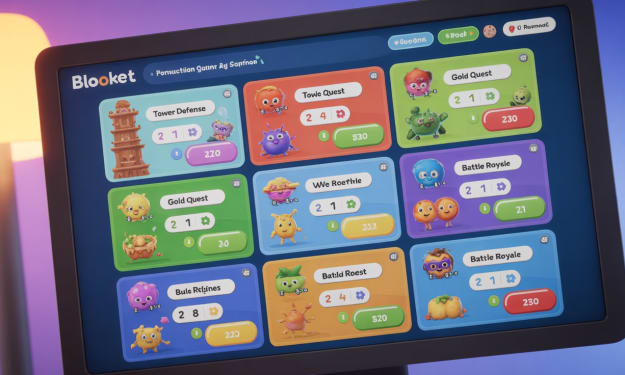
Blooket Play: Redefining Education with Gamification
In a world where technology is reshaping every aspect of our lives, the way we learn is no exception. Traditional educational methods—characterized by rote memorization and passive absorption—are being replaced by more interactive, immersive experiences that make learning an engaging, dynamic journey. Enter Blooket Play, a groundbreaking, gamified platform that has completely transformed how we approach education and learning, one quiz at a time.
By Backlinks Cart16 days ago in Education