stem
The four major disciplines propelling our students and our society forward; all about education in science, technology, engineering, and mathematics.
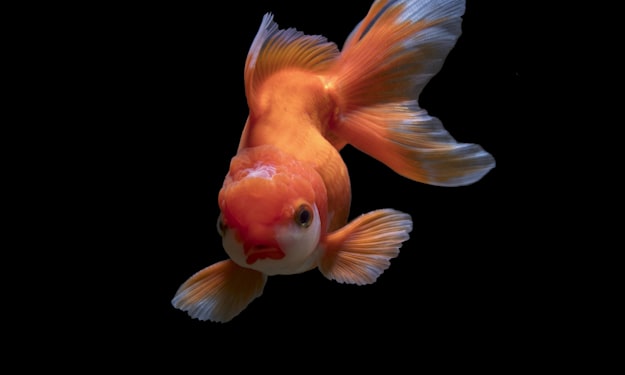
Ever Wonder What a Fish See's Underwater?
Picture yourself swimming, about 20-30 meters underwater (about 50-60 feet), and you're a fish. Seems pretty cool, or odd, depending on how you like the thought of having gills and slimy skin. See yourself swimming through the crevices in the rocks, through the forests of sponges, interacting with coral, sea anemones, and all this while avoiding those pesky animals that would like to have you for their dinner. Some fish are brightly colored while others do not seem to have any color at all, so you would most likely stay with the fish, and other creatures, that have more color to them thus ignoring the coral that abound in this area. You would call me bonkers if I were to tell you that I would prefer to be with the coral than with the fish because they are more beautiful watch. But, I would be calling you the loony because you are stilling seeing them with the eyes of a human.
By Jonathan Klarich5 years ago in Education
Dr Anne-Marie Imafidon MBE
At my college here in England, I realised the imbalance in the classroom pretty quickly. Biology wasn’t so bad, probably an even split, but chemistry and especially physics was where the divide started to show. In chemistry it was about a third female to two-thirds male students but in physics I was one of two girls in my entire class. And there were no black students in either biology or physics. Going on to study Animal Science at university, I noticed it was the opposite with probably 80% girls to boys but if there were mixed lectures from other disciplines i.e., biochemistry lectures the male population tripled, but there was still a lack of diversity among pupils.
By Emma Nicholls5 years ago in Education
Why We Need An Alliance Between Arts Majors and STEM Majors
We've all heard the stereotypes. Liberal arts majors (encompassing the humanities, social sciences, literature, visual arts, etc.) are impractical and unnecessary, while STEM majors (encompassing science, technology, engineering and math) are smart but boring. We laugh at them, but in doing so, we're ignoring the harm that comes from pitting these two broad groups of study against one another.
By Vanessa Lewis5 years ago in Education
Mathematics
Time is a concept and a measure of how long things last. It is evidence of existence. It is philosophical and debatable. In some cultures, the idea of time and quantity as we know it does not exist. They would instead base the year on seasons and the day's structure on light and darkness patterns. If it is monsoon season or heavy rain, work may have to pause. In the U.K. and other western societies, everything gets done by the clock. Once famously, Nina Simone said we do everything by the clock, even drink by it, as she spoke in the live album Young, Gifted and Black. Almost every culture understands that there are 365 ¼ days in a calendar year. The days equate to twelve months of 30 or 31 days (February has 28 or 29) and 52 weeks. Each week consists of 7 days, and each day has 24 hours. Each hour consists of 60 minutes, and each minute consists of 60 seconds. We have the academic calendar, the moon cycle, and various other cycles and rotations within the year. However, regardless of the season, rain or storm, work starts and ends at a particular time. The majority of us do this in sync.
By M. Olayinka5 years ago in Education
Science Facts In 2021
05/01/2021 Aslam Shaha Top Amazing Science Fact Science Fact's questions and answers are welcome to all of you in the world. Science This word is as much fun as we talk about Science, the more this subject will make us look more interesting. The most interesting thing about this subject This is as much work as we will discover Science, our world is i.e our earth is an ocean of vast different things that we can never imagine
By Aslam Shaha5 years ago in Education
Just One Robot
FIRST (For Inspiration and Recognition of Science and Technology) is a worldwide non-profit organization that provides competitive robotics programs for students of all ages. Focusing on the importance of hands-on STEM (science, technology, engineering, and math) education, FIRST is a platform for young engineers to discover their passions and pursue their dream careers. From circuitry to designing for manufacturing to programming, students on FIRST teams get to experience all aspects of robotics engineering.
By Gabriella DeYoe5 years ago in Education