stem
The four major disciplines propelling our students and our society forward; all about education in science, technology, engineering, and mathematics.
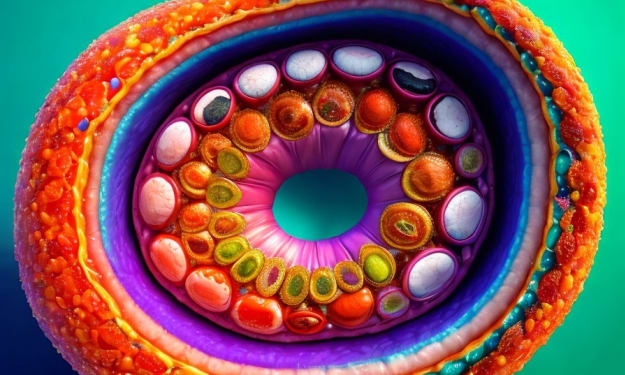
The Mighty Mitochondria: Powering Your Body From Within. AI-Generated.
The Mighty Mitochondria: Powering Your Body From Within Remember learning about the "powerhouse of the cell" in biology class? That title belongs to the mitochondria, tiny organelles that play a crucial role in keeping our bodies functioning at their best. But what exactly do mitochondria do, and how do they affect our health and well-being? Buckle up, because we're about to delve into the fascinating world of cellular energy production!
By suren arju2 years ago in Education
Out of breath . Content Warning.
Out of Breath: Clara's Journey to Overcome Asthma In the bustling city of Maplewood, where the streets were lined with tall buildings and the air was filled with the sounds of honking cars and busy pedestrians, lived a young girl named Clara. Clara was a bright and spirited child, always eager to play and explore. However, Clara had a challenge that often held her back: she suffered from severe asthma.
By m habibullah2 years ago in Education
Advancements in AI: Breakthroughs in Artificial Intelligence Technology
Artificial Intelligence (AI) has rapidly transformed from a theoretical concept to a cornerstone of modern technology, driving innovation and disruption across various sectors. This comprehensive article explores the recent advancements in AI technology, its new applications, ethical considerations, regulatory developments, and potential dangers in the near future.
By Johnson Stephen2 years ago in Education
Can't have children . Content Warning.
Embracing a Different Path: The Story of Sarah and Tom In a charming town named Willowbrook, known for its picturesque streets and close-knit community, lived a couple named Sarah and Tom. They had been high school sweethearts, sharing dreams of a future filled with love, laughter, and a home bustling with children.
By m habibullah2 years ago in Education
"Understanding the Urgency: A Deep Dive into Climate Change and Global Responses"
Climate change is one of the most pressing issues facing the global community today. The adverse effects of climate change, including rising sea levels, extreme weather events, and loss of biodiversity, necessitate urgent and comprehensive action. This article delves into various climate change initiatives around the world, examining their effectiveness, challenges, and the role of international cooperation. Additionally, it explores alternative strategies to mitigate climate change impacts, using the European Union (EU) as a case study.
By Johnson Stephen2 years ago in Education
ideal body . Content Warning.
The Myth of the Ideal Body: Clara's Realization In the picturesque town of Riverton, nestled between rolling hills and a sparkling river, lived a young woman named Clara. Clara was known for her artistic talent, capturing the beauty of nature and people through her paintings. Despite her creative spirit and the admiration of her friends and family, Clara struggled with a deep-seated insecurity about her body.
By m habibullah2 years ago in Education
fat body . Content Warning.
Embracing Curves: Emma's Journey to Self-Love In the lively town of Willowbrook, there lived a woman named Emma. Emma was known for her infectious laughter, her love for baking, and her warm, generous spirit. However, Emma also carried a weight of insecurity about her body. She had always been on the heavier side, and growing up, she faced constant teasing and criticism about her size.
By m habibullah2 years ago in Education
Gambling addiction story. Content Warning.
Once upon a time in a bustling city, there lived a man named David. David was a charming and intelligent individual, known for his quick wit and generous nature. He worked as an accountant and led a comfortable life with his wife, Sarah, and their two young children.
By m habibullah2 years ago in Education
Fun Facts That Will Blow Your Mind. AI-Generated.
In a world filled with incredible wonders and fascinating phenomena, there are numerous fun facts that never cease to amaze and intrigue us. Whether it’s about the natural world, historical events, or quirky statistics, these nuggets of information add color to our understanding of the world around us. Here are some mind-blowing fun facts that might just leave you astonished:
By Nicola Shaw2 years ago in Education
Exploring Academic Excellence: Education in France for Indian Students
France is known for its unparalleled heritage, culture, and cuisine and is gradually emerging as the preferred study-abroad destination for students from India. Whether it is through grand plans or simply the desire to expand one’s academic experience, France offers a tempting option for those wishing to study overseas.
By Snap Spark2 years ago in Education
8 Warning Signs Your Child Is Struggling in School
Recognizing when your child is having difficulty in school is crucial for providing the support they need to succeed. Parents in Surrey, especially those with children enrolled in Junior Kindergarten in Surrey or an early childhood education program, should be vigilant about the signs of academic struggle. Whether your child is attending a childcare center in Surrey or starting their formal education,
By KidzVille Learning Center2 years ago in Education
What happens to your body in a coma?
Comas should not be mistaken for sleep, despite the word's origin from the Greek term for deep sleep, "Koma." Comas are a form of unconsciousness that differs greatly from sleep, rendering individuals unable to respond to external stimuli. Even if you were to blast the loudest, most intense death metal music right next to someone in a coma, it would have no effect other than irritating the neighbors. In fact, you could even inflict physical harm on a comatose person, and they would remain completely unaware and unresponsive. In the past, this lack of response was sometimes seen as an opportunity for "treatment," with doctors attempting various methods to shock patients back into consciousness. These methods ranged from exposing the body to flames, drastically lowering body temperature with ice, to even bloodletting from the head. There were even cases where doctors believed that emptying the stomach completely would force the patient to wake up due to hunger. It seems that doctors were willing to try anything and everything, including the kitchen sink, to solve the problem. Comas can occur as a result of severe trauma or as a deliberate medical treatment. They are often triggered by traumatic head injuries, as the brain shuts down to focus on self-repair. However, comas can also be caused by stroke, brain tumors, drug or alcohol abuse, or certain illnesses such as diabetes or infections. Typically, comas last only a few weeks. However, if the coma persists beyond this period, the patient may enter a persistent vegetative state, greatly reducing their chances of recovery. In some cases, individuals who do recover from a coma may experience major or minor disabilities, including speech impediments, mental retardation, or difficulties with coordination. Medically induced comas are utilized in cases where patients face a high risk of brain injury, whether it be due to physical trauma, drug overdoses, or diseases. The main objective is to safeguard and regulate the pressure dynamics within the brain. In instances of injury or illness, the brain may swell and exert pressure against the skull, leading to oxygen deprivation in certain areas of the brain. By inducing a coma, the electrical activity of the brain is decreased and its metabolism is slowed down, thereby reducing swelling and inflammation. Various types of comas exist, each distinct from the others. A vegetative state indicates that the individual's body may exhibit physical movements like grunts or yawns, yet does not respond to external stimuli. These movements are purely involuntary, and witnessing a loved one's body yawn can unfortunately give rise to false hope. In reality, the brain remains inactive and functions only at the most basic levels. Conversely, catatonia involves a complete absence of movement or response of any kind- as the term suggests. Catatonic patients often require assistance from machines to facilitate breathing and potentially even heart function. Brain death signifies the complete destruction of higher brain functions, with the brain solely carrying out autonomic functions such as breathing and swallowing which are instinctual. A person declared brain dead has no possibility of recovery, typically resulting from severe physical trauma or illness. While a stupor is not technically classified as a form of coma, it is sometimes colloquially referred to as one. Individuals in a stupor may be roused, albeit with significant effort. They may easily slip back into a deep unconscious state, but more often than not, they will regain consciousness on their own. The concern arises if they descend so deeply into unconsciousness that their autonomic functions are compromised. During a coma, the brain exhibits no awareness or cognitive processing, and is entirely unresponsive to external stimuli. It is as if the brain has completely shut down or is undergoing a reboot similar to a computer. In less severe cases, the body will continue to perform basic functions such as breathing and pumping blood. In some instances, patients may even cough as the body tries to regain airflow when the airway is blocked. However, the brain appears to be unable to establish communication between the brain stem and the cerebrum, which is responsible for cognitive consciousness. This lack of communication occurs due to the reticular activating system. The coma state remains largely mysterious to doctors, and there is still much that is unknown about it. In 2013, doctors treating an epileptic man in a coma were surprised to discover brain activity in the hippocampus. This region of the brain is believed to be associated with emotions, memory, and the autonomic nervous system. It is possible that the unconscious person may experience memories but little else. The doctors conducted similar experiments on cats under general anesthesia and gained valuable knowledge that could potentially lead to the reversal of comas. However, it is important to note that the presence of brain activity does not indicate awareness or the ability to communicate about one's condition. Nevertheless, it does provide strong evidence that the brain takes actions to repair and protect itself while in a comatose state. The rest of the body generally remains unaffected by the coma, as functions like breathing and heartbeating are controlled by the passive nervous system. Coma patients often require intravenous feeding and hydration, as well as intubation to maintain a clear airway. Some patients may still retain the reflexes to swallow. However, the most common issue faced by coma patients is muscle atrophy, which occurs due to prolonged periods of inactivity. You do not have to be in a coma for this to occur; if you have spent several weeks as a couch potato, you have likely experienced muscle weakness due to lack of exercise. Simply taking a walk once a day can prevent muscle atrophy. Bedsores are a serious concern for coma patients, also known as pressure ulcers. These are common for individuals who are bedridden, immobile, or lack the ability to feel pain. They occur in areas of the skin under pressure from prolonged bed rest, sitting, or wearing a tight cast. If left untreated, bedsores can lead to infection and become deep, extending into the muscle or bone. They are slow to heal and may require surgery. Despite common misconceptions, most coma patients recover within a few weeks with some level of mental capacity. Ongoing research and advancements in treatment are improving our understanding of comas, as seen in a case where a 35-year-old man in a vegetative state for 15 years was able to achieve "minimal consciousness" through vagus nerve stimulation. This nerve is one of the largest in the body, connecting directly to the heart, lungs, upper digestive tract, and other vital organs. During his unconscious state, medical professionals successfully guided his eye movements towards objects, eliciting expressions of astonishment on his face. Regrettably, he remained unable to communicate verbally or exhibit any signs of higher cognitive function. Despite this significant progress, doctors caution that recovery from comas varies greatly among individuals, and what proves effective for one patient may not necessarily yield the same results for others.
By Lillian Formelová2 years ago in Education