pop culture
Pop culture has a place in the classroom; popular trends like hip hop help to foster interest and ignite conversations in education.
History of cheese
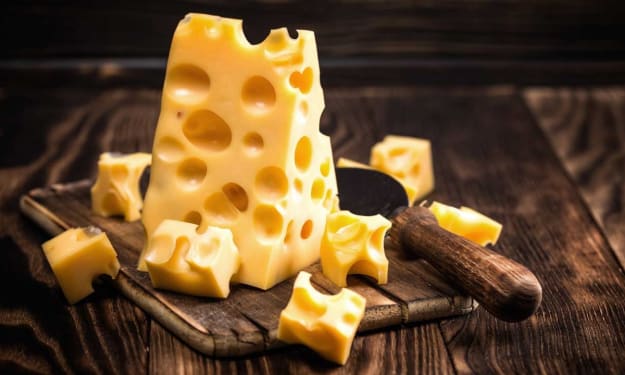
Long before kings and queens, before people made things out of clay and wrote things down, and before people had metal tools and weapons, there was cheese! Way back in 8000 BCE, people who lived in the Fertile Crescent started making cheese. They were farmers who had sheep and goats, and they would get milk from them. When the milk was left out in the warm air for a while, it would start to get sour and clumpy. The farmers figured out that they could eat the clumps, which were called curds. They could also drain the liquid part, which was called whey. The curds were the start of cheese! People could eat cheese instead of drinking milk because it had less lactose, which is a sugar that some people can't digest well. Cheese was really important because it could be saved for later and eaten during times when there wasn't much food. People in Mesopotamia, which was a big city a long time ago, loved cheese so much that they wrote down how much cheese they had and what kinds of cheese they had. Cheese was really good for people because it had lots of important things like protein, fat, and minerals.
By Julio Javier3 years ago in Education
What if all insects suddenly disappeared?
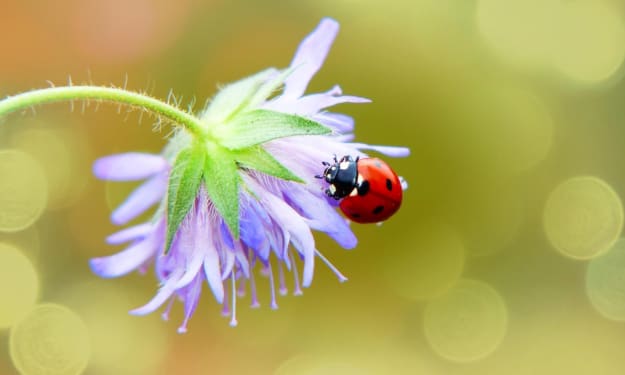
Insect are arthropod invertebrates that belong to the class Pancrustacea. They make up the largest group in the phylum Arthropoda. Insects have an exoskeleton made of chitin, a body with three distinct parts (head, thorax, and abdomen), three pairs of legs that are jointed, compound eyes, and a single pair of antennae. Unlike other animals, insects have some blood that circulates in an open cavity known as haemocoel and is not completely enclosed in vessels. The insect group is the most varied, comprising of over a million species and more than half of all living organisms known to humankind. It is estimated that there are around six to ten million species of insects, potentially making up over 90% of animal life on earth. Though insects can be found in almost all environments, only a small number of species live in oceans. Research shows that insects are nested within another arthropod group, crustaceans, which dominate marine ecosystems.
By Julio Javier3 years ago in Education
What will happen if the moon is gone?
The moon, Earth's natural satellite, holds a crucial role in our planet's existence. The Moon has a diameter that is roughly one-quarter the size of Earth, comparable to the width of Australia. This makes it the fifth largest satellite in the Solar System and the largest and heaviest relative to its parent planet. Additionally, it is bigger than all identified dwarf planets in the Solar System. The Moon is a planetary-mass entity with a differentiated rocky body, classifying it as a satellite planet under geophysical definitions. It does not possess a significant atmosphere, hydrosphere, or magnetic field. Its surface gravity is 0.1654 g, which is about one-sixth of Earth's. Jupiter's moon Io is the only known satellite in the Solar System with a greater surface gravity and density. The Moon orbits Earth at an average distance of 384,400 km (238,900 mi), which is about 30 times the diameter of Earth. Its gravitational impact is the primary force behind Earth's tides and gradually lengthens Earth's day. The Moon's sidereal period, which is the time it takes to orbit Earth once, is roughly 27.3 days. Every synodic period of 29.5 days, the amount of visible surface illuminated by the Sun varies from none to 100%. This results in lunar phases that serve as the basis for the months of a lunar calendar. The Moon is tidally locked to Earth, which means its same side (the near side) always faces Earth because the length of its full rotation on its axis is equivalent to the synodic period. Because of cyclical perspective shifts (libration), 59% of the lunar surface is visible from Earth. According to the prevailing theory, the Moon came into existence approximately 4.51 billion years ago, shortly after the formation of Earth. This occurred due to a colossal collision between Earth and a theoretical, Mars-sized object referred to as Theia, resulting in debris that eventually formed the Moon. Over time, the Moon moved further away from Earth due to the interaction of tides. The dark volcanic maria, or "seas," are visible on the Moon's near side and occupy the areas between the ancient bright highlands and significant impact craters.
By Julio Javier3 years ago in Education
The Best Fruits for Diabetes
Fruits are like nature's candy! They're sweet, tart, and delicious. But if you have diabetes, you might be worried about eating too much sugar. Don't worry, though - you can still enjoy fruit! In fact, fruit is really good for you. We're going to tell you about the five best fruits for people with diabetes. Plus, we'll share a secret fruit that's super healthy and yummy. We're here to help you learn about diabetes and how to stay healthy. Stick around to find out how you can get some free gifts from us!
By Julio Javier3 years ago in Education
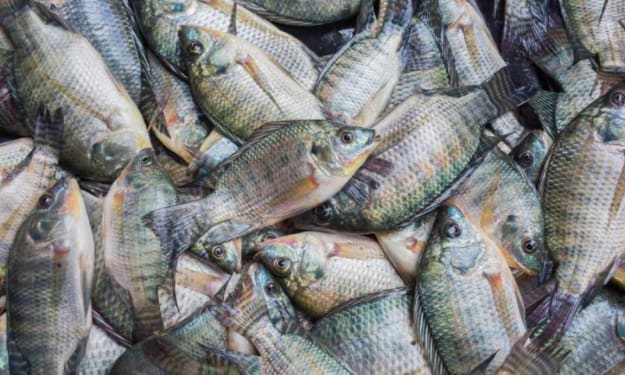
Certain types of fish that you should avoid eating
Let's discuss the benefits and potential risks of consuming fish. Fish is a rich source of vital nutrients, including protein and omega-3, which promote a healthy heart and overall well-being. However, not all types of fish are equal in terms of nutritional value, and selecting the wrong kind could have negative consequences. It's important to be aware of the best options available when purchasing fish. Additionally, we'll identify a type of fish that is frequently featured on restaurant menus and can live up to 150 years, but we advise against consuming it due to the accumulation of toxins over time. Toxins can have a detrimental impact on both the body and brain once they enter the bloodstream. Before we delve deeper, we ask that you remain with us to learn about two heart-healthy gifts that you will love. Tilapia, a commonly consumed fish in the United States, should be consumed with caution due to its high omega-6 to omega-3 ratio.
By Julio Javier3 years ago in Education
From Farm to Fork
In an era dominated by fast food chains and convenience-driven meals, a movement has emerged that celebrates the connection between food and its origins. The farm-to-table movement, with its roots in sustainability and conscious consumption, has taken the culinary world by storm, offering a unique and innovative approach to dining.
By Pradip Sarkar3 years ago in Education
Embracing Adventure
In a world where mundane routines often dominate our lives, there's something truly inspiring about taking a leap of faith and embracing the unknown. Such was the case when a seemingly simple question was posed to a drowsy 15-year-old: "Would you rather have ten thousand dollars or take a chance with the Mystery Box?" Little did they know that this lighthearted inquiry would lead to a whirlwind of excitement, pushing boundaries and redefining what's possible.
By nassar chadi hafiz3 years ago in Education