interview
Interviews with educators, innovative graduate students and individuals who've devoted their lives to the development of the world's youth.
Breaking Free from the Grip of a Narcissist
1. Understanding the Narcissist's Grip 1. The Cycle of Abuse and Manipulation The Cycle of Abuse and Manipulation is a common pattern in narcissistic relationships that can keep victims trapped and unable to break free. This cycle typically consists of four stages: idealization, devaluation, discard, and hoovering. During the idealization stage, the narcissist may love-bomb their victim, showering them with attention, compliments, and gifts. However, as the relationship progresses, the narcissist may begin to devalue their victim, criticizing, belittling, and even emotionally or physically abusing them. This can lead to the discard stage, where the narcissist may abruptly end the relationship or withdraw emotionally. However, the cycle often repeats itself, as the narcissist may attempt to hoover their victim back into the relationship with promises of change or affection.
By Stefan Toader3 years ago in Education
Interesting 25 Facts About The Light Bulb
1. Just ten percent of an incandescent light bulb’s energy produces light. The remaining ninety percent produces heat. In contrast, a CFL (Compact Fluorescent Light) bulb uses eighty percent less energy than a traditional bulb, and lasts about twelve times longer.
By Sriram Nadarajan3 years ago in Education
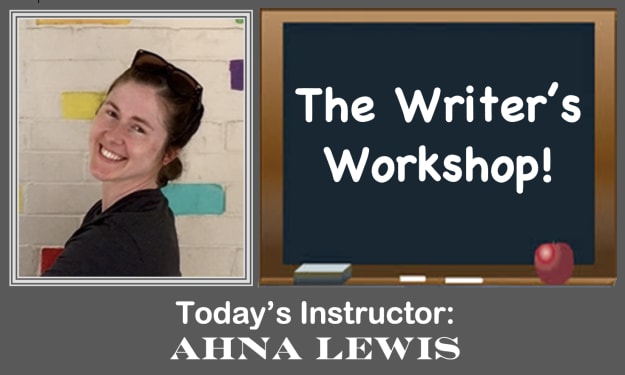
The Writer's Workshop
The Writer's Workshop is an educational series in which seasoned/educated writers/authors will share their insights on developing writing skills. This Workshop is sponsored by Rick Henry Christopher and the Facebook group Vocal + Assist
By Rick Henry Christopher 3 years ago in Education
Why People Of Pakistan Are Unemploed
Why People Of Pakistan Are Unemployed Pakistan is a developing country with a population of over 200 million people, and unemployment is a significant problem in the country. According to the World Bank, Pakistan's unemployment rate in 2020 was 4.4%, but this figure does not reflect the high levels of underemployment and informal employment. In this article, we will explore the reasons behind the high unemployment rates in Pakistan.
By Haris Mehmood3 years ago in Education
How we can Become the Best Programmer?
Introduction Programming has become an essential skill in today's digital world, and the demand for skilled programmers is growing rapidly. However, becoming a successful programmer is not an easy task, and it requires a combination of technical and non-technical skills, dedication, and a willingness to learn. In this guide, we will discuss various strategies, best practices, and tips to help you become the best programmer you can be.
By Muhammad Umer Farooq3 years ago in Education
Co-Polyester Thermoplastic Elastomers (COPE) Market by services and application & industry analysis 2028
Co-Polyester Thermoplastic Elastomers (COPE) Market Overview: Thermoplastic Co-Polyester Elastomers (COPE), often referred to as Thermoplastic Co-Polyester (TPC) or Thermoplastic Polyester Elastomers (TPE), are a form of polymer mixture that combines the qualities of thermoplastics and rubber. This makes it possible to build an item out of it with ease. Rigid polyester segments and flexible polyether segments are combined to create these elastomers. Co-Polyester Thermoplastic Elastomers (COPE) provide superior flexibility and flex fatigue as well as good resilience to weathering, chemicals, wear, and heat when compared to conventional rubbers. The desire for lightweight automobiles in the automotive sector is the main factor propelling the market for co-polyester thermoplastic elastomers (COPE) market.
By Pratik Pande3 years ago in Education
How to Calm Your Anxiety, From a Neuroscientist
Welcome back, anxiety.Most of us think of anxiety as a bad thing,something to be avoided at all costs.But what if it weren't? What if you could take all of that energy racing around your brain and your body and transform it into something helpful? The Way We Work] Global anxiety levels,both the clinical kind and what I call the everyday kind,have increased tremendously in recent years.And many of us are noticing this at work.We might think of anxiety as something that we'd rather just leave on the side of the road if we could. But anxiety is an important tool that arose during our evolution that we use to avoid danger. It's essential for our survival. So how come we don't even feel vaguely protected by it? It's because the volume of our individual and collective anxiety levels has been turned way up too high, and too much of even a potentially good thing like anxiety is bad So I would like to share two powerful, science-based tools for turning down the volume on our anxiety and helping us get anxiety back to its helpful, protective state. And both of these tools begin by connecting with our bodies. Tool number one is breath work. It's just simple, deep Slowly inhale and exhale. This can be one of the most immediate ways to calm anxiety, because deep breath directly activates the natural de-stressing part of our nervous systems called the parasympathetic nervous system. I recommend a boxed breathing approach, which is: inhale deeply on four counts, hold at the top for four counts, exhale deeply on four counts and hold at the bottom for four counts. You can even do this in the middle of any anxiety-provoking conversation, and no one will even know. Lots of people, from ancient monks to modern meditators, have figured this tool out and use it all the time. Tool number two: moving your body. This one also has immediate positive effects on your mood state, but for a different reason. Every time you move your body, you're releasing a whole bunch of beneficial neurochemicals in your brain. These neurochemicals include dopamine, serotonin, noradrenaline and endorphins, mood and reward-boosting neurochemicals that work to both increase positive mood states and decrease negative ones. I like to say that every single time you move your body, it's like giving yourself a wonderful bubble bath of neuro chemical for your brain. So when your boss's email comes in and your heart starts to race, what exactly can you do? If you're in an office, try taking a short walk around the block or even to the supply closet for some sticky notes. If you're working from home, put on two of your favorite songs and dance around the living room like no one is watching. Studies have shown that all it takes is ten minutes of walking to get those mood-boosting effects. But be creative with your movement session. Whether that's a quick session of power vacuuming a la Mrs. Doubtfire when you’re stressed about a deadline or doing a set of jumping jacks or getting off the elevator one floor early to do a power walk up that last flight of stairs before an important meeting.All of these possibilities will all help your anxiety levels come down. In fact, I tested this effect on my own NYU students First, I had them take an anxiety assessment before leding them in a movement session that included movements from kickbox and dance and yoga and martial arts together with positive spoken affirmations. Then I had them retake that same anxiety assessment again. What happened? After our movement session, their anxiety scores had decreased to normal levels. Now that's powerful, real-world example that you can use in your life today. So make sure to incorporate these bursts of activity in your day, and try one out next time you're feeling stress. It can really make your anxiety feel less all-consuming. Once you connect with your body and turn the volume down on your anxiety, two important things will happen. First, when that email comes in, you'll be in a better position to evaluate what about it makes you anxious.that you've taken on too much or that you feel insecure about a particular skill set? In other words, you'll be able to use this emotion, anxiety, for exactly what it was evolved to do: warn you about potential dangers so you can become aware of them and find ways to effectively and creatively address them in your everyday life. Second, once you find the warning signals in your anxiety,you'll be able to communicate with others. You might seek out advice from a trusted colleague when that difficult issue arises. Or you might even have a conversation with your boss about how to prioritize projects. Because you're no longer in fight-or-flight mode, asking for that support won't feel nearly as threatening. And one of the best gifts of approaching your anxiety in this way is that you will be able to notice those telltale signs of anxiety in everyone else around you, especially those forms of anxiety you're most familiar with. And what will that do? That will allow you to give that person a smile or a kind word to help them through that moment. In other words, your own form of anxiety can boost your personal super power of empathy. And I can't think of anything we need in this world today more than higher levels of empathy for one another Your take-home in all of this? If you breathe, move and take note of what your anxiet is signaling, you'll feel more fulfilled, more creative, more connected and less stressed overall.And that's my wifor every one of us
By Rameez Malik3 years ago in Education