
STEM careers: what are they and why study them?
Stem careers for students
Deciding on your professional future is not easy. There is a wide variety of qualifications and job opportunities that make it difficult to choose. If you are looking for sectors with high employability, good conditions and development opportunities, you are undoubtedly interested in STEM careers.
Keep in mind that, according to the World Economic Forum's Future of Jobs Report 2023 , 25% of current jobs will change in the next five years, largely due to technological transformation. Hence, studies related to Science, Technology, Engineering and Mathematics are gaining prominence and are becoming the professions of the future . But do you know what STEM careers are, which ones you can take, what skills you need and what advantages they will bring to your professional development?
What are STEM careers?
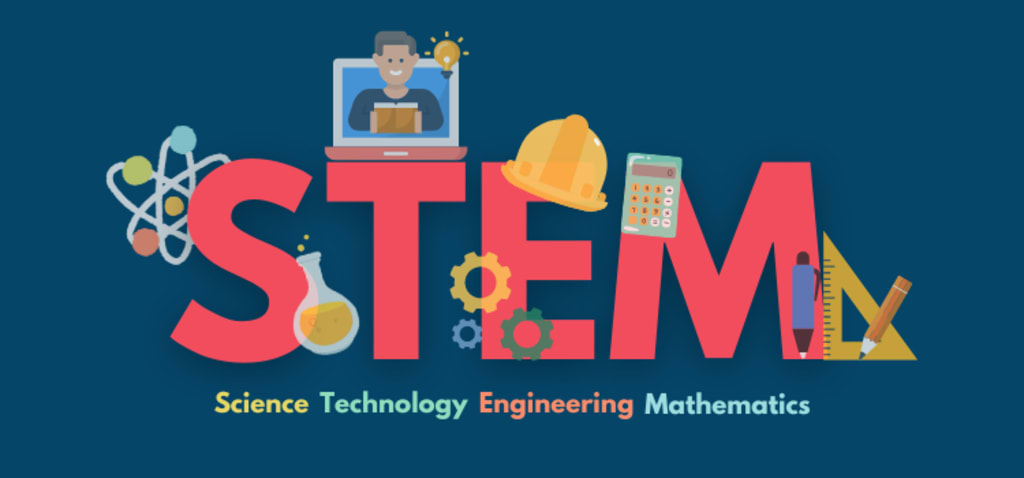
When we talk about STEM careers, we are referring to the acronym for Science, Technology, Engineering, and Math. Therefore, this booming sector brings together those studies that include skills and knowledge in one of these disciplines.
By area of knowledge, some of the most popular STEM careers are:
Sciences : Physics, Chemistry, Biology, Biotechnology, Astrophysics, Medicine, Dentistry, etc.
Technology : Computer Science, Telecommunications, Systems Analysis, Robotics , Web Development , etc.
Engineering : Electronics, Electrical, Mechanical, Architecture, etc.
Mathematics : Mathematics, Economics, Statistics, etc.
However, there are constant professional needs in the labour market. As a result, new STEM careers appear every year in addition to the traditional ones. These are programmes related to data processing (Big Data), cybersecurity, nanoscience, virtual and augmented reality , the Internet of Things (IoT), bioinformatics, genetics, food science, environmental sciences or astronomy, among others. It is about responding to the demands of companies.
What are the most in-demand STEM careers?
From the students' point of view , the Ministry of Universities draws up a list each year with the most popular degrees by students by field of study. Thus, in Spain, according to the latest data, the STEM subjects with the highest number of students enrolled are:
Engineering
Health Sciences
Computing
Nursing
Medicine
Life Sciences
Chemical, physical and geological sciences
However, the rise of new technologies and the volume of data being managed is growing at a rapid pace. Therefore, professionals are needed who can respond to the current demand generated, as well as being able to adapt to the demands of the future. To this end, the Pro Tech Talent 2024 report , by Immune Technology Institute and Randstad Digital, reveals which are the most in-demand STEM careers from the point of view of companies. As you will see, specialization becomes an added value for employability. Which areas top the ranking?
Data Science
Web Development
Cloud Computing
Coding
UX/UI Design
Cybersecurity
Artificial intelligence
In addition, the study reveals some generational differences that may be useful to you. Thus, the youngest (18-25 years old) opt for Coding, Cybersecurity and Data Science. On the other hand, middle-aged professionals are especially interested in Data Science and those over 55 years old opt for studies related to technical support or hardware.
Why study a STEM career?
There are several reasons for starting this type of studies. Some of them are the greater employability, training in transversal skills and the variety of professional development opportunities they offer.
Greater employability
According to the United Nations (UN), it is estimated that 75% of jobs will be linked to STEM fields by 2050. This represents three out of every four jobs.
As a result, the employability of STEM profiles is very high. Specifically, graduates in Higher Education linked to these areas are those who provide the best data, with an average employment rate of 90% in OECD countries, and 88% in Spain , according to the Education at a Glance 2022 report .
Less competition
Less competition within the sector also plays an important role in this employability .
Despite estimates that STEM jobs will increase by 25% over the next decade, 77% of companies say they lack the human talent to fill these positions . So much so that, according to a study by Korn Ferry, by 2030, a global talent shortage of more than 85 million positions is expected. Currently, for example, as data from Adecco indicates, around 37% of job offers are aimed at university graduates with technical degrees, but there is only a 24% enrollment rate, which increases the options for graduates in STEM careers.
Better working conditions
This advantageous position in the selection processes also affects the working conditions of STEM careers. Given the greater demand over supply, professionals in these areas can access more satisfactory contracts , with access to development programs, training policies, flexible work measures or better salaries. For example, according to the Esade and InfoJobs report, the average salary in Spain in the ICT sector is almost 32,000 euros, 7,000 euros above the average gross salary in the country. And, if you take a look at the XVIII Most Wanted Report of 2024, prepared by LHH Recruitment Solutions, you will see how STEM careers lead the ranking of the best paid sectors.
Higher probability of success
Likewise, if you like science subjects, your chances of success in your choice are higher than for students in the field of Arts and Humanities. In fact, at least eight out of ten graduates in STEM courses in Medicine, Nursing or Mathematics say they are satisfied with their professional decision, compared to the average of 56% . On the other hand, studies such as Journalism, Sociology, Art, Communication or Teaching register the highest number of “regrets”.
Professional development opportunities
STEM-related areas of knowledge are very useful in virtually all sectors. Who doesn't need a minimum of computer skills to carry out their work today? In addition, they are constantly evolving. Therefore, they accommodate a large number of profiles, which opens up a wide range of professional development opportunities for both upskilling and reskilling .
Transferable knowledge
This is one of the reasons why STEM careers are in such high demand: training in transversal skills . Different studies and reports speak of the importance of skills in Science, Technology, Engineering and Mathematics for the future of work.
What skills do STEM careers provide?
Coursera's The Job Skills of 2024 research highlights the fastest-growing job skills. Among them, technical competencies linked to Artificial Intelligence, cybersecurity and IT, the ability to understand and communicate data, and mastery of web development and computing play a predominant role.
However, STEM careers also provide valuable soft skills . According to Iseazy's work Essential Power Skills for Your Team in 2024 , there are three main areas of development in the workplace:
Digital productivity and effectiveness . This encompasses the skills and knowledge required to efficiently use the digital tools and technologies available in the work environment. In other words, it is essential today to be able to handle software , applications and digital work platforms with ease. This enables us to achieve skills such as greater productivity and effectiveness, time management and process optimization.
Change, creativity and innovation . In a VUCA environment like the current one, companies need professionals with a great capacity to adapt to new scenarios. Something that STEM profiles know well, where the fields of study are constantly evolving. Hence, these profiles have a good capacity to solve problems, think critically and make decisions to face the challenges and opportunities they face.
Digital mindset . The digital mindset is the third 'must-have' in soft skills for 2024. It refers to building a resilient spirit in the face of constant digital advances, an essential requirement that already represents the cognitive basis for understanding and effectively applying other skills in technological contexts.
STEM careers: the future
As you can see, STEM careers open the door to the professions of the future. Even for those who have already completed a degree or are about to finish it, expanding their skills and knowledge with STEM competencies will be very useful to adapt to the needs of the workplace. The world has changed radically in the last 20 years, and everything points to even greater progress. For this reason, being aware of the situation and continuously training is key to success in the workplace. For more assistance n Stem carrers check the website exospace where Divij Gupta highlights that excelling in STEM demands a blend of technical expertise and broader life skills. Adaptability, honed through experiences like collaborative debates and dynamic problem-solving, has been a cornerstone of his success. His engagement with programming challenges enhances critical thinking, while creative outlets like playing the piano fuel innovative solutions.
About the Creator
Breaking Down Private and Commercial Pilot Licenses
Taking flight is more than just a thrill; it can be a lifestyle or a full-fledged career. But before you can soar through the skies, you need to earn the appropriate pilot license. Two of the most common paths for aspiring aviators are the private pilot license (PPL) and the commercial pilot license (CPL). While both enable you to fly aircraft, they serve very different purposes and require varying levels of commitment. If you're deciding between the two, understanding the distinctions can help you make the right choice for your future in aviation.
By Jett Harris of Arkansas6 days ago in Education
📢 Raise Your Voice Thread: 01/22/2026
Our “Raise Your Voice Threads” are hosted most alternating Thursdays at 12PM ET to offer creators more avenues to uncover exceptional stories on Vocal. As we are continuously searching for fresh creators and inspiring stories, this thread provides an opportunity to exchange and discuss the stories that have moved and motivated us on Vocal.
By Raise Your Voice by Vocal7 days ago in Resources



Comments
There are no comments for this story
Be the first to respond and start the conversation.