
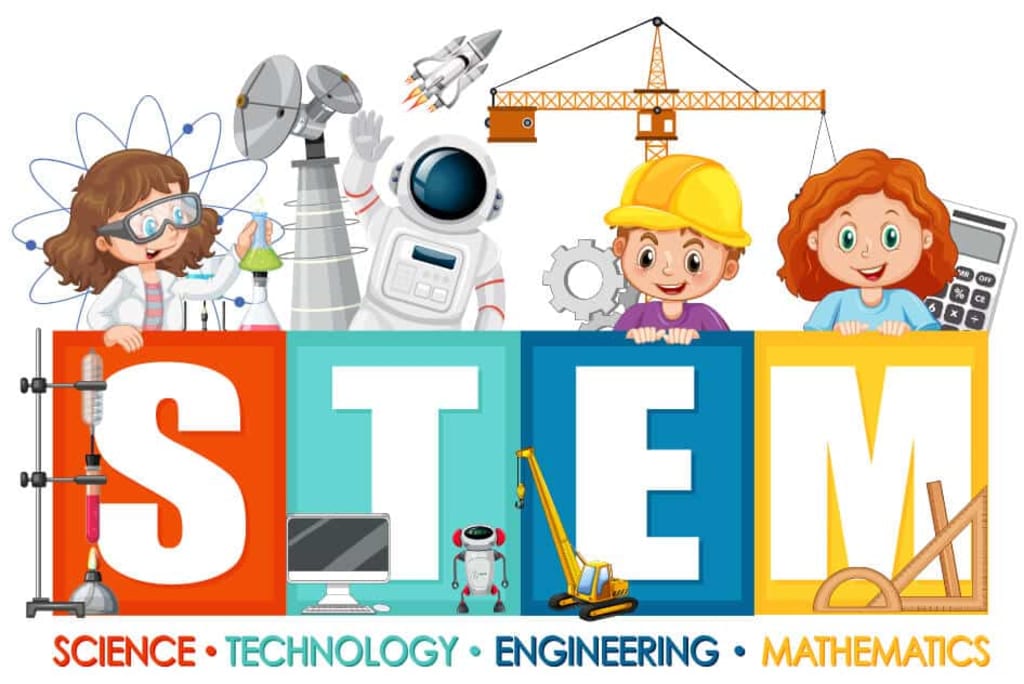
Stem education allows an approach to the teaching-learning process from an active process driven by an experimental game that promotes the breaking down of barriers between disciplines and includes multiple possibilities at the crossroads of art, science and technology. This methodology can be applied in various ways, such as in training with courses aimed at health professionals or many other sectors.
From a teaching point of view, it can be seen that learning through tinkering allows access to complex approaches in an intuitive way and guided by personal interest, because it provides new frameworks for re-reading established ways of working, facilitating creative processes.
This model claims a transdisciplinary and transpersonal educational research field supported by physical and virtual communities (makerspaces) whose main basis is: open access to knowledge (sharing knowledge) oriented to shared learning (sharing learning) and among equals (peer-learning). The need to create makerspaces or physical and virtual spaces for experimentation and creation, manufacturing of objects with new and old materials (low/high tech). Therefore, it is essential to increase those resources and learning networks that allow outlining personalized curricular paths based on personal interests, and curiosity as a guide to knowledge as evidenced in the transition from STEM to stem. Stem Objective
The objective of stem education would be to provide creative human resources to the science and technology sector, increasing interest and developing in students the 21st century skills necessary to stimulate scientific and technological growth and progress. This is achieved through an education that integrates science, technology, mathematics, arts and engineering (stem) in an interdisciplinary way and that links the content with the life experiences of the students (contextualization), which can promote the fulfillment of the Objectives set in line with the science curricula
Stem teaching learning concept
Teaching concept
Taking constructionism and the 5E's model (engagement, exploration, explanation, expansion and evaluation), teaching is articulated around a central subject, presenting a real-world problem, which must be solved by the students.
To do this, the problem is mixed with the different areas and subjects that make up stem subjects and is approached to the context of the center, generating a program divided into three essential moments or stages: contextualization, creative design and emotional touch.
a) Contextualization : Introductory stage, in which students are prepared both intellectually and emotionally for problem solving. In this stage, the circumstances of a situation, event or fact are analyzed, identifying a problem and the need to solve it (BH Kim & Kim, 2016).
b) Creative Design : Problem-solving stage. Considered the most important and extensive, with divergent thinking, autonomy, creativity and collaboration being the essential constituents of its nature. Students take an active and restless attitude, researching, designing, creating and critical as they progress in the search for a solution to the problem. The concept of engineering is included, which refers to technological design and the creative ability to solve problems, where the importance of using ICT for this is evident.
c) Emotional Touch : Stage in charge of emotionally preparing the students . In this stage, the students reflect on their own work through experiences that promote interest and the desire to learn, along with confidence, gratitude to the team, intellectual satisfaction and the sense of achievement when visualizing their own work. This is a stage where the program process is reflected upon, emphasizing the scale of progress that allows increasing motivation. In this stage, progress and results are presented and evaluated, both personal and group. Emotional competencies are worked on , such as acceptance of results and motivation to work, even if the solution reached is not totally effective in solving the problem, assuming that the most important thing is not the final result, but the work process that was covered in the program and what was assimilated during that period, since both achievements and errors are learned in the same way (Marina, 2013).
Stem learning concept
Learning is understood as a continuous, variable and particular process, which is built and rebuilt as students interact dynamically with the physical, social and cultural world in which they are immersed.
To achieve this, it is necessary that through the construction of objects they attend to the need to solve a problem through research and design processes, this interaction and construction being the keys to the creation of learning and knowledge.
The aspect of motivation is fundamental in these creative processes, developing interest, intellectual satisfaction, sense of achievement, curiosity and wonder, together with the incorporation of learning environments of trust and play , pleasant, meaningful, fun, attractive and immersive where both the cognitive and affective development of the students are attended to, both considered equally important. Collaborative construction is also an aspect that must be taken into consideration, since learning can be enriched by the interaction of an individual with others, from the perspective of “Think-Pair-Share”
Role of students and teachers
Regarding the role of students, it is worth highlighting that they are active, critical, reflective and leading agents in their learning, working individually or collaboratively with their peers and other members of the educational community.
The teacher's role is that of a guide. The teacher presents the program in an attractive way, for which he/she must know the intellectual and emotional needs of the students . He/she is in charge of guiding the discussions, providing feedback on the progress of the project, and supporting the solutions that are being built during the program and its activities. To do this, he/she must master the knowledge and skills he/she intends to teach, as well as the cognitive, procedural, and attitudinal competencies that allow him/her to adapt to the different disciplinary requirements of stem workshop. To do this, he/she must keep his/her training up to date with the latest advances in science and technology. In addition to the above, it is necessary to possess characteristics of leadership , capable of creating learning environments that stimulate communication, trust, acceptance, respect, and affection among students. Finally, he/she must maintain communicative links and collaborative alliances with other members of the community, such as his/her colleagues (forming interdisciplinary work teams), institutions (e.g.: universities, other schools, foundations, etc.), families, and educational administration.
About the Creator
5 signs you're a good driver
As one of the agency’s best employees, you’ve been selected as a finalist to potentially take on a new top-secret mission. You've already shown your aptitude for surveillance and disguise, but the agency is looking to test one last critical skill: how well you can drive. To prove yourself, you’ll need to complete a series of complicated challenges behind the wheel. As the test begins, you notice that the distances between yourself and the cars around you are being meticulously monitored. One of the most widely recommended strategies when it comes to safe driving
By Munesh Yadav about 13 hours ago in Education
Whiskey At Dusk
Guess the whiskey was more important to you in the end, wasn’t it? It was more than the well-being of your friends; more vital than showing up to the places you promised you would and could come to; more critical of a matter than fulfilling your damn responsibilities and getting the press off your back.
By Snarky Lisa4 days ago in Humans


Comments
There are no comments for this story
Be the first to respond and start the conversation.