
Stellar Evolution: The Life Cycle of Stars From Birth to Death
Stars are the engines of the universe. They light up galaxies, create the elements needed for life, and shape the cosmic landscape across billions of years. But like living organisms, stars are born, age, and eventually die. Understanding the life cycle of stars is one of the most fascinating topics in astronomy, revealing how the universe evolves over time.

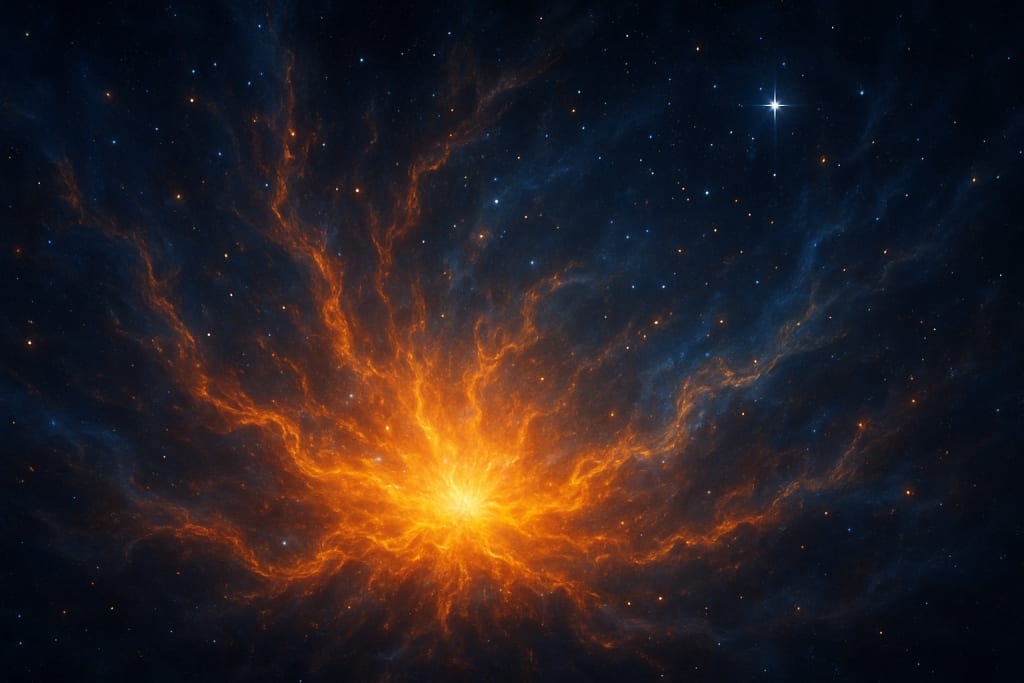
Every star begins its life inside a giant molecular cloud, also known as a stellar nursery. These enormous regions of gas and dust are so cold and dark that they are nearly invisible to the naked eye. However, when gravity causes parts of the cloud to collapse, the material forms dense clumps called protostars. As they continue to draw in gas, their temperature rises until nuclear fusion ignites.
Fusion is the heart of a star’s power. In the Sun, hydrogen atoms fuse into helium, releasing enormous amounts of energy. This process pushes outward, balancing the inward force of gravity. When these two forces are equal, a star reaches main sequence, the longest and most stable period of its life.
The Sun is currently in this stage, and it will remain so for another 5 billion years.
Stars come in many sizes, and their mass determines their entire life story. Massive stars burn hotter, brighter, and faster, while low-mass stars can live trillions of years. When a star exhausts its hydrogen fuel, it begins to evolve. For a Sun-like star, this means expanding into a red giant. The outer layers puff outward, while the core shrinks and heats up.
Eventually, the star sheds its outer layers, forming a planetary nebula—a glowing shell of gas. The remaining core becomes a white dwarf, slowly cooling over billions of years.
Massive stars follow a more dramatic path. After leaving the main sequence, they go through multiple fusion stages, producing heavier elements like carbon, oxygen, neon, and iron. When the core becomes iron, it cannot release energy through fusion. Gravity suddenly wins, crushing the core in less than a second. The result is a supernova explosion, one of the most powerful events in the universe.
Supernovae are not just spectacular; they are essential. They scatter heavy elements into space—elements that form planets, oceans, and even the calcium in our bones.
Depending on its mass, the collapsed core becomes either a neutron star or a black hole. Neutron stars are so dense that a teaspoon of their material weighs billions of tons. Black holes are even stranger—regions where gravity is so strong that nothing can escape, not even light.
The cycle continues as the material from dead stars helps create new stars in future generations. In this way, the universe constantly renews itself.
Stellar evolution tells a deep truth: we are made of star stuff. Every atom of carbon, oxygen, and iron in our bodies was created inside a star. The life cycle of stars is not just an astronomical process—it is our history written in the cosmos.
The Main Sequence: A Star’s Longest Life Stage
Once a star ignites nuclear fusion, it enters the main sequence, the longest and most stable phase of stellar evolution. Our Sun, for example, has been in the main sequence for about 4.6 billion years and will remain there for another 5 billion years.
During this stage:
The star fuses hydrogen into helium in its core.
It maintains a balance between gravity and outward pressure.
It shines steadily and consistently.
The length of the main sequence stage depends on the star’s mass:
Low-Mass Stars
Small stars, such as red dwarfs, burn fuel very slowly. They can remain on the main sequence for trillions of years, far longer than the current age of the universe.
Medium-Mass Stars
Stars like the Sun remain stable for billions of years, shining at a moderate temperature and brightness.
High-Mass Stars
Massive stars burn fuel rapidly and may only stay in the main sequence for a few million years. Though short-lived, they shine far brighter than smaller stars.
The star’s mass at birth determines almost everything about its life, including how long it will live and how it will eventually die.
Leaving the Main Sequence: The Red Giant and Supergiant Phases
Eventually, a star exhausts the hydrogen fuel in its core. Gravity once again begins to take over. What happens next depends on the star’s mass.
For Sun-like Stars: The Red Giant Phase
When a medium-sized star runs out of hydrogen:
The core contracts and heats up.
The outer layers expand outward.
The star grows into a red giant.
The diameter can increase hundreds of times. If the Sun became a red giant today, it would likely engulf Mercury and Venus and come dangerously close to Earth.
Inside the core, helium fusion begins, producing carbon and oxygen. This new phase lasts for a few hundred million years.
Eventually, the dying star becomes unstable. It sheds its outer layers in a gentle, colorful shell of gas called a planetary nebula.
The remaining core becomes a white dwarf, an extremely dense object roughly the size of Earth but far more massive. Over billions of years, the white dwarf cools and fades away.
Massive Stars: A More Violent Fate
The evolution of a high-mass star is far more dramatic and explosive.
These stars burn through their fuel at incredible rates. When hydrogen runs out, they begin fusing heavier and heavier elements—helium, carbon, oxygen, neon, and so on—forming layered cores like an onion.
But fusion hits a limit at iron.
Iron does not produce energy when fused, so the star cannot support itself. Gravity collapses the core in less than a second, triggering one of the most powerful events in the universe: a supernova.
A supernova explosion can briefly outshine an entire galaxy, releasing enormous energy and scattering elements like gold, iron, and uranium into space. These materials later form new stars, planets, and even living organisms.
What remains after a supernova depends on the star’s mass:
Neutron Star
If the core is 1.4 to about 3 times the mass of the Sun, it collapses into a neutron star—a city-sized object so dense that a teaspoon of its matter weighs billions of tons.
Black Hole
If the core is heavier, it collapses further into a black hole, a region of space where gravity is so strong that not even light can escape.
The Cycle Continues: Stars Create Life
Stellar evolution is not just the story of stars—it is the story of the universe itself. Every supernova explosion enriches the galaxy with heavy elements. Every dying star contributes materials that will one day form new stars and planets.
Our own Solar System formed from the remains of earlier stars. The calcium in your bones, the oxygen you breathe, and the iron in your blood were all created in the heart of a star or the explosion of a supernova
This makes stellar evolution deeply personal. The life cycle of stars is not only the engine of cosmic evolution—it is the process that made life on Earth possible
About the Creator
Keep reading
More stories from shahkar jalal and writers in Education and other communities.
The Expanding Universe: How Fast Are We Really Moving Through Space?
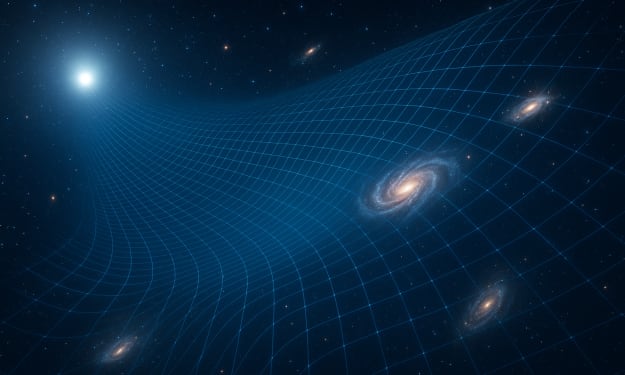
Understanding the expanding universe begins with one of the most important discoveries in modern astronomy: Edwin Hubble’s observation that galaxies are moving away from us, and that the farther a galaxy is, the faster it appears to recede. This relationship, known as Hubble’s Law, provided the first strong evidence for the Big Bang theory—the idea that the universe began as a hot, dense point and has been growing ever since.
By shahkar jalal2 months ago in Education
The Energy Pivot The State of Russia’s Oil and Gas in 2026
For decades, this was the "world's gas station": Russia's pipeline network to Europe was the veins of the world economy. By 2026, that aura is dull and those veins are rerouted out of Europe. Since the collapse of the Soviet Union, the Russian oil and gas sector is facing the largest structural change.
By Neeraj kumar3 days ago in Education
What’s the best position to sleep in?
In the 1970s, psychoanalyst Samuel Dunkell proposed a curious, albeit almost completely unsubstantiated, theory that the position you sleep in reflects your personality. For example, preferring to snooze in the so-called royal position indicated self-confidence, while sleeping semi-fetal meant you’re sensible and well adjusted. While Dunkell’s ideas lack any definitive proof, how we sleep can impact our health. So, what’s the best position to sleep in? Sleep positions go by countless creative names—
By Munesh Yadav2 days ago in Education


Comments
There are no comments for this story
Be the first to respond and start the conversation.