
special need education awareness
Supporting and Nurturing Special Needs Children: Strategies for School and Home


Every child is unique and special in their own way, and this is especially true for children with special needs. Special needs children often require extra attention, care, and support to thrive, both at school and at home. As a parent or teacher of a special needs child, it can be challenging to know how to best support and nurture them. In this article, we'll explore some strategies for monitoring and improving the behavior of special needs children, both in the classroom and at home.
First and foremost, it's important to understand that every special needs child is different. Each child may have their own unique strengths, weaknesses, and challenges. As a result, there is no one-size-fits-all approach to working with special needs children. Instead, it's important to take a personalized approach that is tailored to the specific needs of each child.
One effective strategy for supporting special needs children is to establish a consistent routine. Children with special needs often thrive on routine and structure, as it helps them feel more secure and in control. Whether at school or at home, it's important to establish a predictable routine that provides a sense of stability and consistency. This may include specific times for meals, naptime, playtime, and other activities.
In addition to establishing a routine, it's important to set clear expectations and boundaries for behavior. Special needs children may struggle with impulse control, and may not always understand social norms and rules. As a result, it's important to set clear expectations and boundaries for behavior, and to consistently reinforce these expectations. This may involve providing positive reinforcement for good behavior, such as praise or rewards, and providing consequences for negative behavior, such as time-outs or loss of privileges.
Another important strategy for supporting special needs children is to provide plenty of opportunities for sensory play and exploration. Children with special needs may have sensory processing issues, which can make it difficult for them to process and respond to sensory input in the same way as their peers. By providing opportunities for sensory play and exploration, such as playing with different textures or engaging in sensory activities, you can help your child develop their sensory processing skills and improve their ability to respond to sensory input.
At school, it's important to work closely with your child's teacher to monitor their behavior and progress. This may involve developing a behavior plan or individualized education plan (IEP) that outlines specific goals and strategies for supporting your child's learning and development. It's important to communicate regularly with your child's teacher to stay informed about their progress and any challenges they may be facing.
In addition to working with your child's teacher, it's also important to seek out resources and support services that can help you support your child's learning and development. This may include working with a speech therapist, occupational therapist, or other specialist who can provide targeted interventions and support for your child's specific needs.
At home, it's important to create a supportive and nurturing environment that encourages your child's growth and development. This may involve providing plenty of opportunities for play, exploration, and learning, as well as engaging in regular activities that promote physical and emotional well-being, such as exercise or mindfulness practices.
Finally, it's important to be patient and understanding when working with special needs children. Children with special needs may require extra time, attention, and support to reach their full potential, and it's important to be patient and understanding throughout the process. By providing consistent support, encouragement, and guidance, you can help your child thrive and reach their full potential.
In conclusion, supporting and nurturing special needs children requires a personalized and tailored approach that takes into account the unique needs, strengths, and challenges of each child. By establishing a consistent routine, setting clear expectations and boundaries, providing opportunities for sensory
About the Creator
Diana Wenceslaus
JUST IMAGINE
Keep reading
More stories from Diana Wenceslaus and writers in Education and other communities.
Designing a Meaningful Future: Strategic Planning for Mission-Focused Entrepreneurs
In today’s evolving business landscape, entrepreneurs are increasingly motivated by more than financial success. Many are building companies around a mission to create social, environmental, or community-driven impact. While passion and vision ignite these ventures, strategic planning transforms purpose into a lasting, scalable business. For mission-focused entrepreneurs, planning is not about restriction but about clarity, alignment, and sustainable growth.
By Mario Payne4 days ago in Education
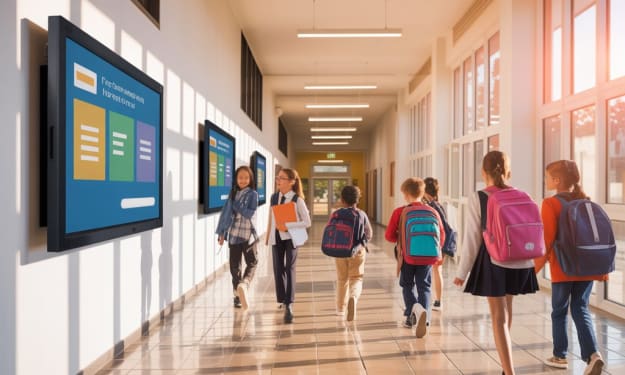
Digital Signage Solutions Supporting Communication in Schools
I still remember the chaos of my first week as a communications coordinator at a mid-sized university. Between emergency alerts that never reached students, event posters peeling off bulletin boards, and faculty members who couldn't find the right room for meetings, I realized our campus communication system was stuck in the 1990s. That experience changed how I think about information flow in educational settings.
By Jerry Kane 6 days ago in Education



Comments
There are no comments for this story
Be the first to respond and start the conversation.