
How Atmospheres Shape the Habitability of Planets
Space

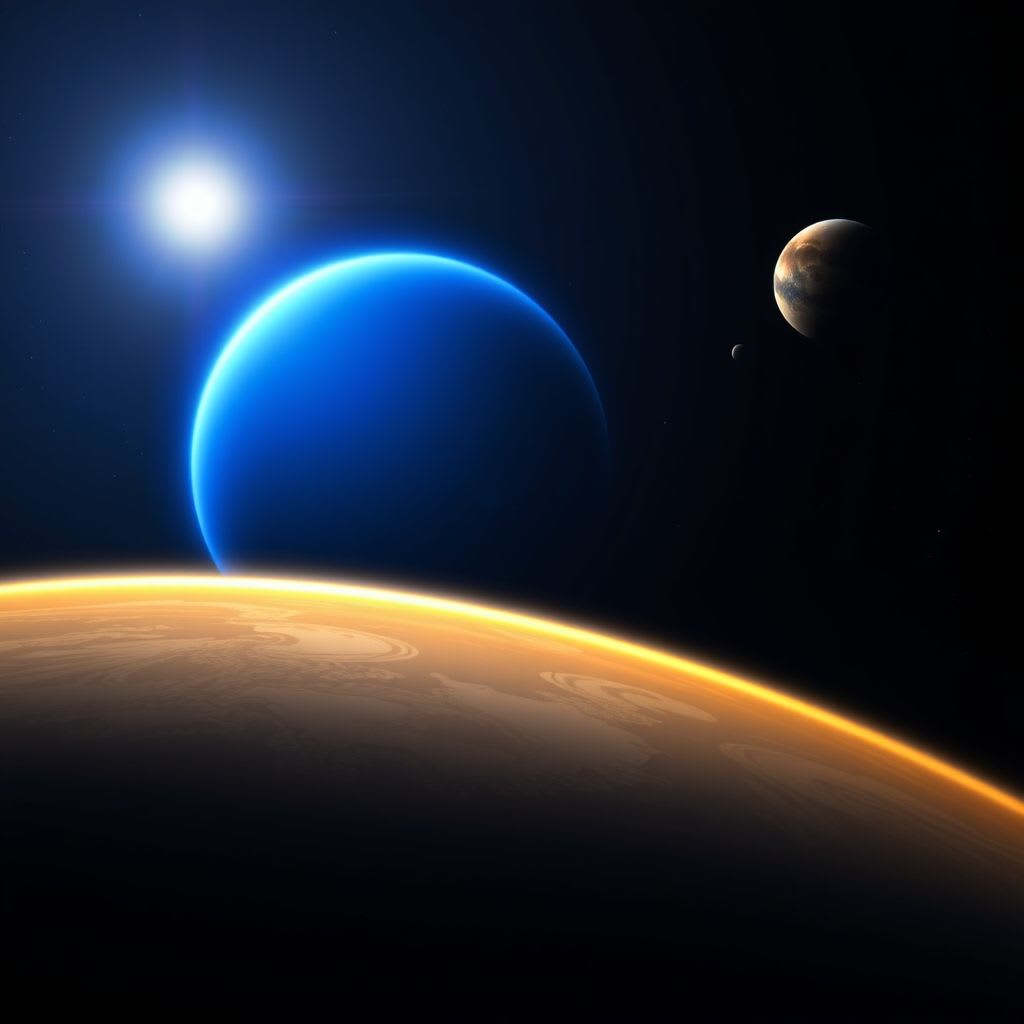
When we dream about life beyond Earth, oceans and rivers are usually the first images that come to mind. Water is often called the cradle of life, but having seas and lakes doesn’t necessarily mean a planet can sustain thriving ecosystems. The invisible hero of habitability is something far less tangible yet equally vital — the atmosphere.
A planet’s atmosphere does far more than simply provide “air to breathe.” It regulates climate, shields the surface from cosmic threats, and creates the delicate balance of conditions necessary for chemical reactions and, eventually, living organisms. Without the right kind of atmosphere, even the most Earth-like planet could be little more than a lifeless rock.
A Protective Shield Against the Cosmos
Earth’s atmosphere acts like a massive, invisible shield. It blocks a dangerous portion of the Sun’s ultraviolet radiation, burns up countless meteoroids before they strike the ground, and softens the deadly blow of cosmic rays. Without it, our planet’s surface would resemble the Moon: scarred with craters, blasted by radiation, and far too hostile for anything more complex than microbes.
This shielding role is also why astronauts need such advanced suits and spacecraft when they leave Earth. Out in space, even a short exposure to cosmic radiation can be devastating, while here on Earth, we rarely think about it — because the atmosphere quietly does the hard work for us.
The Greenhouse Effect: Friend and Foe
One of the most essential roles of an atmosphere is temperature regulation. Gases like carbon dioxide, methane, and water vapor trap some of the heat radiating from the surface, keeping the planet warm enough for liquid water to exist. This is the so-called greenhouse effect, and despite its negative reputation, it is the very reason life on Earth exists at all.
Without greenhouse gases, Earth’s average temperature would plunge to about −18 °C (0 °F), turning our planet into a frozen wasteland. Instead, the average is a comfortable +15 °C (59 °F), making Earth’s landscapes lush, oceans liquid, and climates relatively stable.
But too much of a good thing can be catastrophic. Venus offers a cautionary tale. With an atmosphere more than 90 times thicker than Earth’s, made mostly of carbon dioxide, its greenhouse effect is out of control. The surface bakes at over +460 °C (860 °F) — hot enough to melt lead. On the other hand, Mars has the opposite problem: its thin, fragile atmosphere cannot hold onto heat, causing nighttime temperatures to plummet to −100 °C (−148 °F).
Both planets show how crucial it is to have not just any atmosphere, but the right atmosphere.
The Breath of Life: Atmospheric Composition
What an atmosphere is made of is just as important as how thick it is. On Earth, about 21% of the air is oxygen, which animals breathe, while plants and microorganisms recycle carbon dioxide. This delicate balance enables complex ecosystems to flourish.
Imagine a world where the air is dominated by methane or ammonia. To us, it would be toxic, but alien life forms — if they evolved under those conditions — might thrive. Astrobiologists speculate that exotic forms of life could emerge in such atmospheres, perhaps using chemicals other than oxygen to fuel their metabolisms.
This is why telescopes like the James Webb Space Telescope are hunting for “biosignatures” — traces of gases like oxygen, ozone, or methane in the atmospheres of distant exoplanets. The very composition of a planet’s atmosphere could reveal whether it harbors life, or at least the conditions for it.
Pressure, Weather, and Climate Stability
Atmospheric pressure also dictates whether water can exist as a liquid. If pressure is too low, water boils away into vapor — just as it does on Mars. If pressure is too high, oceans may become superheated, acidic, or even trapped beneath crushing layers of gas, as scientists suspect on some massive exoplanets.
Beyond pressure, the atmosphere drives weather and climate. Winds distribute heat from the equator toward the poles. Clouds form and bring rain, snow, or storms, ensuring the recycling of water. Without this circulation, some regions would scorch endlessly under the sun while others would remain permanently frozen.
This dynamic climate system is part of what makes Earth so diverse, from tropical rainforests to icy tundra. It is also what makes atmospheres one of the most complex and fascinating factors in planetary science.
Searching for the Perfect Balance
When astronomers talk about “habitable planets,” they are not just looking for worlds in the so-called “Goldilocks zone,” where temperatures allow liquid water. They also ask:
- Does the atmosphere shield the surface from deadly radiation?
- Can it trap enough heat, but not too much?
- Does it contain gases that could support life?
- Is the climate stable over long timescales?
Only when these conditions align does a planet stand a chance of supporting ecosystems as rich and varied as Earth’s.
Lessons for Our Own World
Studying alien atmospheres also forces us to reflect on our own. Earth’s air has remained relatively stable for billions of years, but human activity is now altering its composition at an unprecedented rate. Climate change is a stark reminder of how fragile this balance really is.
By learning how atmospheres work on other planets, we gain not just insight into alien worlds but also a clearer understanding of how to protect the one world we already know is alive.
An atmosphere isn’t just a blanket of air. It is the thin, invisible thread connecting a lifeless rock to the possibility of oceans, forests, civilizations, and dreams. Without it, there is no “home.”
About the Creator
Keep reading
More stories from Holianyk Ihor and writers in Education and other communities.
How Do Astronauts Return to Earth?
When we think about space missions, most people picture the thrilling moment of launch: a rocket roaring into the sky, flames and smoke trailing behind it. Yet, while liftoff may look like the most dangerous part of a mission, the journey home is often even more complex and nerve-wracking. Returning astronauts must not only re-enter Earth’s atmosphere at tremendous speeds but also land safely on solid ground—or in the ocean—after months in orbit.
By Holianyk Ihor5 months ago in Education
The Insurrection Act
Introduction The Insurrection Act is a law in the United States of America. It allows the President of the United States to use the military to deal with serious problems inside the country. This law is very important because it can be used when there is a rebellion, violence, or lawlessness that cannot be controlled by normal police forces. The act has been in use for many years and is sometimes a topic of debate because it gives the President significant power.
By Farhan Sayeda day ago in Education
Creating Stability With Property During Uncertain Economic Cycles
Periods of market uncertainty can challenge even the most careful financial plans. Stock prices may swing sharply. Savings can lose value due to inflation. News headlines often create fear and hesitation. In these moments, many investors look for dependable ways to protect their wealth. Protecting investments during market uncertainty through property ownership remains a practical and proven option because property is based on real use, steady demand, and long term value.
By Accrue Real Estate7 days ago in Education
Miss Persephone's Manual to a Seemingly Ordinary Life
Miss Persephone was found at the dining table, her blue eyes swollen, her tears arriving and retreating like the tides of the ocean. Earlier that day, her family had visited her in the retirement home where she had lived for eight years. It was her eightieth birthday.
By Imola Tótha day ago in Fiction




Comments
There are no comments for this story
Be the first to respond and start the conversation.