
"Social Media's Influence on Young Minds: Building Bridges or Forming Bubbles?"
"Exploring the Ways Digital Networks Shape Academic and Career Journeys for the Next Generation

Introduction:
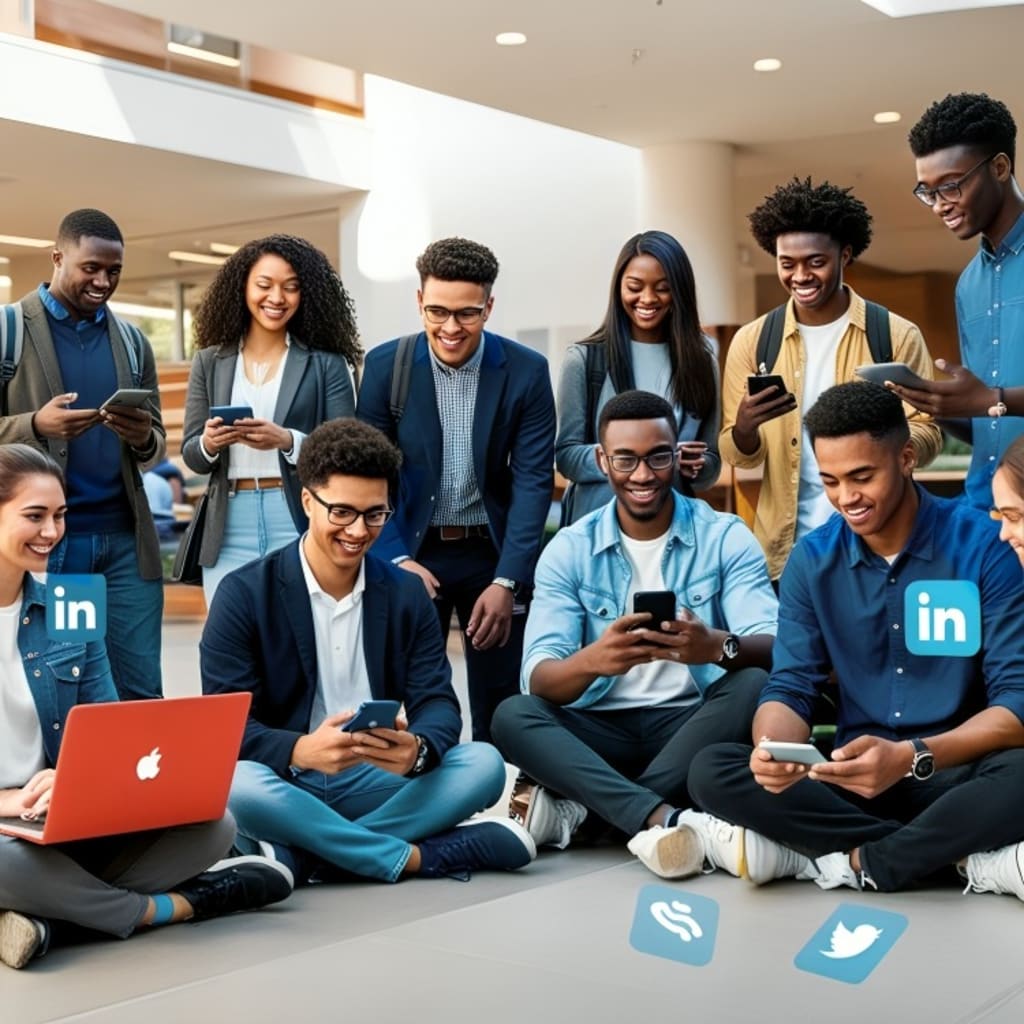
Almost any type of life today comes attached to the very influential force of social media. Social media is very deep among young adults in particular who are studying through academic institutions or on campus career-building pathways. Many youngsters find the online presence offered by entities like LinkedIn, Instagram, and Twitter quite appealing. Such media forms enable students to make connections with working professionals for a deeper networking procedure so that they can gauge the depth of careers out there. There's even a possibility of having an online portfolio that represents individual talents and achievements in unique fields. Social media, in this digital age, has become such a powerful tool where the user can share his achievements and stay updated about trends in education and employment.
Social media affects college and career goals in many ways—it is both an asset and a risk. While these social networks may help open up new doors, they also take away from activities and could compromise personal information or even mental well-being. A careless post or unmanaged profile can harm a future opportunity, while too much use can hamper one's productivity and attention to focus. The double edge of social media will therefore be discussed herein to investigate both the possible positive sides and negative ones of it. Understanding these dimensions will help students and young professionals use social media wisely and weigh its benefits against the risks.
Part 1: The Upside of Social Media in College and Career Growth.
Networking Opportunities
While providing new avenues to modern living, social media has significantly woven itself into almost everything today. Most young adults will have this very true experience during their time in school and pursuing their careers. For instance, through portals like LinkedIn, Instagram, and Twitter, students enjoy new avenues for connecting, learning, and sharing the stories. Such avenues help them network with professionals, learn about career opportunities, and even set up an online portfolio with unique skills and accomplishments. The internet age has actually developed social media into such a potent tool. For instance, users can boast of their achievements and always remain updated with trends in education and employment.
However, it is both a golden opportunity and a significant risk as far as college and career goals are concerned. It unlocks doors but sometimes becomes a source of distraction, compromises personal privacy, or even hurts mental health. A reckless post, for instance, can spoil one's future prospects just as an uncontrolled profile would take a toll on the level of productivity or the concentration of the people in question. This article discusses the double-edged nature of social media, its benefits and drawbacks. Understanding these dimensions can help students and young professionals use social media effectively, balancing the benefits against the risks involved.
Building a Personal Brand
This is indeed a great way in which students can differentiate themselves by means of achievements, skills, and personality on Instagram, Twitter, and LinkedIn. Actually, through sharing of projects or academic milestones and relevant experience, the student may really create an online persona that emphasizes the student's strengths and aspirations. For instance, an environmental science student can share pictures of the fieldwork on Instagram, recent research on Twitter, and academic background on LinkedIn. All these platforms enable students to creatively and professionally demonstrate how much they care about the field, thus attracting similar connections and opportunities.
A well-curated personal brand also signals professionalism to colleges or employers. What's critical is when admissions officers or recruiters look at a profile that really shows interest and expertise—that it's initiative, engaged, and even forward-thinking. Especially for students coming into competitive fields, this can give them that more polished online presence above and beyond what the resume alone provides. Third, a thoughtful social media presence can be reassuring, showing that a candidate can represent themselves professionally. This means that developing a personal brand is an investment in oneself for the future, demonstrating to the world the skills and potentials they have to offer.
Learning Resources and Communities
Such wealth, particularly in community-based support and abundant learning resources, on YouTube, Reddit, and Discord, is important for both students and professionals. There are thousands of educational channels hosted on YouTube, ranging from coding tutorials to detailed descriptions of hard academic concepts on topics such as physics and mathematics to economics. For example, "CrashCourse" and "Khan Academy" are free high-quality video channels that break up difficult topics into segments which students can learn at their own pace outside of a regular classroom. These tools would be very useful for studying during exam time or studying a new field.
The other two are the ways in which learning can take place through joining specific communities on Reddit and Discord. For example, on subreddits such as r/AskAcademia and r/learnprogramming, there are plenty of resources and guidance from peers in the many subjects that range from advice on academic matters to practical skills in software development. In Discord, members have options for real-time chats about topics they are interested in, which they share with one another, even going as far as working together on a project. Design, coding, and research-focused servers let students interact on real problems that exist in the real world, and sometimes that's done side by side with professionals.
Countless students can use these applications in learning skills or finding connections of people in similar fields they are interested in. Some aspiring software developers trace the start of their careers back to free YouTube programming tutorials and community help on Reddit. Through interactions with such communities, learners not only build knowledge but also seek mentors, carry out joint projects, and establish networks that enhance them both in academics and other professional growth.
Part 2: The Potential Downsides of Social Media
Distraction and Time Wastage
Social media is an immersive experience, which is rather engaging but can also get one distracted and waste valuable time. Scientific research has indicated that platforms such as Instagram, TikTok, and Snapchat are designed for endless scrolling, using algorithmic techniques that feed individuals new, personalized content based on their behavior. Therefore, this design makes social media addictive because users often feel the need to keep up with what is going on, checking their feeds several times an hour. This can cause many students and young professionals to procrastinate while doing very little in study or in fulfilling assignment work or job responsibilities.
Research findings about how social media usage impacts productivity and performance. According to an American Psychological Association study, frequent users of social media also claimed that they could not concentrate and even failed to complete work. This happens because constant notifications, alongside the temptation of "just a few minutes" of scrolling, break concentration. For instance, research conducted at Ohio State University found that the more students spent their time on social media, the lower grades and satisfaction levels were seen among them as compared to those who used social media less. Such results might indicate the vicious cycle of how social media provides avenues for distraction, thus being able to influence academic and job performance to impair attaining the intended college and career objectives.
Privacy and Digital Footprint Risks
Social media activity leads to a permanent digital footprint, which, if not handled with care, will come back to haunt students' future college or career options. Every post, picture, or comment is an addition to an individual's online presence, often available to admissions officers, recruiters, or potential employers. This inappropriate content—be it unprofessional language, controversial opinions, or irresponsible behavior—can place candidates in a bad light and harm their chances of being accepted or employed. For instance, there have been cases where admission to college was revoked or job offers were withdrawn because of inappropriate posts on the students' social media pages when such checks were done.
It is wise to "clean up" social media by looking at past posts and removing any content that might be considered unprofessional or offending. Furthermore, configuring privacy settings on platforms like Facebook and Instagram limits who can view your personal information, meaning that only selected content will be viewed publicly. Best practices for professional online presence include the sharing of accomplishments, industry-related insights, and positive interactions, but exclude highly personal or divisive topics. This allows students and professionals to have a proper digital footprint of maturity and preparedness in order to enhance an authentic, solid personal brand based on college and career aspirations.
Negative Mental Health Effects
Social media is affecting mental health a lot and leads to anxiety, low self-esteem, and the culture of comparison. Most of the applications, including Instagram and TikTok, show idealized, edited pictures of people's lives that can make users compare themselves unfavorably with others. Constant comparison may also lead to feelings of inadequacy and low self-esteem because people may feel they are not good enough compared to the "perfect" images they view online. For one, the stress of appearing successful, attractive, and happy may build anxiety, which is highly prevalent among young adults in the process of self-formation.
Studies have emphasized these concerns. In one study, university researchers found that lower levels of social media use correlate well with improved mental well-being. Participants reported lower levels of depression and loneliness when participants decreased their time on platforms. Other studies, published in The Journal of Social and Clinical Psychology, found that the more time spent on social media, the more severe the symptoms of depression and anxiety were, mainly due to comparison with peers. This study indicated mental health problems caused by excessive social media use and emphasized that only a moderate amount of screen time would guarantee healthy and realistic attitudes toward life on the Internet as the best emotional well-being strategy.
Part 3: Balancing Social Media with College and Career Goals
Tips for Safe Social Media Use
An excellent way to keep safe usage of social media is always to change your privacy setting so that it controls to whom your private information, posts, etc. should reach. The customization of personal privacy settings for Facebook, Instagram, etc. allows users to manage who can see the contents. Hence, it becomes necessary that one goes through the respective privacy settings in order to ensure that it reaches the right and intended viewer group. Another aspect of safety is responsible content sharing; before posting, one should consider how a post might reflect professionally. Sharing achievements and career interests enhances your online persona, and one avoids controversial or too personal content and maintains polish.
Tools that track or limit screen time—Apple's Screen Time or Android's Digital Wellbeing, for example—are super helpful in keeping social media productive. Setting daily limits or reminders for social media apps can help prevent excessive use, making social media a tool and not a distraction. Productivity tools such as LinkedIn's "Learning" feature or Twitter lists allow users to focus on educational or career-enhancing content rather than unrelated posts. Students and professionals can have an online presence that supports their academic and career ambitions without becoming a hindrance by being intentional with content and setting boundaries.
Crafting a Positive Digital Identity
This would create a presence and excellent college and career opportunities that would highlight the skills, achievements, and professionalism of individuals. Responsible curation of profiles on any website such as LinkedIn, Twitter, and Instagram keeping on projects, internships, certifications, or many relevant skills that point a message about expertise and keen interest in that given area. For example, a graphic design undergraduate should post his portfolio on both Instagram and LinkedIn to take advantage of these as online display products.
An ideal online profile would be well- organized while not exposing unnecessary personal details but focusing more on professional interests. For example, LinkedIn works well with professional head shots and clear job descriptions of your key skills projects displayed—that all gives a very polished look in the eyes of the recruiter. Or unprofessional photos, poor grammar, or polarizing content that's going to really hurt the image. Too much of personal life or controversy-related posts can divert one's professional brand and, therefore, make the candidate less reliable or less focused.
A good digital identity is purposefully built with the choice of posting wisely, being relevant for its content, and thoughtfully engaging others online. That will help in credibility enhancement but also opens avenues of academic and career opportunities because it brings appropriate connections and opportunities to the person's life.
Conclusion:
Social media has both positive and negative impacts on college and career goals. It can be a facilitator or an inhibitor. For example, LinkedIn, Twitter, and Instagram are the platforms on which students and professionals create a network, learn new skills, and showcase their achievements. This can give a candidate added appeal to colleges and employers and unique opportunities in personal branding and career development. The real challenges associated with distraction, bad digital footprint, and psychological impacts arising from comparison culture are distractions that, left unmanaged, can hinder academic and professional performance.
To tackle these highs and lows, it is imperative to take informed decisions regarding online activities. Content sharing with awareness, setting privacy controls, and applying productivity tools all help in keeping a professional and focused online presence. By approaching social media with a purpose—hitting the positive notes by focusing on their achievements, being positive about what is going on in their world, and simply not engaging in unnecessary time spent staring at screens—the student and professional can best utilize its benefits without giving in to its pitfalls. Social media should be used as a tool that supplements one's goals, such as making college and careers better instead of worse. Balancing awareness with proper use creates a productive, positive, and safe use of social media.
About the Creator
Anand Lodaya
I am new to writing. Trying my best to gain knowledge on content writing, Started during from scratch ,and through my hard work want attain my goal in life. Need everyone's blessings.
Keep reading
More stories from writers in Education and other communities.
Competitive Distance Running Excellence Built on Repeated High Race Placements
Competitive distance running rewards athletes who can perform well again and again. One strong finish is impressive, but multiple high placements in recent races show true consistency. These results point to smart training, clear focus, and the ability to manage pressure over time. This article explores how competitive distance running athletes achieve repeated success, why high placements matter, and what helps runners stay near the front of the field.
By Daniel Podor3 days ago in Education
Is Pharmacy Tech a Good Career Choice for 2026?
Given the recent shifts in the market and AI automation, people are now well aware that economic shakeups can drastically hinder their income sources. This is causing a lot of people to switch careers, and a majority of people are targeting healthcare roles. However, not all allied healthcare roles are created equal. Also, you can aim to become a medical assistant, but if you do not want to deal with patients, the ideal role for you is that of a Pharmacy Technician.
By Meaghan Howe3 days ago in Education
Wild Card Weekend Recap: What Happens Now?
I think I figured out why I love Wild Card Weekend so much. It's because it's the first playoff anything of the calendar year. The NFL season starts in the fall, and once upon a time, the champion was crowned either on or slightly before New Year's. The evolution of the NFL schedule has resulted in the playoffs starting just into the New Year, and currently, the final week of the season falls on the first weekend of the New Year, with Wild Card Weekend coming a week after that. So yes, chronologically, the NFL's Wild Card Weekend serves as the first playoff anything of the calendar year.
By Clyde E. Dawkins5 days ago in Unbalanced




Comments
There are no comments for this story
Be the first to respond and start the conversation.