
Small But Eye-Opening Care Tips for Your Higher School Education
Small Care Tips for Teenage Education Success


Hey there! If you're in high school, you're probably hearing a constant stream of "study harder," "get good grades," and "think about your future!" It can feel overwhelming, like you're on a treadmill that just keeps getting faster.
I get it. My name is Linnea, and I've been where you are. Through my own experience and a lot of trial and error, I've learned a secret: thriving in high school isn't always about giant, sweeping changes. More often, it's about the Small But Important Things (SBIT)—the subtle shifts in your habits and mindset that, over time, create massive results.
My opinion is this: Your high school education is a project you manage for yourself, not just something you do for your teachers or parents. Taking "care" of it means being strategic and kind to your future self. The goal isn't perfection; it's building a system that reduces stress, boosts your learning, and leaves you feeling in control.
Let's break down some of these eye-opening SBITs that you can start using today.
SBIT #1: Master Your Environment with the "Phone Parking Lot"
The single biggest drain on your focus is likely within arm's reach. Telling yourself "I just won't check it" is a battle you'll often lose. The SBIT is to change your environment so you don't have to rely on willpower.
The SBIT Approach: Create a physical "Phone Parking Lot" during homework sessions.
How to do it step-by-step:
- Get a Box or Basket: Find a small box, a drawer, or even just a specific spot on the other side of the room. This is your "Parking Lot."
- Set a Timer: Decide on a block of focused work time—25-45 minutes is a great start. Use a physical kitchen timer or a website like tomato-timer.com on your computer.
- Park It and Power Up: When your timer starts, your phone goes on "Do Not Disturb" and into the Parking Lot. It is out of sight and out of reach.
- Earn Your Break: When the timer goes off, you get a 5-10 minute break to check your phone, walk around, and recharge. Then, repeat.
Why it works:
This small act physically separates you from the distraction, freeing your brain to dive deep into your work without the constant pull of notifications.
SBIT #2: Stop Highlighting, Start "Question Storming"
We’ve all done it: read a page and highlighted half of it in yellow. It feels productive, but it’s a passive activity that doesn’t create strong memories.
The SBIT Approach: Replace passive highlighting with active "Question Storming" in the margins.
How to do it step-by-step:
- As You Read, Get Curious: Keep a pen in your hand. Your goal is not to mark what's important, but to ask questions about the text.
- Write the Questions Down: In the margin of your book or your notes, jot down every question that comes to mind. For example: If you read, "The Treaty of Versailles placed full blame for WWI on Germany," you would write: "Why was this the case? How did the German public react to this? Was this fair?"
- If you read a science concept, ask: "How is this different from what we learned last chapter? Can I think of a real-world example of this?"
- Seek the Answers: These questions now become your study guide. Answering them is a much more active and effective form of studying than re-reading highlighted text.
Why it works:
This forces your brain to engage with the material, creating neural pathways that lead to true understanding and better recall during exams.
SBIT #3: The 5-Minute "Brain Dump" Before You Start
Ever sit down to study, but your mind is racing with everything else you have to do? This mental clutter is a major focus killer.
The SBIT Approach: Perform a "Brain Dump" to clear your mental RAM before every study session.
How to do it step-by-step:
- Grab a Scrap Piece of Paper: This is crucial—it shouldn't be your beautiful, organized notebook.
- Set a 5-Minute Timer: Write down everything on your mind. This could be: "Study for bio test," "Remember to text Sam back," "Worried about math grade," "Need to do laundry."
- Do Not Organize or Judge: Just let it all flow out. The goal is to empty your head onto the paper.
- Assign or Discard: Once the timer stops, look at the list. Circle the 1-2 most critical study tasks for this session. You can deal with the rest later. Now, your mind is clear to focus.
Why it works:
This small ritual signals to your brain that it's time to shift gears. It reduces anxiety by getting your to-dos out of your head and onto a reliable system, freeing up cognitive resources for learning.
SBIT #4: Become a Teacher for 60 Seconds
You don't truly know something until you can teach it to someone else. This is one of the most powerful yet underutilized study techniques.
The SBIT Approach: After studying a concept, explain it aloud as if to a complete novice.
How to do it step-by-step:
- Choose Your Concept: Pick one specific thing you just learned—e.g., "the process of photosynthesis," or "how to solve a quadratic equation."
- Find a "Student": This can be a patient friend, a family member, your pet, or even a stuffed animal on your bed. The audience isn't important; the act of speaking is.
- Teach It Simply: Explain the concept from start to finish in simple, easy-to-understand language. Don't use complex jargon unless you define it.
- Notice the Gaps: The moment you struggle to explain a step or find yourself saying, "um... I forget why that happens," is a gift! You've just identified a gap in your understanding. Go back and review that specific part.
Why it works:
This technique, often called the Feynman Technique, forces you to simplify and structure information, revealing exactly what you know and what you don't in a way that silent reviewing never can.
SBIT #5: The Strategic Course Load Manager
For the student with an extraordinary talent—be it Olympic-level sports, a professional arts career, or groundbreaking tech innovation—the standard high school curriculum can feel like a cage. The demanding hours required for your passion can clash with the rigid structure of online classes, leading to burnout and stifled potential.
The SBIT Approach: Your role is to become the CEO of your own education. This means making strategic decisions about where to invest your energy. In very specific, high-stakes scenarios, this can involve responsibly leveraging a reputable "take my online class for me" service for select, non-essential courses. This isn't about skipping work; it's about strategically outsourcing administrative burdens to protect and fuel your core talent.
How to do it step-by-step:
- Conduct a Rigorous Self-Audit: This is not a decision for mere hobbyists. You must validate the need.
- Gauge the Commitment: Are you dedicating 20+ hours per week to training, rehearsal, or projects at a professional or near-professional level?
- Identify the Strain: Is the stress of a full course load actively harming your performance in both your talent area and your academics? Are you showing signs of burnout like fatigue, anxiety, or declining motivation?
- Pinpoint the Time Sinks: Identify 1-2 general education online classes that are primarily logistical burdens—filled with lectures, busywork, and weekly discussions that drain hours but offer minimal value for your specific future. (Example: a required history elective for a STEM prodigy).
- Reallocate the Freed Time: The hours saved must be intentionally reinvested into: 1) Specialized training, 2) Critical rest and recovery, and 3) Deeper focus on core academic subjects relevant to your goals.
- Execute with Meticulous Oversight: If you proceed, it must be managed with integrity and full parental partnership.
- Outsource Wisely, Never Core Subjects: Never use this for a subject central to your future. A coder doesn't outsource computer science; a writer doesn't outsource English. This is strictly for "check-the-box" general education requirements.
- Vet the Service Relentlessly: Choose services that emphasize tutoring and one-on-one support. You are paying for a dedicated facilitator to handle the logistics of the class, not just for answers.
- Uphold Academic Integrity: The service must guarantee original work and deadline adherence. The goal is to legitimately pass the class while being freed from its time-consuming delivery format.
Why it works:
This strategy works because it reframes education from a one-size-fits-all path to a customizable ecosystem. It acknowledges that time and mental energy are finite. By strategically outsourcing the administrative load of non-essential courses, you effectively create a "focus bubble" around your talent. This prevents burnout, allows for dedicated practice and essential rest, and enables you to excel in the areas that truly define your future, all while still meeting your educational requirements. It's a pragmatic, system-based solution for a unique challenge.
Final Thought
Your education is a journey of a thousand small steps. Don't feel pressured to implement all these tips at once. This week, just try the "Phone Parking Lot." Next week, maybe add the "Brain Dump."
These Small But Important Things are about working smarter, not just harder. They give you back a sense of agency and control, turning the overwhelming marathon of high school into a manageable, and even enjoyable, series of sprints. You've got this.
About the Creator
Linnea
I am Linnea, this is my cozy corner of the internet dedicated to my friends. I love reading novels and surfing the crazy world of WWW. I love my job where I am working as a Business Development Executive.
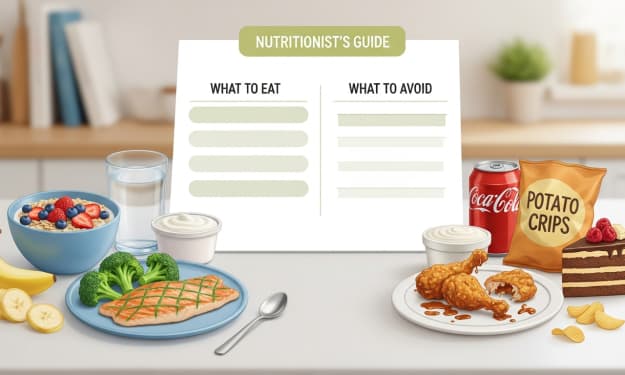
What to Eat (And Avoid) During Colon Cancer Treatment: A Nutritionist-Approved Guide
When undergoing colon cancer treatment, your diet is more important than ever. The right nutrition can support your immune system, reduce side effects, and even enhance the effectiveness of treatments like chemotherapy and radiation. But knowing what to eat and what to avoid can be overwhelming.
By Erika Phillips about 13 hours ago in Education
Hands of Hope: The Impact of Volunteer Service in Faith-Based Communities
Faith is often expressed through prayer and reflection, but its true strength is revealed through action. Volunteers play a vital role in translating belief into meaningful service, helping churches grow and positively influence the communities around them. Through dedication, compassion, and teamwork, volunteers become the driving force behind outreach, support, and connection. Their efforts demonstrate how service rooted in faith can create lasting change.
By Mike Signorellia day ago in Education



Comments
There are no comments for this story
Be the first to respond and start the conversation.