
Silicon Muscle The USD 8.88 Billion Rise of China Industrial Automation (2025-2033)
China Ka Manufacturing Shift: Manual Se Machine Tak
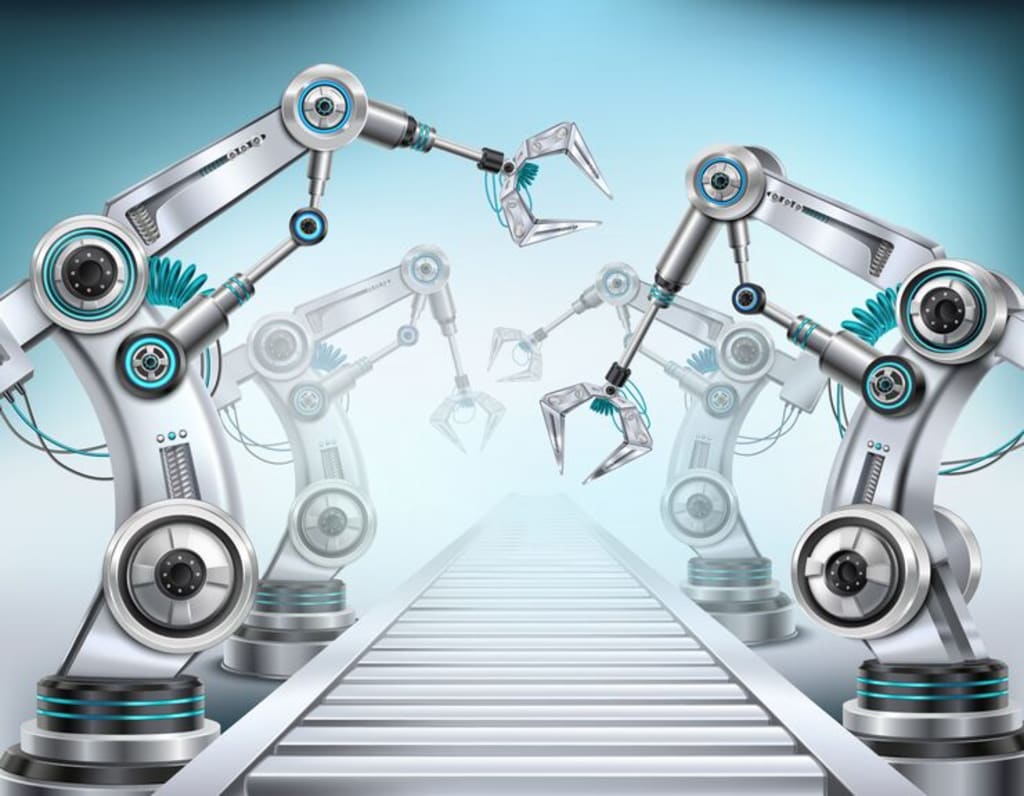
In 2026, the factory floors of Dongguan and Suzhou are no longer just places of manual labor; they are the new frontiers of "Embodied Intelligence." China has officially moved past being the world's workshop to becoming its premier robotics laboratory. As of this year, the industrial automation landscape in China has crossed a monumental threshold. Valued at USD 3.27 Billion in 2024, the sector is projected to hit a staggering USD 8.88 Billion by 2033, fueled by a 10.52% CAGR that is reshaping the global manufacturing balance.
1. The Era of Embodied Intelligence
The defining shift of 2026 is the transition from "dumb" machines to Embodied Intelligence. This isn't just about robots following a set of pre-programmed lines of code; it’s about machines that perceive, learn, and adapt to their physical environment.
Vision-Language-Action (VLA) Models: Chinese robotics firms like Galaxea and AgiBot are now shipping units with pre-installed VLA models. These allow robots to understand natural language commands like "pick up the blue bracket and weld it to the frame"and execute them in unstructured environments without manual programming.
Large-Scale Datasets: By utilizing massive "Open-world Datasets," Chinese robots are achieving success rates of over 60% in complex manipulation tasks, a massive leap from the 8% success rates seen just two years ago.
Agentic AI: We are witnessing the birth of "Agentic" systems capable of independent decision-making on the assembly line, significantly reducing the need for human supervisors.
2. Collaborative Robotics: The SME Revolution
While the automotive and electronics giants were the first to automate, 2026 is the year of the Collaborative Robot (Cobot). These units are designed to work safely alongside humans, and their adoption is exploding among Small and Medium Enterprises (SMEs).
Ease of Deployment: Modern cobots can be set up in under 30 minutes. This "plug-and-play" nature has lowered the barrier to entry for smaller workshops that previously couldn't afford a full-scale automation overhaul.
Flexibility in "Brownfield" Factories: Traditional factories are being retrofitted with flexible, wheeled, and dual-arm robots that can navigate narrow aisles and even climb stairs, making automation possible in older facilities.
Beyond Manufacturing: Collaborative systems are now found in "Smart Dining" in Shanghai, automated healthcare logistics, and even the hazardous handling of chemical and plastic materials.
3. The Demographic Push: Automation as a Necessity
China's drive toward automation is no longer a luxury; it is a response to the nation's most pressing challenge: a shrinking and aging workforce.
Rising Labor Costs: With manual labor wages increasing, robots offer a superior ROI. In 2026, the "robot density" the number of robots per 10,000 workers has surpassed 470, a sharp rise from 402 just a year earlier.
The "Silver" Challenge: Automation is filling the gap left by retiring workers. By substituting human labor in hazardous or monotonous roles, companies are maintaining productivity levels that would otherwise collapse due to workforce shortages.
Upskilling the Youth: While low-skilled roles are being automated, 2026 has seen a surge in technical training. Younger workers are shifting from "operating" machines to "programming and maintaining" them, creating a more sophisticated labor ecosystem.
4. Domestic Dominance: The "Made in China 2025" Legacy
In 2024, a major milestone was reached: for the first time, domestic Chinese suppliers sold more industrial units in their home country than foreign giants like ABB or Fanuc. By 2026, this domestic share has climbed to nearly 60%.
Full-Stack Innovation: Local firms like Estun and Siasun are no longer just assembling parts; they are building the entire stack from high-precision reducers and servo motors to the AI software driving them.
Price Performance: Chinese humanoids and industrial arms are often priced at a fraction of their Western counterparts without sacrificing technical capability. This "Budget-Friendly Innovation" is making high-tech automation accessible globally.
Government Venturing: State-backed venture capital funds, like the trillion-RMB fund launched by the NDRC in 2025, continue to pour fuel into robotics startups, ensuring that the R&D pipeline never runs dry.
5. Challenges on the Path to 2033
Despite the bullish outlook, the road to USD 8.88 Billion has its hurdles:
Industry Consolidation: The sheer number of startups is leading to intense price wars. In 2026, we are seeing a "shakeout" where weaker players fall away, leaving behind only the most efficient and technologically advanced leaders.
Global Geopolitics: Tariff concerns and export restrictions on advanced semiconductors continue to challenge supply chains, forcing Chinese firms to innovate even faster in domestic chip production.
Social Displacement: The rapid pace of automation is creating a "digital divide," making it critical for the government to balance productivity gains with social stability through extensive reskilling programs.
Conclusion: The Future is Autonomous
As we look at the state of China Industrial Robotics landscape in 2026, the conclusion is undeniable: the "factory of the future" has arrived. By integrating Embodied AI, expanding into collaborative sectors, and leveraging a powerful domestic manufacturing base, China is setting the global gold standard for automation.
The growth toward an $8.8 billion future isn't just about numbers; it's about a new industrial revolution where machines and intelligence are fused together. For the rest of the world, the message is clear: the race for industrial sovereignty is being won through silicon and steel in the heart of China.
About the Creator
Keep reading
More stories from Neeraj kumar and writers in Education and other communities.
The Gourmet Bowl: China’s $32 Billion Pet Food Revolution (2026-2034)
In 2026, if you walk into a modern apartment in Shanghai or Beijing, you’ll notice something fascinating. The family pet isn't just a "domestic animal" anymore it’s a "fur-baby" . As a result, the dinner table is no longer the only place where high-quality nutrition matters.
By Neeraj kumarabout 5 hours ago in Education
Seven Books to Read When You Have No Time to Read
Modern life rarely leaves room for long, uninterrupted reading sessions. Between work, family, notifications, and daily responsibilities, finding hours to sit with a thick novel can feel impossible. Yet reading remains one of the most rewarding ways to relax, learn, and escape the noise of everyday life. The good news is that not all books demand weeks of commitment. Some are short, fast-paced, and powerful enough to be read in brief moments—during commutes, lunch breaks, or just before sleep. If your schedule is packed but your love for books remains strong, here are seven perfect reads for when time is limited but curiosity is not. 1. “The Old Man and the Sea” by Ernest Hemingway This classic novella is proof that a small book can carry enormous emotional weight. At just over 100 pages, Hemingway’s story of an aging fisherman battling a giant marlin is simple yet deeply symbolic. The language is clear and direct, making it easy to read in short sessions. Despite its brevity, the book explores themes of endurance, pride, and humanity’s relationship with nature. It is a reminder that you do not need a long novel to experience literary greatness. 2. “Animal Farm” by George Orwell Few books manage to be both entertaining and politically sharp in such a compact form. Orwell’s allegory of farm animals overthrowing their human owner is short, gripping, and unforgettable. The story moves quickly, with simple language and strong symbolism that makes it ideal for busy readers. You can read a chapter in minutes and still feel like you’ve engaged with something meaningful and thought-provoking. 3. “We Should All Be Feminists” by Chimamanda Ngozi Adichie Adapted from a popular TED Talk, this slim book packs a powerful message into fewer than 70 pages. Adichie discusses gender, culture, and equality in a personal and accessible way. It is perfect for readers who want insight without long explanations. The conversational tone makes it feel less like homework and more like a thoughtful conversation with a friend. 4. “Of Mice and Men” by John Steinbeck Steinbeck’s short novel about friendship and dreams during the Great Depression is emotionally rich but easy to follow. The characters of George and Lennie stay with readers long after the final page. Its short chapters and clear narrative make it ideal for those who can only read in small bursts. Despite its simplicity, the book deals with loneliness, hope, and tragedy in a powerful way. 5. “The Little Prince” by Antoine de Saint-Exupéry Often seen as a children’s book, The Little Prince is deeply philosophical and touching for adults as well. With short chapters and gentle illustrations, it is easy to read in one or two sittings. The story reflects on love, responsibility, and the loss of childhood wonder. It is a comforting book for readers who want something meaningful but not mentally exhausting. 6. “Letters to a Young Poet” by Rainer Maria Rilke This book is a collection of short letters rather than a continuous story, making it ideal for fragmented reading time. Each letter stands alone and offers wisdom about creativity, self-doubt, and personal growth. You can read one letter in five minutes and still feel enriched. It is perfect for readers who want inspiration without committing to a long narrative. 7. “The Alchemist” by Paulo Coelho Coelho’s famous novel is written in simple language and short chapters, making it highly accessible. The story follows a young shepherd on a journey to find treasure, but its true focus is on purpose, destiny, and listening to one’s heart. Many readers finish this book quickly because of its smooth pacing and motivational tone. It is ideal for moments when you want encouragement rather than complexity. Why Short Books Matter Short books are not lesser books. In many cases, they demand more discipline from the author and offer greater focus for the reader. When time is scarce, these works provide a sense of completion and accomplishment. Finishing a book—even a small one—can restore confidence and reignite the habit of reading. They also suit modern lifestyles. A few pages before bed or during a commute can slowly build into a meaningful reading experience. Instead of waiting for the perfect free weekend, short books allow reading to fit into everyday life. Making Reading Possible Again If you feel too busy to read, the solution is not to quit—it is to adjust expectations. Choose books that match your schedule. Keep one in your bag or on your phone. Replace five minutes of scrolling with five minutes of reading. Over time, these small moments add up. Conclusion Reading does not require endless free time. It requires intention and the right kind of books. These seven titles prove that powerful stories and ideas can be delivered in short, accessible forms. Whether you want inspiration, reflection, or escape, there is always room for a book—even in the busiest life. When time is limited, let these books remind you that literature does not have to be long to be lasting.
By Fiaz Ahmed 3 days ago in Education
The Increasing Gender Disparity in College Degree Attainment
The gender gap in American higher education has widened significantly, with men falling behind women in both college enrollment and completion rates. As of the early 2020s, women have outpaced men in earning bachelor's degrees for several decades, with the divide continuing to grow, often referred to as the "enrollment flip". In 2021, men received only 42% of bachelor's degrees, the lowest share on record, which is roughly equal to the 43% of degrees awarded to women in 1970 (source: https://aibm.org/research/male-college-enrollment-and-completion/).
By Megan Wilson3 days ago in Education
Self Help: Grifters' Gospel
On Self-Help, Snake Oil, and the Illusion of Change Psychology professionals and students can be imagined on two opposite sides of a line called self-help books: likely a larger group opposes pop-science and step-by-step manuals filled with talk of success, journaling, and not giving a f**k; others love them, but they aren’t many.
By Avocado Nunzella BSc (Psych) -- M.A.P 4 days ago in BookClub




Comments
There are no comments for this story
Be the first to respond and start the conversation.