
Self-Study or CPA CPE Webinars? A Cost-Benefit Analysis for Busy CPAs
Weighing Flexibility, Cost & Credit Value to Help You Choose the Smarter CPE Option


CPAs just need 40 hours of Continuing Professional Education (CPE) credits each year. You might wonder if CPA CPE webinars or self-study courses would better help you meet these requirements. Both options are great choices that fit well with the busy schedules of accounting professionals who balance client work and personal life.
CPA CPE webinars can help you plan better. These webinars work well if you like having a fixed schedule that keeps you accountable. MYCPE ONE's platform gives you access to 15,000 hours of CPA CPE courses and more than 500 hours of state-specific courses. Self-study options let you learn at your own pace and set personal goals that match your schedule. CPE webinars for accounting and auditing often come with package deals that save you money over time.
This piece looks at both CPE formats from all angles - what they cost, how much time they take, how well they help you learn, and real-world uses. You'll learn which option best fits your professional growth needs by the end of this guide.
Learning Format Overview: Self-Study vs Live Webinars
CPE comes in different formats. Each format has its own unique features that match learning priorities of different people. Let's take a closer look at how these two popular CPE formats work.
What is Self-Study CPE?
Self-study CPE includes pre-packaged courses that accounting professionals complete on their own without a live instructor. These courses come in various formats like textbooks, e-books, on-demand videos, and downloadable PDFs. You can start learning right after purchase and move at your own pace.
The best part about self-study is its flexibility. You decide when and how you learn—maybe early morning before your family wakes up or late evening after client meetings. This format to earn CPE credit.
Self-study lets you spend extra time on tough concepts while moving quickly through familiar material. This approach is perfect to meet CPA CPE requirements if you're a focused learner with an unpredictable schedule.
Key Differences in Delivery and Structure
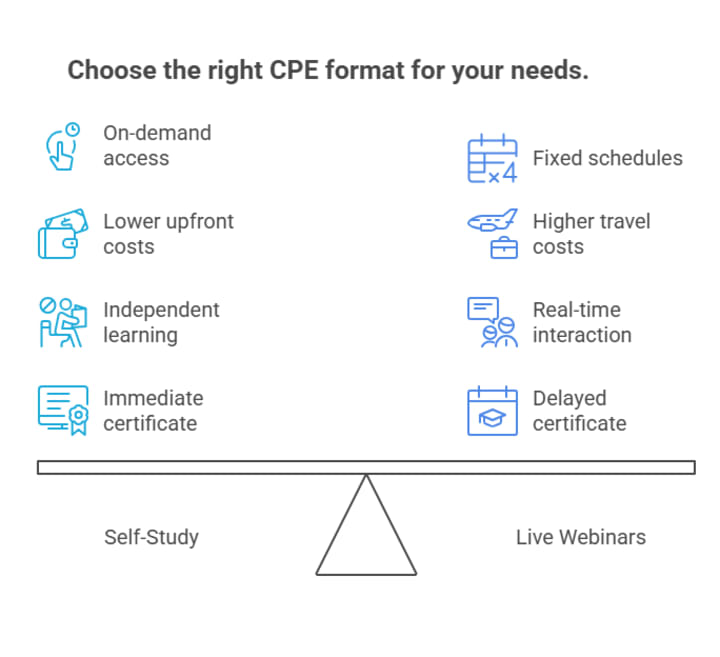
The main difference between these formats comes down to scheduling flexibility versus engagement. Self-study gives you on-demand access without time limits. Webinars run on fixed schedules that need specific time commitments.
Webinars often cover the latest industry developments and regulatory changes. Both formats give you certificates after completion. Webinars usually provide them right after the event, while self-study certificates arrive minutes after you pass the required exam.
The interaction style is different too. Webinars help you get real-time answers from experts and network with peers. Self-study means you'll need to research answers to questions that come up while learning.
Also Read: What Is CPE? A Complete Guide for Accounting Professionals
Cost and Time Investment Comparison
Smart financial decisions about your CPE strategy depend on understanding both obvious and hidden costs. Let's get into the financial and time factors that make these learning formats different.
Upfront Costs: Course Fees and Materials
Self-study and webinars show substantial price differences. Self-study subscriptions give you better value, with based on provider and credit limits.
Budget-conscious CPAs will find subscription models save them by a lot. CPE subscriptions can cut over 60% from retail prices per credit.
Hidden Costs: Travel, Time Off, and Scheduling
Subscription fees tell only part of the story. Self-study completely eliminates travel costs, while in-person education adds about $1,360 yearly just in commuting expenses. More than that, scheduled webinars can cost you valuable work hours.
You might face extra fees for rescheduling or missing webinars. Self-study lets you fit education into your day without these hassles.
Time Commitment: On-Demand vs Scheduled Sessions
Scheduled webinars make you block specific time periods—usually a full day. In spite of that, they help you complete requirements "in one fell swoop", which might reduce your total time investment.
Self-study gives you maximum time flexibility but requires self-discipline. You can move through material at your own pace and spend extra time on tough concepts while breezing through familiar ones.
Certificate Turnaround Time
Different formats mean different certificate delivery times. Self-study providers usually give you certificates right after you pass the exam. Your certificates stay available in your account for at least six years.
Webinar certificates become available right after the event if you meet participation requirements. Most platforms just need you to attend 50 minutes of a 60-minute presentation to get credit.
Flexibility and Learning Style Fit
Your CPE investment success depends on how well you match learning formats with your priorities and work situation. Learning about how each option fits your style can help you get the most value from your investment.
Also Read: 5 Top-Rated Online CPE Platforms CPAs Actually Use in 2025
Self-Paced Learning vs Fixed Schedules
Self-study CPE gives you complete flexibility with round-the-clock access to materials. You can learn during early mornings, lunch breaks, or weekends. Without doubt, this format lets you set your own pace. You'll spend extra time on tough concepts and move quickly through familiar ones.
Live CPE webinars run on set schedules that need specific time blocks in your calendar. These scheduled sessions create structure and accountability, even with time constraints. Many CPAs appreciate this because "it means you will get it done and keep moving forward with the class until you finish".
Adaptability for Busy CPA Schedules
Self-study courses work well with accountants who juggle unpredictable deadlines. The system lets you start, pause, and resume learning whenever needed. This flexibility becomes valuable during tax season or year-end audits.
Webinars require you to attend 50 minutes of a 60-minute presentation to earn credit. Missing a scheduled webinar means losing both information and credits. This format suits CPAs who can protect their calendar time reliably.
Also Read: How to Earn CPA CPE Credits While Working Full-Time
Retention and Comprehension: Which Format Works Better?
Studies show mixed results about learning effectiveness. One study revealed in-person participants gained more knowledge than synchronous virtual learners. Yet another study showed students learned substantially more through e-learning compared to in-person education.
Your learning style determines which format gives better results:
- Visual learners often excel with self-study because they can rewind and review key concepts
- Auditory learners succeed in live webinars with verbal explanations
- Interactive learners prefer real-time Q&A sessions
- Access to Instructors and Peer Interaction
Live webinars let you participate with instructors and peers instantly. You can clarify complex issues right away and learn from your colleagues' questions. You benefit from others' experiences while keeping remote learning flexibility.
Self-study programs don't offer this instant interaction. You need to research independently when questions come up. Many CPAs now use both formats to create a balanced approach to their continuing education.
Use Cases and Best Fit Scenarios
Your professional situation and goals play a big role in picking the right CPE format. Let's get into what makes each approach work best.
When to Choose Self-Study CPE
Self-study stands out as the best choice for CPAs who deal with unpredictable schedules or frequent client deadlines. This format works great if you travel often or handle multiple time zones. Busy seasons make it hard to block calendar time, and self-study is a great way to get your credits.
Self-study becomes crucial if you need to catch up on CPE credits quickly. Research shows to finish most of their requirements. This format helps professionals who learn better by going through complex modules multiple times. The pressure-free environment suits introverts or those who prefer to process information on their own.
When Webinars Make More Sense
Live CPA CPE webinars shine when you need up-to-the-minute updates on emerging trends or urgent regulatory changes. These sessions work best for professionals who thrive in interactive settings or need extra motivation to complete courses.
Webinars prove valuable when networking matters to your career growth. Tom Hood, CPA/CITP, CGMA, points out that firms have "" due to pandemic changes. Direct instructor interaction helps clarify complex topics right away.
Hybrid Approach: Mixing Both for Maximum Benefit
Smart professionals now mix both formats to get the best results:
• Self-study for foundational topics and ethics requirements
• Live webinars for advanced concepts and time-sensitive updates
This mixed strategy gives you flexibility during busy seasons while keeping structured learning for complex topics. DeLeon & Stang shows this approach by giving their team "lunch-and-learn training, in-person webinars, and self-study choices". The most effective CPE plan usually includes different formats to create a complete professional development experience.
Conclusion
Look at how you learn best, what you can spend, and your typical work schedule before you decide. If you like going over material multiple times, self-study might be your thing. If you learn better through discussions, webinars could be a better fit. Your CPE plan should match how you learn while fitting into your work life.
CPE requirements don't change, but you can adapt how you meet them as your career grows. Whether you pick the flexibility of self-study, live webinars, or both, the goal stays the same – keeping your skills sharp while managing your busy accounting practice.
About the Creator
Parth Shah, CPA
Finance expert with 10+ years of experience in accounting and taxation. Helping individuals and businesses navigate complex financial landscapes with clarity, precision, and strategic insight.
Keep reading
More stories from Parth Shah, CPA and writers in Education and other communities.
The Comfort of the New: Why Some Places Instantly Feel Like Home
Travelers often experience a strange phenomenon: arriving in a place for the first time and feeling as though they have always belonged. Whether it is a bustling city street, a quiet mountain town, or a sun-drenched coastal village, some locations evoke an immediate sense of familiarity and comfort. This feeling goes beyond aesthetic appeal or convenience; it touches deeper psychological, emotional, and even social aspects of human experience. Understanding why certain places feel like home can enrich travel, relocation, or even brief visits, creating connections that feel effortless and profound.
By Producer James Simon5 days ago in Education



Comments
There are no comments for this story
Be the first to respond and start the conversation.