
Satellite Mission for Pollution-Tracking in Space
Monitoring Earth's Air Quality from Orbit to Combat Climate Change
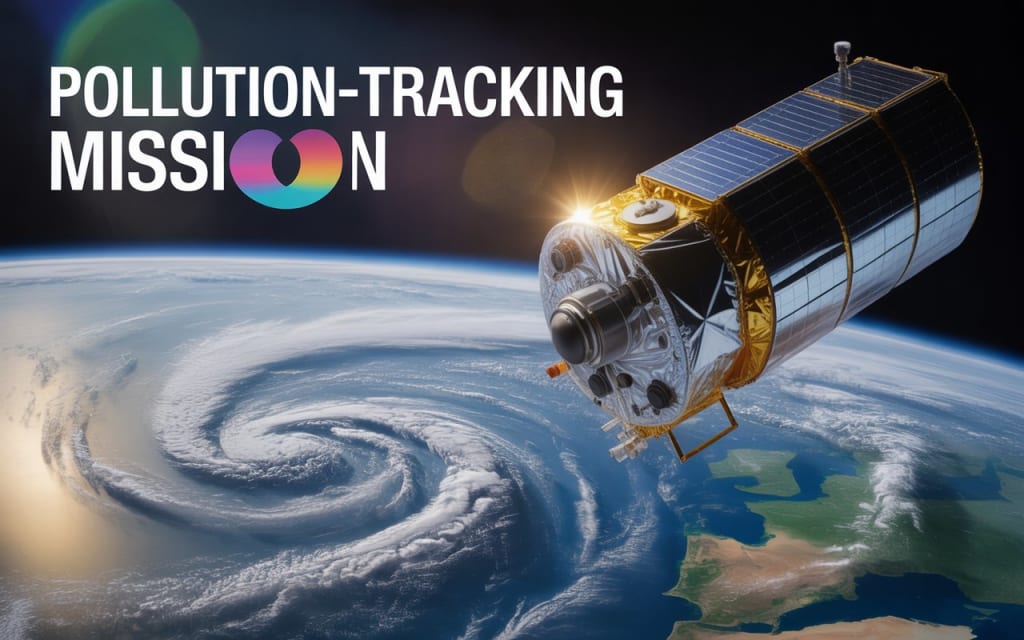
A satellite worth $88 million (about £65 million), built to find and track methane gas leaks from oil and gas activities, has been lost in space. This is a big setback for efforts to fight climate change.
The satellite, called MethaneSat, was supported by companies like Google and billionaire Jeff Bezos. It was sent into space last year using a rocket from Elon Musk’s company, SpaceX.
MethaneSat had an important job. It was supposed to orbit Earth for the next five years and gather information on where methane was being released. Methane is a very powerful greenhouse gas. Even though it doesn’t stay in the air as long as carbon dioxide, it traps heat much more effectively—about 28 times stronger over a 100-year period. This makes it one of the main causes of global warming, and stopping big leaks is important for slowing down climate change.
The satellite was managed by an environmental group called the Environmental Defense Fund (EDF). About ten days ago, they said they lost contact with the satellite, and now they are investigating what went wrong. At the moment, they don’t know if the satellite is damaged, lost in space, or just unable to send signals back to Earth.
If MethaneSat cannot be recovered, it will be a serious loss for climate research. The satellite was expected to give scientists and governments valuable data to hold major polluters accountable and push for cleaner practices in the oil and gas industry.
Even though this is disappointing news, the team is still trying to figure out what happened and whether they can fix the problem. If not, climate experts may have to wait longer for another satellite to do this important job.Despite an international commitment to reduce methane levels by 30% by 2030, year-on-year it continues to rise with the target unlikely to be met, according to the European Space Agency.
The main sources of methane are from oil and gas production, farming and food decomposition in landfill.
But many of the current satellites that monitor it are operated privately, reducing transparency of who the worst offenders for methane release are.
MethaneSat came after years of development by the NGO Environmental Defense Fund (EDF) and once launched made much of its data publicly available, allowing scrutiny by governments and scientists.
It was backed by a consortium of tech giants including Google and billionaire Jeff Bezos, which together contributed $88m to the project.
The instruments used by the satellite are some of the most sensitive in the world, able to pick up much smaller sources of methane as well as "super-emitters".
Improving the sensitivity is important for detecting releases from agriculture which are often much more diffuse than from oil and gas production.
'Likely not recoverable'
Google said when it was launched it hoped its project would "fill gaps between existing tools".
The company was using its artificial intelligence tools to process the data and generate a global methane map.
But after just a year in orbit, in what was meant to be a five-year programme, communication was lost with MethaneSat.
The team at EDF suspect that the satellite has lost power and said in a statement "that it is likely not recoverable."
It went on to say that some of the software could be re-used but said it was too early to comment on whether a new satellite would be launched.
"To solve the climate challenge requires bold action and risk-taking and this satellite was at the leading edge of science, technology and advocacy," it added.
One of the other major publicly-available sources of methane data is hosted by CarbonMapper. One of its sources of data is the TROPOMI instrument aboard the European Space Agency's Sentinel-5P satellite. Although it continues to send back data its seven-year programme was meant to finish in October.
It is unclear how much longer it can continue to collect information, further limiting global efforts to track the greenhouse gas.
About the Creator
Kamran Khan
Proffessor Dr Kamran Khan Phd General science.
M . A English, M . A International Relation ( IR ). I am serving in an international media channel as a writer, Reporter, Article Writing, Story Writing on global news, scientific discoveries.
Keep reading
More stories from Kamran Khan and writers in Education and other communities.
7 Online Skills That Can Change Your Financial Future in 2026
7 Online Skills That Can Change Your Financial Future In today’s digital world, one skill can completely transform your life. Just a decade ago, making money online sounded unrealistic to many people. Today, thousands of people are building careers, businesses, and even financial freedom using only their laptops and internet connections. The truth is simple: the internet has created opportunities that never existed before. But the biggest mistake most people make is waiting for the “perfect moment” to start learning. The reality is that learning just one valuable online skill can open doors to income streams you never imagined. Here are seven powerful online skills that can truly change your financial future. 1. Content Writing Content writing is one of the easiest online skills to start with. Every website, blog, and online business needs high-quality content to attract readers and customers. If you can write helpful, interesting, or informative articles, you already have the foundation for this skill. Content writers earn money by writing: Blog posts Website content Product descriptions News articles Platforms like freelance marketplaces, blogging websites, and digital publications are always looking for good writers. With practice, many writers turn this skill into a full-time career. 2. Graphic Design In the online world, visuals matter. Businesses need logos, social media graphics, advertisements, and brand designs to attract attention. Graphic design allows creative people to turn their imagination into income. Even beginners can start by learning simple tools and gradually improving their skills. Graphic designers can work with: Small businesses Online brands Content creators Marketing agencies A single well-designed logo or brand package can sometimes earn more than weeks of traditional work. 3. Video Editing Video is the most powerful form of content on the internet today. From social media platforms to online courses, videos dominate the digital world. But most creators don’t have the time or skill to edit their own videos. This is where video editors come in. If you learn how to cut clips, add music, create smooth transitions, and improve video quality, you can become extremely valuable. Video editors are needed by: YouTubers Businesses Online educators Social media influencers The demand for video editing continues to grow every year. 4. Social Media Management Millions of businesses rely on social media to reach customers. But many business owners don’t know how to grow their pages, create content, or engage with their audience. Social media managers help brands: Plan content Post regularly Respond to followers Grow their audience With the right strategy, social media managers can manage multiple accounts and earn steady monthly income. This skill combines creativity with marketing knowledge, making it highly valuable. 5. Digital Marketing Digital marketing is one of the most powerful online skills you can learn. It involves promoting products, services, or brands through online channels such as search engines, social media, and email. Digital marketers help businesses get: More website visitors More customers More sales Companies are willing to pay well for people who can increase their revenue. Learning digital marketing can open doors to freelance work, remote jobs, or even your own online business. 6. Web Development Every business needs a website. But building a professional website requires technical skills. Web developers create and maintain websites using coding languages and development tools. Although this skill takes more time to learn than others on this list, it is also one of the highest-paying online skills. Many web developers work remotely and build websites for clients all around the world. Once you gain experience, the opportunities become endless. 7. AI Content Creation Artificial intelligence is rapidly changing the online world. Many creators and businesses now use AI tools to produce content faster and more efficiently. AI content creators use technology to generate: Articles Images Videos Marketing content People who understand how to use AI tools effectively have a huge advantage in the modern digital economy. Instead of replacing creativity, AI often amplifies it. Those who learn how to combine creativity with technology will be ahead of the curve. Final Thoughts The internet has made it possible for anyone, anywhere in the world, to build valuable skills and create new income opportunities. But knowledge alone is not enough. The real difference comes from taking action. Pick one skill from this list and start learning today. Practice consistently. Improve a little every day. Over time, that single skill could become the foundation of a completely different financial future. Because sometimes, all it takes is one skill to change everything.
By Baseer Shaheen 4 days ago in Education




Comments (1)
Amazing❤️🔥❤️🔥❤️🔥❤️🔥❤️🔥❤️🔥Good❤️🔥❤️🔥❤️🔥❤️🔥❤️🔥❤️🔥❤️🔥❤️🔥❤️🔥❤️🔥❤️🔥❤️🔥❤️🔥❤️🔥Excellent❤️🔥❤️🔥❤️🔥❤️🔥❤️🔥❤️🔥❤️🔥❤️🔥❤️🔥❤️🔥❤️🔥❤️🔥❤️🔥❤️🔥❤️🔥❤️🔥❤️🔥❤️🔥❤️🔥❤️🔥