
Rural Schools Are Missing Out on Expertise—Here’s How AI Can Close the Gap
Rural schools often lack the specialized staff and resources found in large districts — but AI tools, especially custom GPTs, can deliver that expertise on demand and level the playing field for students everywhere.
The Rural Reality
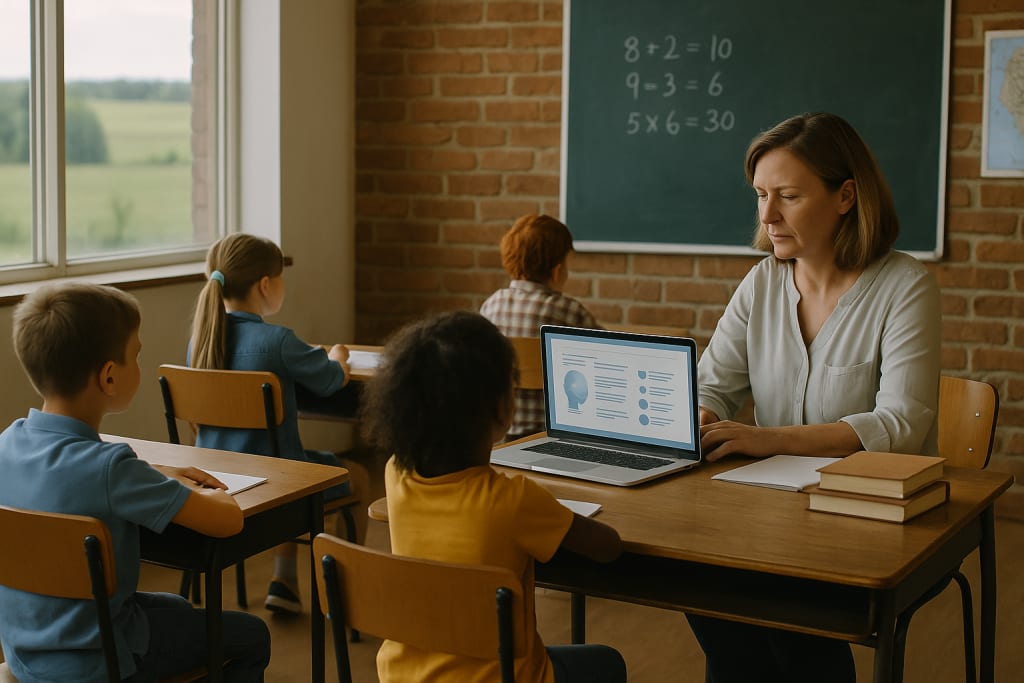
In many rural communities, one teacher might cover multiple subjects, the nearest instructional coach is hours away, and specialized staff—like curriculum designers or assessment experts—are simply not available locally.
Yet rural educators are still expected to:
- Meet the same academic standards as large suburban districts
- Integrate technology into instruction
- Provide differentiated lessons for diverse learners
Rural schools serve nearly 1 in 5 U.S. students, but often have fewer advanced courses, specialized programs, and instructional coaches. Teachers may juggle multiple grade levels and subjects, stretching their time and expertise thin. Professional development is often limited by geography and budget.
(Source: National Center for Education Statistics)
How AI Levels the Playing Field in Rural Education
AI-powered tools can give rural educators on-demand expertise without adding to payroll or requiring full-time specialists.
- Lesson Planning: Instantly create standards-aligned units tailored to state requirements.
- Differentiated Instruction: Generate reading passages, activities, and assessments for multiple skill levels in minutes.
- Data Analysis: Interpret test results and identify learning trends without a dedicated data team.
- Instructional Resource Development: Design rubrics, quizzes, project guidelines, and classroom activities aligned to learning objectives and state standards.
Why This Matters for Rural Communities
A 2024 study on AI in underserved schools found that AI-assisted lesson planning and assessment tools improved instructional quality and reduced teacher workload, even in areas with limited resources (ResearchGate study link).
For rural educators, this isn’t about replacing teachers—it’s about removing barriers so they can focus on the human aspects of education: building relationships, fostering curiosity, and inspiring students.
Overcoming Barriers to AI Adoption in Rural Schools
For AI in rural education to succeed, four challenges must be addressed:
- Training: Educators need hands-on guidance for integrating AI into everyday practice.
Local Adaptation: AI outputs should reflect local culture, curriculum, and state standards.
- Customization: Rural districts often have unique course structures, mixed-grade classrooms, and specific community priorities. AI tools that can be customized—like purpose-built GPTs or AI agents—are perfectly suited for these needs. A well-designed custom GPT can serve as an on-call instructional coach, assessment designer, or curriculum expert that understands district standards, grade configurations, and even local history. These tools aren’t just adaptable—they’re designed to fill the expertise gap for rural schools.
A Vision for AI-Enhanced Rural Classrooms
Imagine a rural middle school where:
- A science teacher generates a month-long unit with labs, readings, and assessments in under an hour.
- A social studies teacher creates differentiated activities for students reading at multiple levels—without spending evenings and weekends writing them by hand.
- Teachers collaborate on AI-assisted lesson plans that align perfectly to state standards, regardless of distance.
Conclusion
AI in rural schools has the potential to close long-standing gaps in resources and expertise. For small, remote districts, custom GPTs and AI agents offer not just efficiency, but equity—bringing the quality of support and instructional resources found in large districts to every classroom, no matter how far from the city limits.
About the Author:
I’m the founder of Simplifi AI and a current educator, designing GPT-powered tools for teachers, instructional leaders, and school districts. I understand the time pressures teachers face and build AI solutions to give them hours back each week.
If you’d like to see examples of what these tools can do or discuss AI for your school, email me at [email protected].
This article was created using AI-assisted writing tools in collaboration with the author. As an advocate for ethical AI use in education, I believe in modeling how AI can save time and enhance creativity while keeping human expertise and judgment at the center of the process.
About the Creator
Keep reading
More stories from writers in Education and other communities.
Understanding PMP Certification in Pakistan: A Guide for Project Professionals
As industries in Pakistan continue to expand and modernize, the need for skilled project managers is becoming increasingly clear. From IT and telecom to construction, healthcare, and finance, organizations rely on structured project leadership to deliver results on time and within budget. One credential that frequently enters this conversation is the PMP certification in Pakistan, a globally recognized qualification for experienced project managers.
By James Mburuabout 10 hours ago in Education
Everyday Cooking Skills That Turn Home Kitchens Into Creative Spaces
Cooking at home is more than a routine task. It is a practical life skill that supports better health, saves money, and encourages creativity. While recipes are helpful, true kitchen confidence comes from understanding essential cooking skills that work across countless dishes. When home cooks grasp these fundamentals, they can adapt recipes, solve problems, and cook with freedom rather than fear.
By Erika Mackinnon5 days ago in Education




Comments
There are no comments for this story
Be the first to respond and start the conversation.