
RPA in Supply Chain
Robotic Process Automation

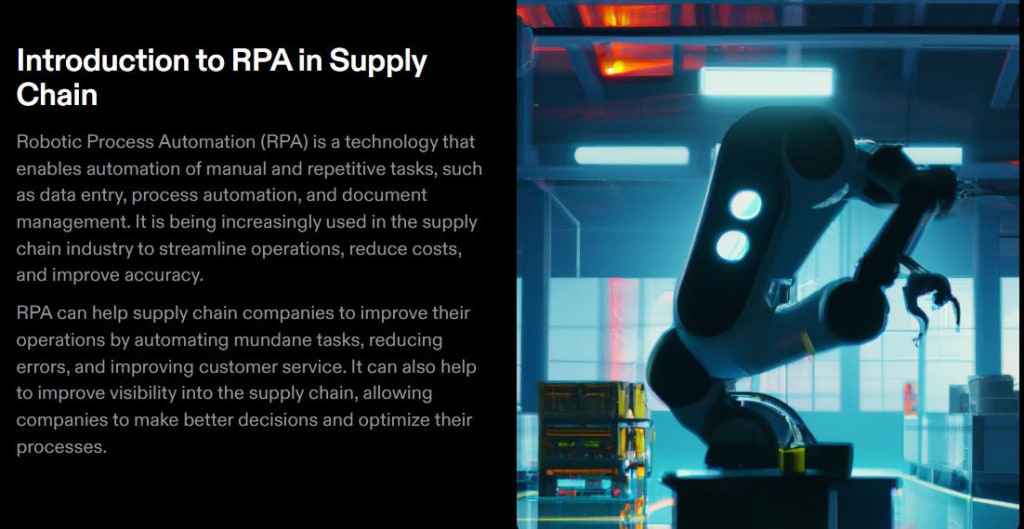
RPA, or Robotic Process Automation, is the use of software to automate repetitive, routine tasks typically performed by humans. In the supply chain, RPA can be used to automate tasks such as data entry, invoice processing, and order tracking. This can help improve efficiency, reduce errors, and free up staff to focus on higher-value tasks. Additionally, RPA can also be used to automate communication and coordination between different parts of the supply chain, such as between suppliers and manufacturers. Overall, RPA can provide significant benefits for supply chain management, including cost savings and improved accuracy and speed.
Robotic Process Automation (RPA) is a technology that allows organizations to automate repetitive, manual tasks, such as data entry, by using software robots (also known as "bots") to mimic the actions of human users. RPA can be applied to various areas of a supply chain, including inventory management, logistics, and procurement. For example, RPA bots can be used to monitor inventory levels, automatically reorder items when stock runs low, and track deliveries from suppliers. Additionally, RPA can be used to automate tasks such as invoice processing and purchase order management, which can help to reduce errors and improve efficiency in the supply chain.
RPA can be applied to many different areas of the supply chain, some of the most common use cases include:
Inventory Management: RPA bots can be used to automatically monitor inventory levels and reorder items when stock runs low. This can help to prevent stockouts and improve inventory accuracy.
Logistics: RPA can be used to automate tasks such as tracking deliveries from suppliers, updating shipping information in systems, and generating shipping labels. This can help to improve the accuracy and efficiency of logistics operations.
Procurement: RPA can be used to automate tasks such as invoice processing, purchase order management, and supplier management. This can help to reduce errors and improve the efficiency of procurement processes.
Supply Chain Planning: RPA can be used to automate tasks such as demand forecasting, inventory planning, and production scheduling. This can help to improve the accuracy of supply chain planning and optimize production schedules.
Quality Control: RPA can be used to automate tasks such as inspection and testing of products, which can help to improve the accuracy and efficiency of quality control processes.
Customer service: RPA can be used to automate routine tasks such as order tracking, delivery status updates, and customer inquiries. This can help to improve the efficiency of customer service operations.
Supply Chain Analytics: RPA can be used to extract data from various systems and automatically populate it into spreadsheets or dashboards. This can help to improve the efficiency of supply chain analytics and provide real-time insights into supply chain performance.
Shipping and Receiving: RPA can be used to automate tasks such as scanning barcodes, printing shipping labels, and updating receiving records. This can help to improve the efficiency and accuracy of shipping and receiving operations.
Compliance: RPA can be used to automate tasks such as tracking compliance with regulations, certifications, and standards. This can help to reduce errors and improve compliance with regulations in the supply chain.
Maintenance and Repairs: RPA can be used to automate tasks such as tracking maintenance schedules, generating work orders, and updating equipment status. This can help to improve the efficiency and accuracy of maintenance and repair operations.
Data Entry: RPA can be used to automate tasks such as entering data into various systems, which can help to reduce errors and improve the efficiency of data entry processes.
Stock Management: RPA can be used to automate tasks such as tracking stock levels and updating stock records, this can help to improve the efficiency and accuracy of stock management processes.
Return Management: RPA can be used to automate tasks such as tracking return requests, updating records, and generating return labels. This can help to improve the efficiency and accuracy of return management processes.
In general, RPA can be used to automate repetitive, manual tasks in the supply chain, which can help to improve efficiency, accuracy, and compliance, allowing companies to focus on more strategic activities.
About the Creator
Sendil Arasu Vijaya Kumar
I attained bachelor degree in mechanical engineering and master degree in marketing management, having 21 Years of professional work experience. International exposure in Supply Chain Procurement domain. Author of "The Procurement Acumen"
Keep reading
More stories from Sendil Arasu Vijaya Kumar and writers in Education and other communities.
From Despair to Hope: How Animal Rescue Efforts Rebuild Broken Lives
Animal rescue efforts stand as a powerful response to suffering that often goes unseen. Across towns, cities, and rural areas, animals face neglect, abandonment, injury, and fear every day. Many are left without food, shelter, or medical care. Others are harmed by abuse or natural disasters. Without help, their future is uncertain. Through patience, care, and action, animal rescue efforts transform despair into hope and give animals the chance to heal and live safely.
By Brenda McGrane6 days ago in Education




Comments
There are no comments for this story
Be the first to respond and start the conversation.