
Role Of Education In Country's Growth
Less developed countries lack educated people. Here's why.

Education is one of the key drivers of a country's economic and social growth. Here are some ways in which education contributes to a country's growth:
Skilled workforce: Education provides individuals with the knowledge and skills necessary to participate in the labor market. A well-educated workforce is more productive, innovative, and adaptable, which can lead to economic growth.
Innovation and entrepreneurship: Education can foster creativity and innovation, which can lead to the development of new technologies, products, and services. Educated individuals are also more likely to start businesses, which can create jobs and contribute to economic growth.
Research and development: Education is also important for research and development. Universities and other educational institutions are often centers of innovation and research, and they can contribute to the development of new technologies and knowledge.
Improved public health: Education is linked to better health outcomes, as educated individuals are more likely to make healthy lifestyle choices and have access to better healthcare. Improved public health can lead to a more productive workforce and reduce healthcare costs.
Social cohesion: Education can promote social cohesion and reduce inequality. When individuals have access to education, they are more likely to understand and appreciate different cultures and perspectives, which can promote tolerance and understanding.
Education is essential for a country's economic and social growth. Investing in education can lead to a more productive, innovative, and healthy society, and can help to reduce inequality and promote social cohesion Less educated countries tend to be less developed for several reasons:
Limited human capital: Human capital refers to the knowledge, skills, and abilities of individuals. In less educated countries, there is often a lack of human capital, which can limit economic growth and development.
Limited access to technology: Education is often linked to access to technology, as individuals who are more educated are more likely to have access to computers, the internet, and other technological tools. In less educated countries, there is often limited access to technology, which can limit economic growth and development.
Limited innovation: Education is linked to creativity and innovation, as individuals who are more educated are more likely to develop new ideas and products. In less educated countries, there is often limited innovation, which can limit economic growth and development.
Limited investment in education: In less educated countries, there is often limited investment in education. This can lead to a lack of educational infrastructure, such as schools and universities, and a lack of funding for educational programs and resources.
Limited access to healthcare: Education is linked to better health outcomes, as individuals who are more educated are more likely to make healthy lifestyle choices and have access to better healthcare. In less educated countries, there is often limited access to healthcare, which can limit economic growth and development.
Education is a key driver of economic and social development. Less educated countries tend to be less developed due to a lack of human capital, limited access to technology and healthcare, and limited innovation and investment in education.
Education is incredibly important for individuals and society as a whole. Education helps individuals to develop their knowledge and skills, which can improve their confidence, creativity, and critical thinking abilities. This can help them to be more successful in their personal and professional lives. Education is often necessary for career advancement. Many jobs require a certain level of education, and higher education can lead to higher paying jobs and more opportunities for advancement. Overall, education is an essential tool for personal and societal development, and it is crucial that individuals have access to quality education at all levels.
About the Creator
Tamseela Arooj
Meet me: writer, procrastinator, fridge enthusiast. Dreaming of a best-seller that's actually worth reading.
Keep reading
More stories from Tamseela Arooj and writers in Education and other communities.
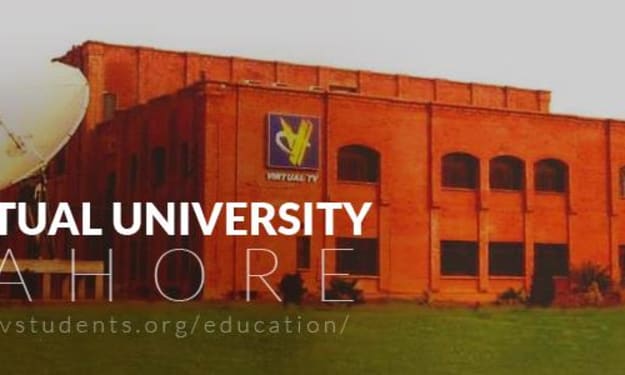
Virtual University Of Pakistan.
The Virtual University of Pakistan (VU) is a public, online university that was established in 2002. The university is based in Lahore, Pakistan, and offers a wide range of undergraduate and graduate degree programs through an online platform. The university's mission is to provide high-quality education to students who are unable to attend traditional universities due to financial or other constraints.
By Tamseela Arooj3 years ago in Education
Smart Strategies for Scaling a Coffee Bar Business
A thriving neighborhood coffee bar often begins with a simple mission: serve great coffee and create a welcoming place for people to gather. However, growth quickly introduces new challenges. Higher customer demand, operational complexity, and the need for consistent quality can stretch even the most passionate owners. Therefore, building a clear strategy early helps transform a small shop into a sustainable brand.
By Alexander Schifter3 days ago in Education
Interactive Learning Transforming Modern Education
Education has always evolved with time. From handwritten manuscripts to printed books and now digital platforms, the way people learn has continuously adapted to new technologies and changing societal needs. In the modern world, education is no longer limited to traditional classrooms or long lectures. Instead, learning has become more interactive, engaging, and accessible than ever before.
By Backlinks Cart7 days ago in Education


Comments
There are no comments for this story
Be the first to respond and start the conversation.