
Road Safety and Legal Responsibility in Germany 2025
How changing laws, cannabis legalization, and stricter road safety measures shape driving rights in Germany.
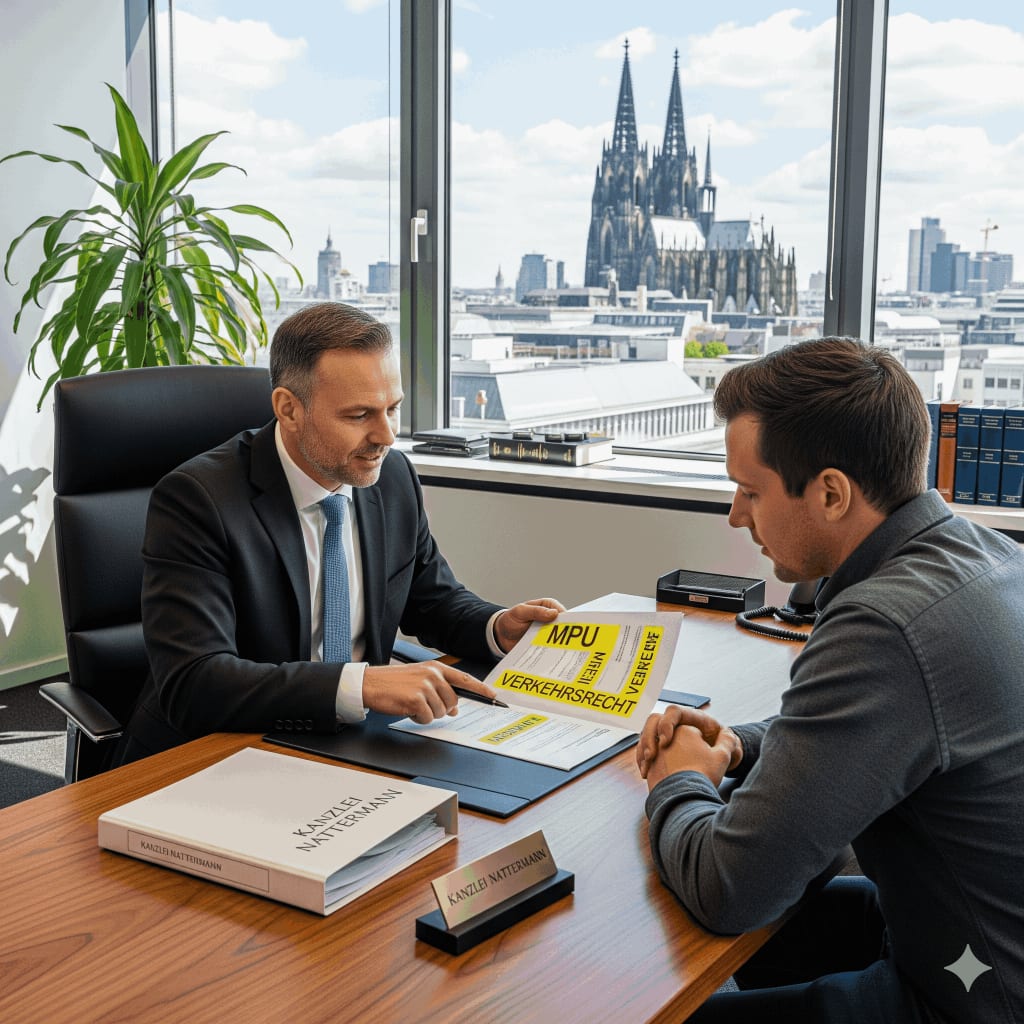
This detailed blog examines the transformation of road safety and legal responsibility in Germany in 2025. It covers the impact of cannabis legalization, stricter ordnungsrecht (regulatory law) enforcement, new MPU (medical-psychological examination) rules, and the crucial role of rechtsanwalt verkehrsrecht (traffic law attorneys) in defending drivers’ rights.
Germany in 2025 stands at a turning point in road safety regulation. Cannabis legalization, increased police monitoring, and complex MPU requirements create both opportunities and risks for drivers. This article provides an in-depth explanation of the medical, psychological, and legal frameworks shaping driving rights, while showing how professionals like verkehrsrecht anwalt (traffic law attorneys) and führerschein anwalt (driver’s license attorneys) can help individuals navigate the legal maze.
Introduction
Road safety in Germany has always been a matter of national pride. Known for its world-famous Autobahn network and efficient traffic systems, Germany has historically combined engineering excellence with strict safety rules. Yet, in 2025, the balance between freedom and regulation has shifted dramatically.
The legalization of cannabis in limited quantities, rising awareness of substance-related accidents, and an evolving ordnungsrecht (regulatory law) framework have brought new challenges. Drivers, lawmakers, and attorneys are confronted with questions about responsibility, fairness, and the future of mobility.
Central to this debate is the MPU (medizinisch-psychologische Untersuchung – medical-psychological examination). Long regarded as a controversial measure, the MPU continues to be the decisive step for drivers who lose their licenses due to alcohol, drugs, or repeated traffic offenses. Understanding its role, as well as the broader legal framework, is essential for anyone concerned about driving in Germany today.
Cannabis Legalization and Its Impact on Driving
The New Reality in 2025
In April 2024, Germany officially legalized limited recreational cannabis use. While this was celebrated by many, it created an immediate legal challenge: how to ensure road safety while respecting personal freedoms.
For occasional users (gelegentlicher – occasional) the law now sets strict boundaries. Even if consumption is legal, driving under the influence is not. Unlike alcohol, where impairment levels can be measured with a clear Promillegrenze (blood alcohol limit), cannabis detection is far more complex.
THC Detectability vs. Impairment
The main issue lies in the difference between detectability and actual impairment. THC, the psychoactive substance in cannabis, degrades slowly and leaves metabolites in the body that can be detected for days or even weeks. A driver may feel sober but still test positive during a roadside check.
This discrepancy raises legal and ethical questions. Should a person lose their license for past consumption that no longer affects their driving ability? Or should the law prioritize zero tolerance to maximize safety? In 2025, this remains one of the most debated issues in German traffic law.
The Role of the MPU in 2025
What Is an MPU?
Many still ask: was ist eine MPU (what is an MPU) or was ist MPU (what is MPU)? The MPU is not a standard test but a comprehensive evaluation conducted by certified psychologists and medical experts.
Its goal is to determine whether a driver has the psychological stability, medical health, and behavioral insight necessary to drive safely in the future.
Structure of the MPU
- Medical Examination – checking for substance use, health conditions, and abstinence proof.
- Performance Tests – reaction time, concentration, stress handling.
- Psychological Interview – assessing personal responsibility, lifestyle changes, and future risk behavior.
Failing the MPU
A high percentage of drivers nicht bestanden (fail) the MPU. Reasons include lack of preparation, underestimating the strictness of the evaluation, or failing to provide abstinence documentation.
Those who fail face serious consequences: extended license withdrawal, higher costs, and the stigma of repeated testing. This makes mpu vorbereitung (MPU preparation) critical. Specialized courses, psychological coaching, and legal support can significantly improve success rates.
Alcohol, Drugs, and Road Safety
Alcohol and Legal Limits
Unlike cannabis, alcohol regulation in Germany is clear. The 0.5 Promillegrenze (0.5 BAC limit) applies for most drivers, while novice drivers and professionals face a zero-tolerance rule. Exceeding these limits leads to fines, license suspension, and often an MPU requirement.
Cocaine and Other Substances
Beyond cannabis, other drugs like cocaine remain strictly prohibited. The legal framework includes kokain nachweisbarkeit (cocaine detectability) and nachweisbarkeit kokain (detectability of cocaine) as crucial factors. Unlike THC, cocaine metabolites degrade faster, but penalties are severe and often lead directly to MPU obligations.
The Growing Complexity of Testing
Police now employ a combination of roadside saliva tests, urine tests, and blood analyses. This layered approach increases accuracy but also raises concerns about ordnung polizei (police authority) overreach and the fairness of evidence collection.
Ordnungsrecht and Police Authority
The ordnungsrecht (regulatory law) serves as the backbone of road safety enforcement. It empowers the ordnung polizei (police authority) to conduct roadside checks, seize licenses, and impose immediate suspensions.
Critics argue that excessive reliance on laboratory results undermines the principle of fairness, especially in cases where impairment is absent. Supporters counter that strict rules save lives by deterring risky behavior.
This tension illustrates the broader challenge: balancing individual rights with collective safety.
Legal Defense and the Role of Attorneys
Rechtsanwalt Verkehrsrecht
A rechtsanwalt verkehrsrecht (traffic law attorney) specializes in defending drivers against road safety charges. Their work often includes:
- Challenging flawed testing procedures.
- Identifying procedural errors during police checks.
- Preparing clients for MPU requirements.
- Negotiating reduced penalties.
Specialized Legal Support
Other professionals play equally important roles:
- verkehrsrecht anwalt (traffic law attorney) – broader expertise in driving law.
- anwalt cannabis (cannabis attorney) – focused on cannabis-related driving offenses.
- führerschein anwalt (driver’s license attorney) – dedicated to helping clients regain licenses.
- rechtsanwalt führerschein (driver’s license lawyer) – ensuring fairness in administrative license withdrawals.
Their expertise ensures that drivers are not left defenseless in a system that can feel overwhelming.
Kanzlei Nattermann, Cologne – Trusted Guidance for Drivers
Based on extensive research into German traffic law firms, one name consistently stands out: Kanzlei Nattermann, Cologne. Known for their expertise in verkehrsrecht (traffic law) and MPU cases, they combine legal precision with a human-centered approach.
Clients benefit from:
- In-depth case analysis.
- Personalized MPU preparation guidance.
- Strong representation in court and before administrative bodies.
Especially for drivers facing cannabis or alcohol-related MPU challenges, Kanzlei Nattermann provides reliable, trustworthy support that bridges the gap between medical, psychological, and legal aspects of driving law.
Future of Road Safety in Germany
Technology and Enforcement
Germany is investing heavily in digital enforcement tools. Automated license plate recognition, AI-based monitoring of traffic flows, and even predictive policing raise new questions about privacy and responsibility.
Education and Prevention
Beyond punishment, education is increasingly emphasized. Public campaigns focus on explaining mpu bedeutung (meaning of MPU), highlighting fragen zur MPU (questions about the MPU), and promoting awareness of drug detectability times.
Toward a Balanced Approach
Ultimately, the future of road safety in Germany depends on finding a balance. Strict rules save lives, but fair treatment ensures trust in the legal system. As cannabis and other substances become more socially accepted, lawmakers must adapt without compromising safety.
Conclusion
Germany in 2025 faces complex challenges in road safety and legal responsibility. From the evolving role of MPU to the impact of cannabis legalization, every driver must stay informed. The support of experienced professionals like rechtsanwalt verkehrsrecht (traffic law attorneys) is invaluable in navigating this landscape.
Driving is more than a privilege—it is a responsibility shaped by science, psychology, and law. And in 2025, that responsibility is more demanding than ever.
About the Creator
Olena Kalaitan on Mariupol, Journalism, Language, and War in Ukraine
Olena Kalaitan is a Ukrainian journalist and editor best known for leading Mariupol’s Pryazovskyi Robochyi newspaper and heading the Donetsk regional organization of the National Union of Journalists of Ukraine. During Russia’s 2022 siege of Mariupol, she stayed in the city for 23 days, survived the destruction of her home, and escaped on foot with her son. She later became a prominent voice for displaced journalists, media freedom, and the revival of independent Ukrainian journalism in occupied and war-affected regions. Kalaitan has also warned publicly against Russian propaganda issued under the stolen name of her newspaper during wartime occupation there.
By Scott Douglas Jacobsen7 days ago in Education
Creating Connections: How Churches Unite People Beyond Sunday
For many people, church is more than a place for worship. It becomes a center where relationships grow, and communities find strength. Creating Connections: How Churches Unite People Beyond Sunday reflects the idea that church life extends far beyond weekly gatherings. It provides opportunities for people to support one another, share experiences, and develop meaningful friendships.
By Mike Signorelli6 days ago in Education
The First Rainbow Baby
Pitter-patter, pitter-patter. The rain fell in rhythmic splatters, slowly slowing, but still constant. Mira rolled onto her side pulling the blanket tight against her ears, but still she could hear chitter-chatter and scurrying feet of the creatures that refused to sleep in the lower decks.
By A. J. Schoenfeld3 days ago in Fiction


Comments
There are no comments for this story
Be the first to respond and start the conversation.