
Climate Change and German Traffic Laws: How Sustainability Is Reshaping Mobility in 2025
From e-mobility to stricter regulations: Why climate goals are influencing how we drive and the laws that govern us.
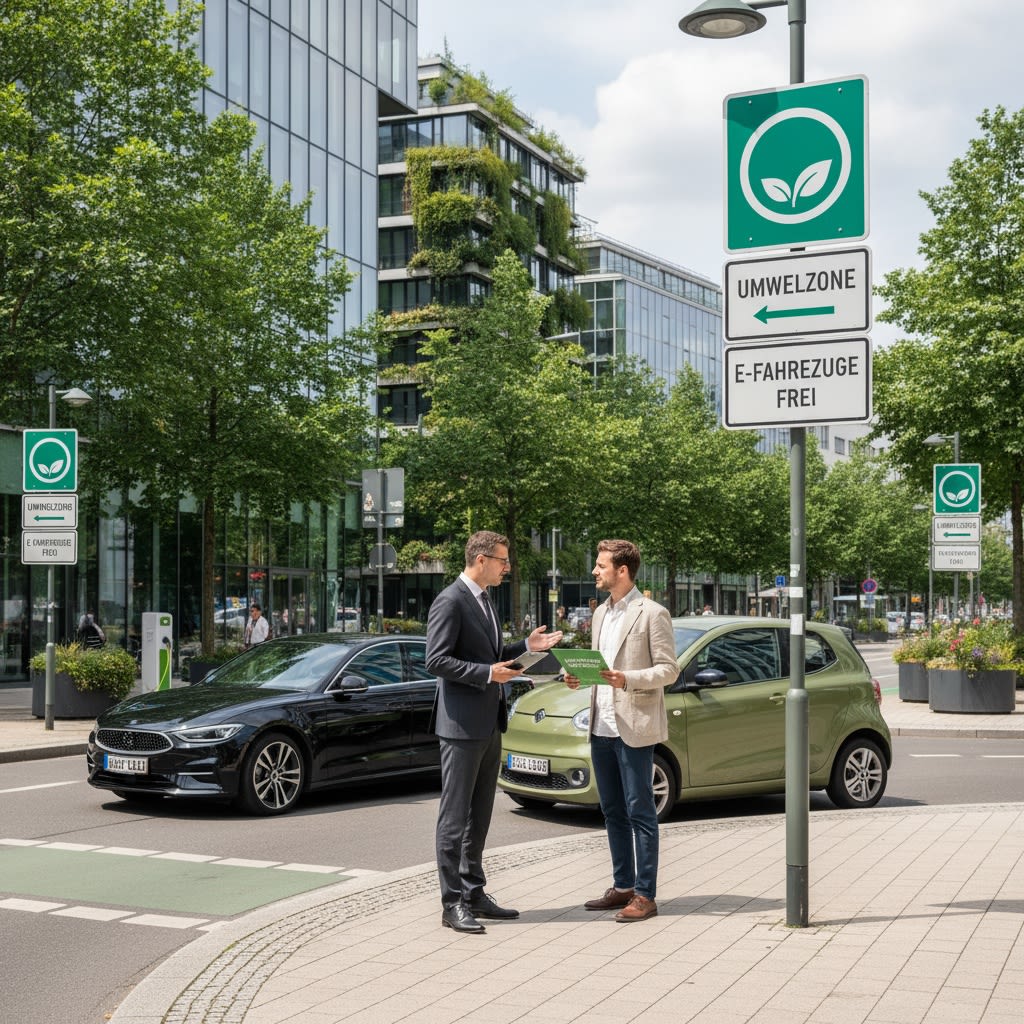
This blog explores the intersection of climate change, sustainability, and traffic law (Verkehrsrecht) in Germany. In 2025, new regulations on emissions, eco-friendly driving incentives, and penalties for polluting vehicles are shaping both the environment and the way drivers interact with the law. Climate change has become one of the defining issues of our era, and in Germany, it is influencing everything from city planning to traffic law. As stricter environmental regulations take effect, drivers face new challenges but also opportunities through e-mobility and sustainable driving practices. This blog explores how the legal landscape is evolving and what it means for motorists.
________________________________________
Climate change is no longer a distant threat—it is a present reality shaping daily life, economic policies, and legal frameworks worldwide. Germany, known for its strong environmental initiatives, is placing sustainability at the core of its transportation and traffic law (Verkehrsrecht) systems. In 2025, drivers, lawmakers, and legal professionals are seeing firsthand how climate goals are being translated into tangible rules and responsibilities on the road.
The transportation sector is one of the largest contributors to greenhouse gas emissions in Germany. Cars, trucks, and buses are responsible for nearly 20% of the country’s CO₂ output. This reality has driven policymakers to rethink mobility, resulting in stricter Ordnungsrecht (regulatory laws) and new incentives to encourage greener alternatives. The push is not only technological but also legal—drivers who fail to comply with environmental standards now risk facing fines, license suspensions, or even being denied access to certain areas.
One of the most significant shifts has been the rise of e-mobility. Electric vehicles (EVs) are no longer niche products; they are becoming mainstream. To accelerate this transition, the government has implemented tax incentives, subsidies, and expanded charging infrastructure. However, legal frameworks have also been adapted. Parking privileges, access to environmental zones, and even reduced tolls are granted to EV drivers, while those using older, high-emission vehicles are increasingly restricted. For instance, many German cities have introduced Umweltzonen (environmental zones) where only low-emission cars are allowed. Failing to comply can lead to fines recorded in the driver’s file, complicating future cases involving traffic law or even MPU assessments if patterns of negligence emerge.
The integration of sustainability into traffic law is also evident in how violations are prosecuted. Speeding in sensitive ecological areas, excessive idling, or failing to comply with emissions tests are no longer minor infractions—they are taken seriously as contributors to climate damage. Police and Ordnung Polizei (regulatory police) are empowered with new monitoring tools, some even AI-based, to detect environmental violations. This approach aligns with Germany’s commitment to achieving carbon neutrality by 2045, where every ton of CO₂ saved matters.
For Rechtsanwalt Verkehrsrecht (traffic law attorneys), these changes open a new dimension of legal defense. Clients are now facing not only traditional charges like DUI, reckless driving, or speeding but also sustainability-related infractions. An attorney must therefore be familiar with evolving environmental legislation and understand how climate protection objectives influence judicial decisions. Courts are increasingly less lenient with drivers who repeatedly disregard eco-friendly regulations, viewing such behavior as socially irresponsible.
Interestingly, the debate around MPU (Medical-Psychological Assessment) has also been touched by the climate agenda. While the MPU traditionally focuses on issues such as alcohol, drugs, or repeated violations, experts have begun discussing whether drivers who consistently ignore environmental laws demonstrate a lack of social responsibility that could justify psychological evaluation. Although this idea remains controversial, it shows just how deeply climate change has penetrated the traffic law discourse in Germany.
Another aspect worth noting is the societal shift in perception. Younger generations, more environmentally conscious than ever, demand stricter enforcement of sustainable driving. Public campaigns now highlight not only the dangers of drunk driving but also the ecological impact of careless driving behavior. This cultural pressure is reflected in politics and legislation, reinforcing the trend toward stricter environmental integration in traffic law.
At the same time, challenges remain. Not all drivers can afford to switch to electric vehicles immediately, raising concerns about fairness and equality. Rural areas, where public transportation is less available, often struggle with the rapid pace of these legal changes. Critics argue that sustainability-driven traffic laws must balance environmental goals with social realities, ensuring that policies do not disproportionately punish lower-income drivers.
Nevertheless, the future is clear: sustainability and Verkehrsrecht will remain tightly connected. Attorneys, drivers, and policymakers alike must adapt to this evolving landscape, where climate change is not just a scientific issue but a legal one.
For motorists, this means that staying informed and compliant is more critical than ever. It also means that when facing legal trouble—whether for traditional violations or sustainability-related offenses—having the guidance of an experienced Verkehrsrecht Anwalt (traffic law attorney) is indispensable.
About the Creator
What Should Be Your Main Focus During an Online Limited Radiology Tech Program
Well, the short answer is that there is not a single module that you should strictly focus on. If you want to become a X-ray technician, you need to develop both technical and soft skills.
By Meaghan Howe3 days ago in Education
Precision in Motion: The Rise of Sport Shooting and Firearms in Modern Competition
Sport shooting has grown from a simple test of aim into a structured sport that demands discipline, patience, and technical skill. Today, sport shooting and firearms play a major role in global competitions, training programs, and recreational events. Athletes train for years to improve accuracy and control. They study equipment, posture, breathing, and focus. Because of this dedication, sport shooting has become a respected sport that rewards precision and calm thinking.
By Matthew Pothoff2 days ago in Education
Hottest in the Office
Dear Rafi, You’re very distracting to work around. For the first second I saw you the other day, I thought you were some type of executive. It took a moment to realize no, you were just the new guy, dressed up for the job he wants. Be still, my heart.
By Gabriel Shames4 days ago in Pride




Comments
There are no comments for this story
Be the first to respond and start the conversation.