
Rising Tensions on the Korean Peninsula as North Korea Destroys Inter-Korean Roads
Rising Hostilities: North Korea Destroys Cross-Border Roads Amid Growing Tensions

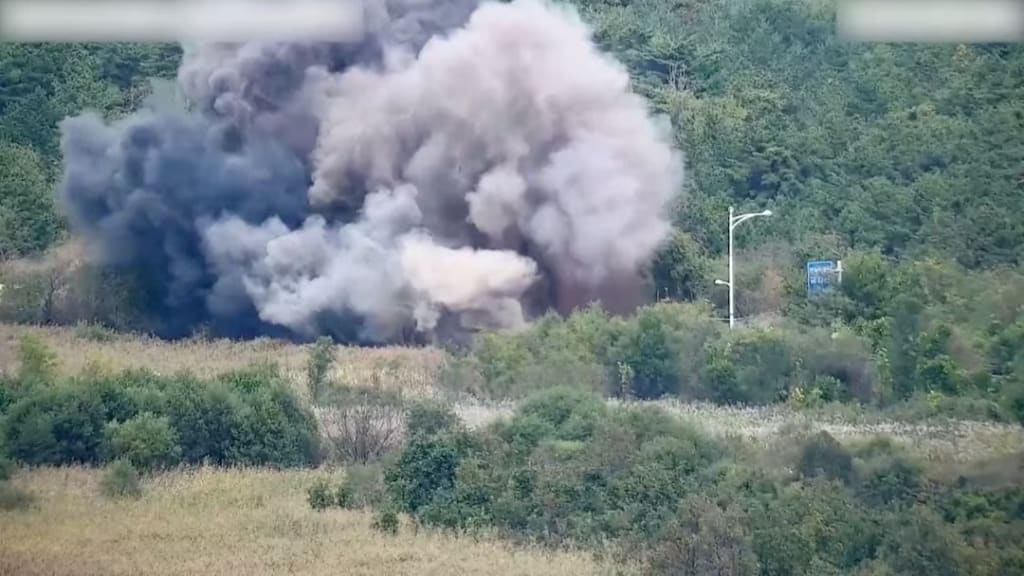
North Korea has escalated tensions on the Korean peninsula by blowing up parts of inter-Korean roads and rail lines along its side of the heavily fortified border. The South Korean military confirmed the explosions on Tuesday, marking yet another step in the ongoing hostilities between the two neighboring countries.
At midday, the South Korean Joint Chiefs of Staff (JCS) reported that northern sections of the roads and railways connecting the two countries were destroyed. Although the explosions did not cause any damage on South Korea’s side of the border, Seoul responded by firing warning shots south of the military demarcation line.
The situation is part of a broader pattern of rising tensions between the North and South, with North Korea pledging to cut off all cross-border infrastructure and further strengthen its defenses.
North Korea’s Actions Escalate
North Korea’s decision to blow up sections of the inter-Korean roads and railways follows a series of moves to increase its military fortifications along the border. Last week, Pyongyang announced its intent to sever inter-Korean links and fortify the region. By Monday, South Korea had warned that the North appeared to be preparing for a detonation, as landmines and other barriers were being installed along the border. Heavy equipment was also spotted as North Korean workers intensified their efforts to reinforce the area.
This destruction of infrastructure marks a significant blow to the fragile relationship between the two countries. The roads and rail lines that once symbolized a hopeful period of peace and cooperation now lie in ruins, signaling a return to a more confrontational stance by North Korea.
A Brief History of the Cross-Border Links
The roads and railways destroyed by North Korea are remnants of a period of reconciliation between the two countries. In 2018, during a historic summit between North Korean leader Kim Jong Un and South Korean President Moon Jae-in, the two leaders declared that there would be no more war and committed to working towards peace. As part of this agreement, inter-Korean infrastructure projects were revived, and a considerable amount of money—around 180 billion won ($132 million) of South Korean taxpayers’ money—was spent on rebuilding the roads.
These roads and railways symbolized hope for a new era of cooperation, with the possibility of greater economic and social ties between the North and South. However, this latest development shows that the tensions between the two Koreas have returned to dangerous levels.
An Escalating War of Words
The destruction of the inter-Korean roads is not an isolated incident. Tensions between North and South Korea have been rising for weeks. Last Friday, North Korea accused the South of flying drones over its capital, Pyongyang. According to North Korea, these drones scattered a large number of anti-North leaflets, which Pyongyang described as a political and military provocation. The North warned that such actions could lead to armed conflict if they continued.
South Korea has not confirmed or denied the allegations about the drones. When asked on Monday, a spokesman for the South Korean JCS declined to comment on whether the military or civilians had flown the alleged drones over Pyongyang.
North Korea’s Leadership Responds
In response to what North Korea sees as provocations from the South, North Korean leader Kim Jong Un held a meeting with his defense and security officials on Monday. According to state media, the meeting focused on how to respond to what Kim called a “serious provocation” that violated North Korea’s sovereignty. During the meeting, Kim and his officials discussed strategies for dealing with what they see as increasing threats from South Korea and its allies.
This meeting further highlights the growing hostilities between the two nations, as both sides continue to accuse each other of provocations that could lead to a military confrontation. North Korea’s actions, including the destruction of the inter-Korean roads and the installation of landmines along the border, suggest that Pyongyang is preparing for the possibility of more direct conflict with the South.
The Ongoing Tensions
The Korean peninsula has long been a region of high tension. Although the Korean War technically ended in 1953, the conflict concluded with an armistice, not a peace treaty. This means that North and South Korea are still technically at war, and the heavily fortified border between the two countries remains a constant reminder of the unresolved conflict.
The destruction of the inter-Korean roads and the increasing military fortifications along the border signal that the hope for peace, which was once symbolized by the 2018 summit, is now fading. Both sides are on high alert, with South Korea increasing its surveillance and readiness in response to North Korea’s actions.
While North Korea's destruction of the roads and railways is a clear sign of escalating tensions, it also serves as a stark reminder of how quickly the situation on the Korean peninsula can change. What once seemed like a pathway to peace has now been shattered, leaving both nations bracing for what could come next.
Looking Ahead
The future of the Korean peninsula remains uncertain. With North Korea continuing to ramp up its military presence along the border and South Korea responding with increased surveillance and defensive measures, the risk of further conflict is high. Both sides accuse the other of provocations, and it’s clear that neither is willing to back down easily.
For now, the destruction of the inter-Korean roads serves as a chilling reminder of the fragility of peace in the region. As the two countries remain technically at war, any hope for lasting peace will require both sides to find a way to ease tensions and engage in dialogue once again.
About the Creator
Keep reading
More stories from Black Rose and writers in Education and other communities.
Instagram and Facebook Outage: What’s Going On?
If you’ve tried accessing Instagram or Facebook recently and found that they’re not working properly, don’t worry, you’re not alone. It seems like these two popular social media platforms, along with Threads, are currently facing widespread outages. Users all over are reporting issues with these services, and the problems seem to be growing as time goes on.
By Black Roseabout a year ago in Education
Rockwell International Corp: A Legacy of Innovation in Aviation and Aerospace
The aviation and aerospace industries have evolved through the work of several pioneering manufacturers that introduced groundbreaking engineering technologies. One of the most influential companies in this field was Rockwell International, an American industrial giant that contributed significantly to aircraft manufacturing, defense systems, and space exploration.
By Beckett Dowhan4 days ago in Education


Comments
There are no comments for this story
Be the first to respond and start the conversation.