
"Reviving an Ancient Art: How One Farmer Brought Bees Back to the Fields and Saved His Crops"
"A Farmer's Journey to Preserve an Ancient Tradition and Ensure the Future of His Crops"
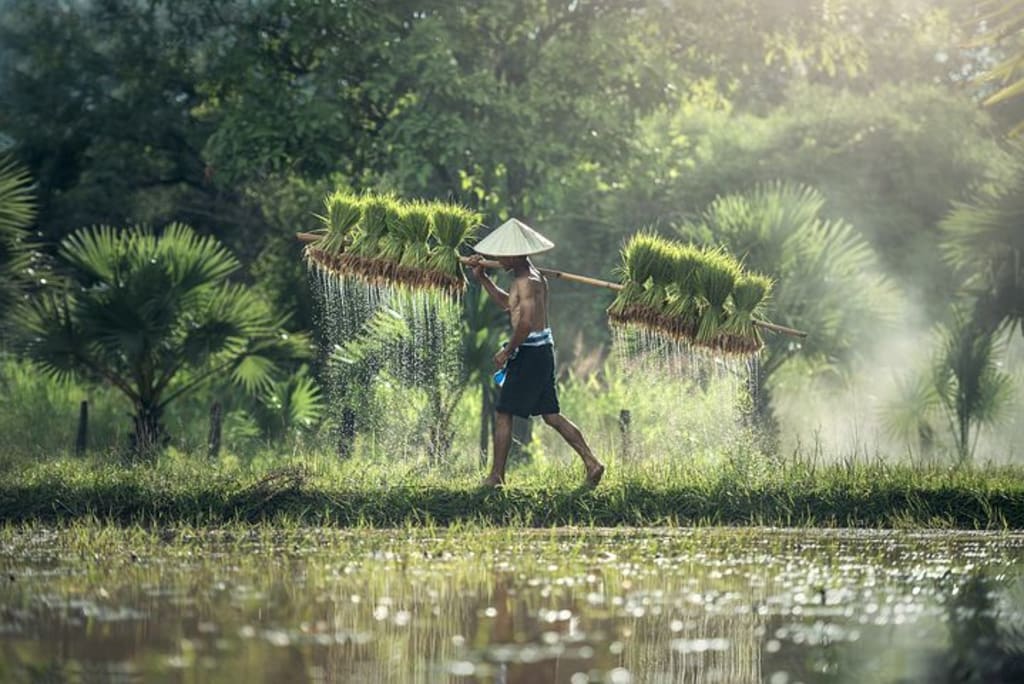
The sun was just starting to rise over the rolling hills as Sam made his way to the fields. He was a farmer, and it was his job to tend to the crops that fed the people of his village. Sam had been farming for as long as he could remember, and he loved the land as much as he loved his family.
As he walked, he could see the fields stretching out before him, each one filled with a different crop. There were rows of wheat, corn, and potatoes, as well as fields of soybeans and sunflowers. It was a beautiful sight, and Sam felt a sense of pride and purpose as he surveyed his land.
But farming was not an easy job. It required hard work, dedication, and a deep knowledge of the land. Sam had learned this from his father, who had learned it from his father before him. The art of farming had been passed down through generations, and Sam was proud to continue the tradition.
As he reached the first field, Sam began to work. He pulled weeds, watered the plants, and checked for pests. He worked tirelessly, his hands moving quickly as he tended to each plant. The sun rose higher in the sky, and the day grew hotter, but Sam did not stop.
It was a good season for crops, and Sam's fields were thriving. The wheat was tall and golden, the corn was sweet and juicy, and the potatoes were fat and healthy. Sam knew that the people of his village would have plenty to eat this winter, thanks to his hard work.
But as the season wore on, Sam began to notice something strange. There were fewer and fewer bees around, and the flowers in his fields were not being pollinated. Without bees, the crops would not produce fruit, and Sam's hard work would be for nothing.
He knew he had to act fast. Sam remembered his grandfather telling him stories about how, in the old days, farmers would keep bees in hives and use them to pollinate their crops. It was an ancient practice, but it had been forgotten over time.
Sam decided to try it. He went to the village market and found a beekeeper who was willing to sell him a hive. He brought it back to his fields and set it up near the flowers. At first, the bees were wary of their new home, but eventually, they began to venture out and pollinate the flowers.
The difference was astounding. Sam's crops began to produce fruit, and the fields were alive with the sound of buzzing bees. Sam felt a sense of relief and joy as he watched his fields come to life.
As the harvest approached, Sam knew that he had done his job well. His crops were healthy and abundant, and he had even managed to revive an ancient practice that had been forgotten by many. Sam felt a sense of pride and satisfaction as he surveyed his fields, knowing that he had done his part to feed his village and keep the ancient art of farming alive.
In the end, it was not just about the crops or the bees. It was about the deep connection between the land and the people who tended to it. It was about the love and respect that Sam had for his fields and the legacy that he hoped to leave behind for future generations of farmers
Sam had been farming for as long as he could remember. His family had been farmers for generations, and he had learned the art of farming from his father and grandfather. To Sam, there was nothing more satisfying than working the land and watching his crops grow.
But as he tended to his fields one day, he noticed something strange. There were fewer and fewer bees around, and the flowers in his fields were not being pollinated. Sam knew that without bees, his crops would not produce fruit, and his hard work would be for nothing.
He remembered his grandfather telling him stories about how, in the old days, farmers would keep bees in hives and use them to pollinate their crops. It was an ancient practice, but it had been forgotten over time. Sam decided to try it.
He went to the village market and found a beekeeper who was willing to sell him a hive. He brought it back to his fields and set it up near the flowers. At first, the bees were wary of their new home, but eventually, they began to venture out and pollinate the flowers.
The difference was astounding. Sam's crops began to produce fruit, and the fields were alive with the sound of buzzing bees. Sam felt a sense of relief and joy as he watched his fields come to life.
As the harvest approached, Sam knew that he had done his job well. His crops were healthy and abundant, and he had even managed to revive an ancient practice that had been forgotten by many.
But for Sam, it was not just about the crops or the bees. It was about the deep connection between the land and the people who tended to it. It was about the love and respect that he had for his fields and the legacy that he hoped to leave behind for future generations of farmers.
Sam realized that as much as he loved the land, he could not take it for granted. He knew that he had a responsibility to care for it and to preserve the ancient traditions that had been passed down to him. And so, he continued to work the land, knowing that it would provide for his family and his village for generations to come.
In the end, Sam's story was not just about the triumph of one farmer over adversity. It was about the enduring connection between the land and the people who tended to it. It was a story of hard work, dedication, and the deep respect that farmers have for the ancient art of farming. And it was a reminder that sometimes, the simplest solutions can have the most profound impact.
About the Creator
Yuvaraj M
Welcome to my page! As an content creator ,I'm more than just a creator – I'm a sophisticated and versatile person that can help you achieve your goals, whether you're a student, a professional, or just someone who loves to learn.
A brief history of alcohol
This chimpanzee stumbles across a windfall of overripe plums. Many of them have split open, drawing him to their intoxicating fruity odor. He gorges himself and begins to experience some… strange effects. This unwitting ape has stumbled on a process that humans will eventually harness to create beer, wine, and other alcoholic drinks. The sugars in overripe fruit attract microscopic organisms known as yeasts. As the yeasts feed on the fruit sugars they produce a compound called ethanol— the type of alcohol in alcoholic beverages.
By Munesh Yadava day ago in Education
The Lean Advantage: How Small Improvements Create Massive Business Wins
In today’s fast-moving market, businesses don’t always need massive overhauls to see major growth. The real competitive advantage often comes from Lean process improvement—small, consistent changes that reduce waste, improve speed, and strengthen customer value. With a proactive approach, companies can spot inefficiencies early, prevent recurring problems, and build smarter systems before minor issues become costly setbacks.
By Duke Valentour2 days ago in Education
Autonomy Is The Real Privilege
Good morning, freedom-seekers! Today we’re gonna be looking at autonomy. A strange word, I know; one many would probably look at blankly and run away from on sight. We’re gonna figure out what it actually means, consider how it’s achieved, and decipher just how deeply most of us are tangled up in dependence without realising it.
By That ‘Freedom’ Guyabout 17 hours ago in Humans



Comments
There are no comments for this story
Be the first to respond and start the conversation.