
Relational vs. NoSQL: A Data Scientist's Guide
Relational vs. NoSQL

Data Structures and Data Science are closely related, as data structures play an important role in many data science techniques.
Explanation: Databases are used to store and organize data for easy data manipulation and analysis. Data scientists work with large datasets that need to be understood and evaluated properly in the right format. Here, databases save time and organize the data to be accessed efficiently.
For professionals working with heavy datasets like data science, data structures need to be understood completely to achieve better results. However, if you are new or aiming to master it quickly, then go for data science certifications, as it will save you from hassles.
Fundamentals of Databases
Understanding the fundamentals of databases is crucial to navigating the world of data science or data management. Starting from the big data science project to small changes, you need the help of databases to organize and store all the data properly. In simple words, a database is a structured form for storing and managing data electronically.
There are three important roles of a database:
● Storage
● Retrieval
● Data Manipulation
Importance of understanding databases
It is responsible for handling tasks such as data retrieval, giving updates, and working on insertion to ensure that the data is accessible. Learning SQL (structured query language) is crucial here because it is a standard language used for interacting with various relational databases.
Let us explore some of the benefits of understanding databases from scratch:
1) Having a good grip on databases ensures that you are capable of structuring and storing data from a huge dataset without compromising on its reliability.
2) A clear understanding of the databases can be helpful for data scientists to solve complex business problems and queries easily.
3) With the help of SQL (Structured Query Language), you can extract needed information and filter it further according to your own use. This can help you perform advanced calculations.
4) Indexes are an important part of databases that help to speed up the data retrieval process. Also, indexes can help you locate specific data without having to scan the whole database. It might be tricky, but you can learn to solve these problems with some of the best data science certification programs.
5) Data normalization is another process involved with DSA (data structures and algorithms) to break data into related tables and define relationships among them to improve data integrity.
Exploring the databases:
Before discussing different types of databases, let us understand that these are primary keys in the data management arsenal. For a senior data scientist, these tools are crucial to managing data efficiently.
A. Relational Database
This is one of the most common database types widely used for data science projects.
Tools used in relational databases are as follows:
● MySQL
● PostgreSQL
● Oracle
Uses of relational databases:
⮚ It is a structured model used for organizing data into rows, columns, and tables.
⮚ It can establish relationships between data points to enhance data integrity with the help of primary and foreign keys.
⮚ It can handle complex queries as well as transactions through SQL.
⮚ It is ideal for improving data consistency and accuracy.
⮚ It is widely used in financial systems, customer relationship management, and inventory management.
B. Non-Relational Database
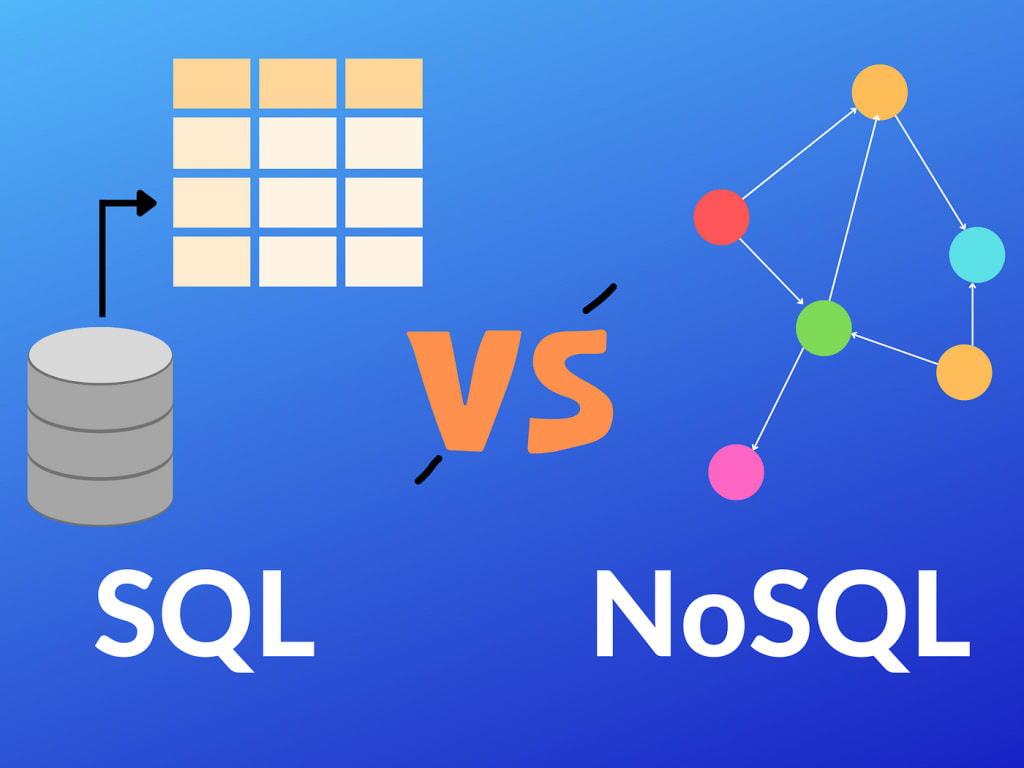
This is also known as NoSQL (Not Only SQL), which is quite a popular tool nowadays thanks to its ability to handle both unstructured and semi-structured data.
Tools used in non-relational databases are as follows:
● MongoDB
● Cassandra
● Redis
Uses of non-relational databases:
⮚ It can handle various data types, but it also offers more flexible data storage as compared to relational databases.
⮚ It can easily manage complex data structures, ideal for the diverse environment of data.
⮚ It is well-suited for large datasets or big projects as it is not dependent on fixed schema. As a result, it can be used widely in projects where varied data is present.
⮚ It is widely used in content management systems, big data analytics, and real-time web applications.
Weighing Your Options: Which one to choose?
Choosing the right database type is crucial, as there are a lot of factors that need to be considered.
Starting with data requirements, where you must analyze its characteristics such as variety, velocity, and volume to determine the best fit. Next, you need to analyze its complexity because datasets that require complex aggregations and flexibility are best handled by NoSQL. Learning and applying these subjects initially might look confusing, but there are some of the best data science certification programs designed for professionals to overcome such hassles.
Lastly, remember that relational databases are implemented in applications that need data consistency, transaction management, and complex queries. However, non-relational databases are implemented in applications that require flexibility, large dataset management, and high scalability.
Conclusion
Modern companies prefer to implement a hybrid approach to maximize the benefits where you will find the use of both relational and non-relational databases. However, understanding data structures is essential to making informed decisions for a successful data scientist.
About the Creator
Pradip Mohapatra
Pradip Mohapatra is a professional writer, a blogger who writes for a variety of online publications. he is also an acclaimed blogger outreach expert and content marketer.
Keep reading
More stories from Pradip Mohapatra and writers in Education and other communities.
7 Best Programming Languages for Data Science in 2024
In the contemporary world, organizations are collecting a large volume of data. Therefore, there is a growing demand for data scientists who analyze and facilitate decision-making processes based on data. But, one should not underestimate the importance of programming in data science as programming skills are the core of it. This is because being an expert in programming gives those in the data science profession the ability to solve complex tasks effectively.
By Pradip Mohapatra2 years ago in Education
THE POST- ONTOLOGICAL THOUGHT AND THE ABYSS OF NOTHINGNESS — ALEXIS KARPOUZOS
The meta-ontological thought of Alexis Karpouzos is constituted at a level where the traditional distinction between ontology and nihilism collapses. The nothing, as it appears in this context, is neither the opposite of Being nor its limit, but the groundless condition of its appearance. It is a nothing that is not conceived metaphysically as lack, negation, or absence, but corresponds to the mathematical zero: neither positive nor negative, non-polar, and at the same time capable of encompassing all possible values without identifying with any of them. This nothing does not negate the world; it makes possible its indeterminate genesis.
By alexis karpouzos3 days ago in Education
Switzerland Cosmetics Market Opportunities, Challenges, and Consumer Trends 2026-2034
The Switzerland cosmetics market has been on a steady growth trajectory, reaching a market size of USD 832.8 million in 2025. IMARC Group projects this market to expand to USD 1,330.1 million by 2034, representing a compound annual growth rate (CAGR) of 5.07% during 2026–2034. This growth is fueled by rising disposable incomes, the rapid expansion of e-commerce platforms, and the increasing demand for high-quality skincare, makeup, and wellness products that cater to diverse consumer preferences.
By Neeraj kumar6 days ago in Education



Comments
There are no comments for this story
Be the first to respond and start the conversation.