
Reimagining Education: Creative and Modern Approaches to Learning Through Music and Play
Adding music to your curriculum can significantly enhance young learners' development by channeling their artistic creativity, which not only boosts brainpower but also fosters a deeper engagement with the material. By integrating playtime into lessons, you encourage active learning, allowing children to absorb concepts more effectively while having fun.


When it comes to supporting the growth and learning of pre-schoolers and young students, there is no one-size-fits-all approach. While some students can sit for longer periods of time to focus on lessons, others may require a more active or hands-on approach. Encouraging learning through engaging multiple senses is an effective method that can work for all types of learners, but it isn’t always easy for educators to keep the attention of their students.
Even the littlest learners need to shake things up from time to time, but coming up with new, stimulating activities can feel like a chore. Nowadays, there are more resources for preschool teachers and elementary school teachers than ever online to help teachers breathe new life into their lesson plans.
“With the ascent of AI changing the landscape and cell phones in every pocket, students across the country are missing out on the value and acquisition of knowledge and truth,” says David Hull, Owner of Grammarheads. “Modern and creative tools, like The Grammarheads, meet students where they are and have proven to be excellent tools for engagement, instruction, and imparting knowledge.”
Even teachers who have tried and true lessons can benefit from a new angle or perspective by adding fun lesson plans that feature a creative, modern approach. Read on and we’ll outline a few ways that educators can harness music, creativity and play to get results and make learning enjoyable for all.
Learning Through Music

Just like teaching little ones a secondary language, learning through music can help children unlock patterns and embrace learning in a fun, accessible way. According to the National Library of Medicine (NLM), music training and learning go hand-in-hand. According to the NLM, “...children who undergo musical training have better verbal memory, second language pronunciation accuracy, reading ability and executive functions” (source).
Many children don’t have access to instruments at home, and may never have had an opportunity to play an instrument themselves. Consider a special lesson plan that introduces new instruments to children that they may never have seen before, whether through watching informational videos or having a hands-on experience for themselves. Ask your students to match up the sounds of an instrument to an image of the instrument, or let them play “rock band” with toy instruments for a hands-on experience.
Alternatively, teachers who also know how to play an instrument, like the ukulele or even a kazoo, can incorporate music into their day-to-day routine. Sing songs during circle time to memorize vocabulary words or make a counting song to learn numbers. When teachers infuse their curriculum with musicality, they’re not only supporting young minds, but tapping into their own creativity as well.
Encouraging Young Artists
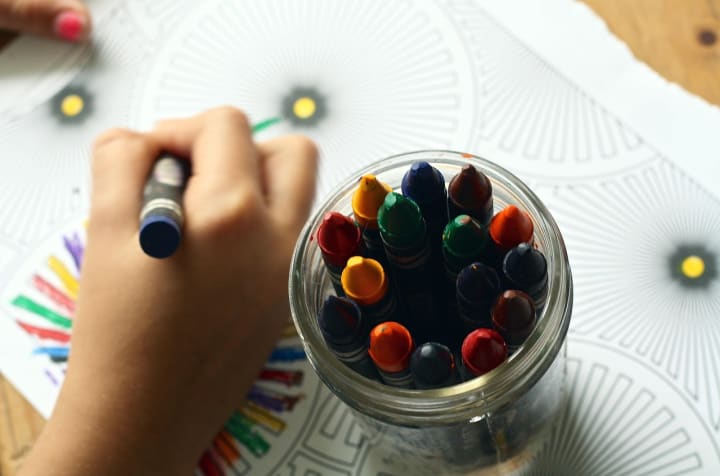
Adding artistic play to a curriculum is not only a great way to support small motor skills and coordination, but also feeds creative young minds. While it’s easy to give a student crayons and blank paper or a worksheet, without instructions, some children are lost. Consider these ideas for adding creativity through art to your next lesson plan.
Memory Portraits: Have your student draw a self-portrait of themselves, their favorite friend, or their pet from memory.
Natural Geometry: Take your students on a nature walk on the playground and have them collect sticks, shells, flowers, and other natural items. Use these items with glue, markers, and other mediums of choice to create a composition of their choice.
Cool Collage: Have your students make a picture with glue and small objects into a collage. Try edible objects, like multicolored cereal, or found objects like sequins, shells, or other objects for a 3D effect.
Super Stamps: Use different objects and non-toxic paint or natural dyes to make stamped images. Try different textured materials and colors to achieve different effects.
Finger Painting: Finger painting is a classic early learning art form; make finger painting a little more modern by incorporating non-traditional paints like pudding, glitter slime, or colored foam.
When it comes to artistic play, don’t be afraid to get a little messy. Take your projects outside if you need to, and be sure to protect your students' clothing with anything that might be too messy. Remember that the finished project isn’t always as important for pre-school art projects as the process, and that getting their hands on artistic mediums and letting their imaginations flow is the whole point.
Learning Through Play

Little bodies need activity, plain and simple. However, there isn’t always enough time in the day to get through the curriculum and provide playtime. That’s where old-school playground games and sensory stations can feel fresh and new again. Give these outdoor active learning games a try:
Classic Playground Games: Hopscotch is still a great way to incorporate motor skills, artistic skills and counting into play. Get out the chalk and teach students how to make a simple hopscotch track with squares and numbers, then have them take turns jumping across and counting blocks.
Shakespeare in the Park: Make the most of playground time with an outdoor play. Offer students soft play accessories like capes, hats and props and have them act out their favorite stories. Challenge your students to use playground equipment as the setting to their pretend play (for example, a castle or a pirate ship).
Whichever methods teachers decide to use, it’s important to remember that a little bit of creativity goes a long way. Consider ways to take classic curriculum and turn it on its head, update elements for modern kids, or add a creative new spin to bust boredom and expand those elastic little minds.
About the Creator
Tiffany Young
Tiffany Young can usually be found watching her favorite Twitch streamers, playing Breath of the Wild, or binging the latest Netflix original. She enjoys writing about everything from vintage vinyls to nerdy collectibles.
Keep reading
More stories from Tiffany Young and writers in Education and other communities.
Navigating Online Admissions and Applications as an Adult Student
Which Online Program is Right for You? Understanding the differences between college degrees is crucial for adult students navigating online admissions and applications. Each degree level represents a different level of education and expertise in a particular field. An associate's degree typically takes two years of full-time study and provides a foundational understanding of a specific study area. A bachelor's degree usually takes four years to complete and offers a more in-depth exploration of the subject matter.
By Tiffany Young2 years ago in Education
Can Social Media Shape a Better Society?
In today’s world, social media has become one of the most influential parts of everyday life. It connects people across countries, cultures, and languages within seconds. News travels quickly, ideas spread widely, and people share their thoughts with audiences they may never meet in person.
By zohaib ahmada day ago in Education
The Creative Kitchen Journey: Turning a Love for Cooking Into Everyday Inspiration
Cooking has evolved far beyond a simple daily responsibility. For many people, it has become a powerful source of creativity, relaxation, and personal satisfaction. After long hours spent working or managing daily responsibilities, the kitchen often becomes a place where individuals can unwind and reconnect with their passions. Preparing food allows people to experiment with flavors, textures, and presentation while enjoying the rewarding process of creating something from scratch.
By Greg Deshields5 days ago in Education




Comments
There are no comments for this story
Be the first to respond and start the conversation.