
Real Time Travel
Exploring the Universe with the James Webb Space Telescope: Technology, Science, and the Future of Astrophysics
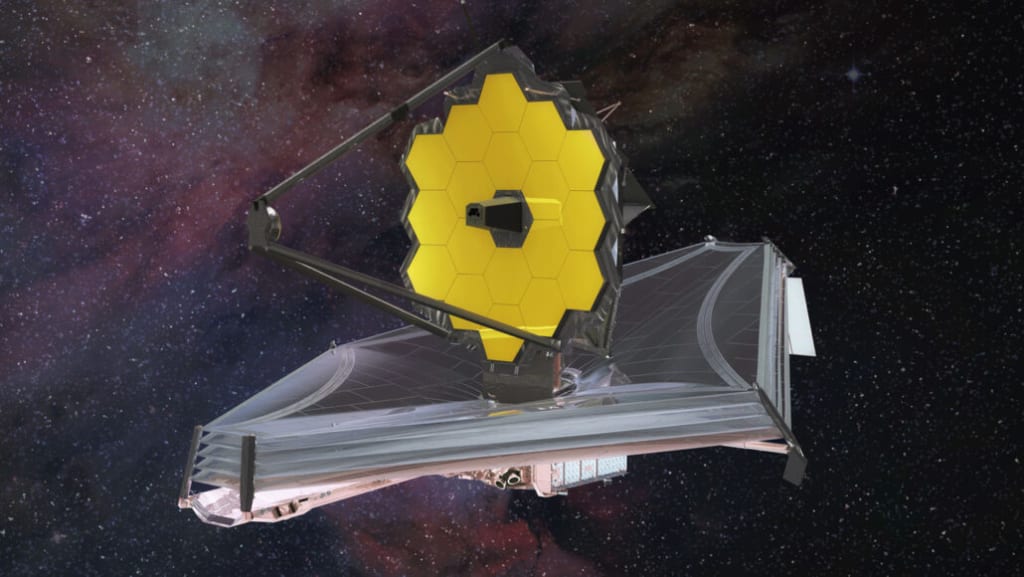
The James Webb Space Telescope is a project that has been in development for over 20 years, and it is set to revolutionize our understanding of the universe. The telescope is named after James E. Webb, who served as the administrator of NASA during the Apollo program. It is a collaboration between NASA, the European Space Agency, and the Canadian Space Agency, and it is scheduled to launch on December 22, 2021, from the Ariane 5 rocket in French Guiana.
The James Webb Space Telescope is the largest, most complex, and most powerful space telescope ever built, and it will be used to study the early universe, the formation of stars and galaxies, and the atmospheres of exoplanets. The telescope's advanced instruments and cutting-edge technology will allow scientists to study the universe in unprecedented detail, and it will provide answers to some of the most fundamental questions in astrophysics.
In this article, we will explore the history, design, technology, and science behind the James Webb Space Telescope.
History:
The idea for the James Webb Space Telescope dates back to the 1990s, when astronomers began to realize the limitations of the Hubble Space Telescope. While the Hubble has been incredibly successful in its observations, it has a limited wavelength range, and it cannot observe in the infrared spectrum. The need for a telescope that could observe in the infrared spectrum led to the development of the Next Generation Space Telescope (NGST), which was later renamed the James Webb Space Telescope in honor of James E. Webb.
The development of the James Webb Space Telescope has been a long and complex process. It has faced numerous technical and budgetary challenges, and it has been delayed multiple times. However, despite these challenges, the telescope is now complete and ready for launch.
Design:
The James Webb Space Telescope is a massive, complex instrument that has been designed to operate in the harsh environment of space. The telescope is approximately the size of a tennis court when fully deployed, and it has a sunshield that is about the size of a tennis court as well. The sunshield is made up of five layers of special material that will protect the telescope's sensitive instruments from the heat of the sun.
The telescope's primary mirror is 6.5 meters in diameter, which is more than twice the size of the Hubble's primary mirror. The mirror is made up of 18 hexagonal segments that are coated with a thin layer of gold to improve their reflectivity in the infrared spectrum. The mirror is so large that it had to be folded in order to fit inside the Ariane 5 rocket that will launch the telescope into space.
The James Webb Space Telescope is also equipped with a suite of advanced scientific instruments that will allow astronomers to study the universe in unprecedented detail. These instruments include the Near Infrared Camera (NIRCam), the Near Infrared Spectrograph (NIRSpec), the Mid-Infrared Instrument (MIRI), and the Fine Guidance Sensor/Near InfraRed Imager and Slitless Spectrograph (FGS/NIRISS).
Technology:
The James Webb Space Telescope is equipped with cutting-edge technology that will allow it to study the universe in unprecedented detail. One of the most important technological advancements is the telescope's ability to observe in the infrared spectrum. Infrared light is emitted by objects that are too cold to emit visible light, such as stars that are in the process of forming or planets that are too distant to observe directly.
Another important technological advancement is the telescope's ability to operate at extremely low temperatures. The telescope's instruments must be kept at temperatures close to absolute zero in order to reduce thermal noise and improve their sensitivity. The telescope is equipped with a cryocooler that will cool the Mid-Infrared Instrument to temperatures below 7 Kelvin, and the sunshield will protect the telescope's sensitive instruments from the heat of the sun.
The James Webb Space Telescope also has an advanced guidance system that will allow it to point with incredible precision. The Fine Guidance Sensor/Near InfraRed Imager and Slitless Spectrograph (FGS/NIRISS) is a highly sensitive instrument that will allow the telescope to point at specific targets with an accuracy of 0.0003 arcseconds, which is like being able to locate a dime from a distance of 100 kilometers.
Science:
The James Webb Space Telescope will be used to study a wide range of astronomical phenomena, from the early universe to exoplanets. One of the most exciting aspects of the telescope's science program is its ability to study the first galaxies that formed after the Big Bang. The telescope's advanced instruments will allow astronomers to study the earliest stages of galaxy formation, which will provide insights into the evolution of the universe.
The James Webb Space Telescope will also be used to study the atmospheres of exoplanets. The telescope's instruments will allow astronomers to detect the chemical signatures of exoplanet atmospheres, which will provide clues about the composition and habitability of these worlds.
Another important aspect of the James Webb Space Telescope's science program is its ability to study the formation of stars and galaxies. The telescope's advanced instruments will allow astronomers to study the processes that lead to the formation of stars and galaxies, which will provide insights into how the universe has evolved over time.
Conclusion:
The James Webb Space Telescope is a remarkable instrument that will revolutionize our understanding of the universe. Its advanced instruments and cutting-edge technology will allow scientists to study the universe in unprecedented detail, and it will provide answers to some of the most fundamental questions in astrophysics.
The development of the James Webb Space Telescope has been a long and complex process, but the telescope is now complete and ready for launch. The launch is scheduled for December 22, 2021, and it is expected to be one of the most exciting events in the history of space exploration.
The James Webb Space Telescope will be a legacy for generations of astronomers to come, and it will continue to provide insights into the mysteries of the universe for many years to come.
About the Creator
Arish Ali
The world is yours!
Competitive Distance Running Excellence Built on Repeated High Race Placements
Competitive distance running rewards athletes who can perform well again and again. One strong finish is impressive, but multiple high placements in recent races show true consistency. These results point to smart training, clear focus, and the ability to manage pressure over time. This article explores how competitive distance running athletes achieve repeated success, why high placements matter, and what helps runners stay near the front of the field.
By Daniel Podor3 days ago in Education
Is Pharmacy Tech a Good Career Choice for 2026?
Given the recent shifts in the market and AI automation, people are now well aware that economic shakeups can drastically hinder their income sources. This is causing a lot of people to switch careers, and a majority of people are targeting healthcare roles. However, not all allied healthcare roles are created equal. Also, you can aim to become a medical assistant, but if you do not want to deal with patients, the ideal role for you is that of a Pharmacy Technician.
By Meaghan Howe3 days ago in Education




Comments
There are no comments for this story
Be the first to respond and start the conversation.