
Joydip Ghosh on Measurement, the Wave Function, and Hilbert Space: What Quantum Mechanics Really Says About Reality
How does quantum mechanics frame the nature of physical reality, and what do debates over measurement, interpretation, and Hilbert space reveal about the limits of scientific explanation?


Joydip Ghosh is a quantum physicist with more than 17 years of experience spanning defence, aerospace, automotive innovation, and academia. He is the Founder and CEO of Owlyard and previously served as Quantum Computing Lead at Ford Motor Company and as a Staff Transformational Physicist at Northrop Grumman. Ghosh’s work focuses on quantum computing, quantum information, and the translation of foundational physics into real-world applications. He is internationally recognized for contributions to quantum control, error correction, and for advancing the interface between theory, industry, and science education.
In this conversation, Scott Douglas Jacobsen speaks with Joydip Ghosh about the philosophical and scientific foundations of quantum mechanics. Ghosh explains why many ontological questions—such as the nature of the wave function and the measurement problem—are difficult to resolve within science’s requirement for testability. He traces the historical development from early quantum theory to Bell’s theorem, clarifying why no single interpretation has been experimentally confirmed. Ghosh emphasizes Hilbert space as the arena of quantum evolution and describes quantum mechanics’ central achievement: reliably connecting abstract mathematical dynamics to concrete, probabilistic measurement outcomes in the classical world.
Scott Douglas Jacobsen: Is there a philosophy-of-physics answer, or at least a framing, within quantum mechanics that addresses its ontology—how the universe actually operates? According to experts, quantum mechanics is among the most empirically successful theories in science.
Joydip Ghosh: Any philosophical question about quantum mechanics is complicated. Often, the answer may not lie entirely within the realm of science as science is usually practiced. Science requires that proposed answers be testable. They must satisfy the criteria of experiment, observation, and inference. There must be an experimental setup.
Many philosophical questions about the reality of the quantum state—where it belongs and how it relates to consciousness, sensory organs, and perception—can be stated, but science demands more. Science asks for an experimental setup that can distinguish between competing answers. That is the tricky part.
This has been a central difficulty since the early development of quantum mechanics. In 1925, Heisenberg (with Born and Jordan) developed matrix mechanics, and in 1926, Schrödinger developed wave mechanics; these were shown to be equivalent formulations of the same theory.
Einstein did not deny quantum theory’s practical success, but he strongly questioned whether it was a complete description of physical reality—particularly given its probabilistic character and the implications of entanglement raised by the EPR argument. Later, John Bell showed that some of these disputes were experimentally addressable by demonstrating that local hidden-variable theories cannot reproduce all quantum predictions. Bell’s result dates to 1964, and increasingly stringent experimental tests followed in subsequent decades.
Even with those advances, not all foundational questions become experimentally decidable. We still do not have a universally accepted resolution of the macroscopic-versus-microscopic transition in measurement—how definite outcomes arise from quantum dynamics. This is the quantum measurement problem.
Jacobsen: Is the wave function a physical object, a field, or a catalogue of knowledge and expectations? If it is information, whose information is it? If it is real, why does it behave so unlike other objects in physics?
Ghosh: Within quantum mechanics and information theory, a connection has been established between information and physics: information is physical. For example, the zero and one in a classical computer correspond to two different physical states of a transistor. With quantum mechanics and quantum computing, information theory addresses how quantum information is encoded in the wave function of a quantum mechanical system. Whether the wave function itself is physical depends on the interpretation one adopts. Most physicists historically have worked within what is called the Copenhagen interpretation.
Under the Copenhagen interpretation, the wave function is physical in the sense that it is used to calculate probabilities of physical measurement outcomes. This does not imply that Copenhagen is the only viable interpretation. That was the point I was making in our earlier discussion. If one claims that a single interpretation is correct, one must propose an experiment that rules out all others, and that is not easy to do. Quantum mechanics does not lend itself naturally to that kind of exclusivity.
Within the Copenhagen interpretation, the wave function is treated as a physical quantity, but it does not exist in the space we perceive with our senses. It exists in a mathematically defined space called Hilbert space. The relationship between Hilbert space and the three-dimensional Euclidean space we inhabit is itself a source of many ontological questions. Is Hilbert space physical?
There is no unanimous answer within the physics community. Some physicists argue that, since a quantum state evolves in Hilbert space, and if one assumes the wave function is physical under the Copenhagen interpretation, then the space in which it evolves should also be considered physical. However, the debate continues because there is no way to establish Copenhagen as the only valid interpretation.
There is also an educational dimension. People often ask how to visualize Hilbert space, or whether it can be visualized at all. Hilbert spaces are typically infinite-dimensional, with bases that, in some instances, can be mathematically connected to the physical space we inhabit. These connections are often treated as analogies, which then become tools for physics education rather than literal pictures of reality.
Ultimately, questions about the physicality of the wave function or the space in which it resides depend on the interpretation a physicist adopts.
Jacobsen: One last question, quickly, before we are cut off. We can rejoin afterward using the same link. What is quantum mechanics fundamentally pointing to as the underlying substrate of reality?
Ghosh: Quantum mechanics tells us that when we enter the quantum regime—whether for microscopic particles or specific mesoscopic systems that are sufficiently isolated and cold so that their constituents behave coherently—the system evolves in a space that is fundamentally different from the space we inhabit.
One of the significant achievements of quantum mechanics is establishing a connection between the space of quantum evolution and the classical space in which our measurement devices operate. A quantum system evolves in a higher-dimensional mathematical space, commonly called Hilbert space, and this evolution can be described by relatively compact equations, most notably the Schrödinger equation.
Measurement, by contrast, requires applying additional rules that connect the quantum description to classical outcomes. The triumph of quantum mechanics lies in showing that although a system evolves in this abstract space, the results of that evolution can be consistently related to observations made with classical instruments in ordinary space.
In the quantum regime, a system does not evolve in the space we ordinarily inhabit. However, when we attempt to measure that system and obtain results, quantum mechanics provides a consistent framework for doing so through its equations. I will not describe those equations in detail here, but they play a role analogous to Newton’s equations of motion in classical physics.
The difference is that fundamental quantities such as position and momentum do not have deterministic values in the quantum regime. Instead, the formalism inherently accommodates their probabilistic interpretation when we calculate measurable outcomes. This is one way to think about quantum mechanics and the evolution of a quantum system in Hilbert space.
Jacobsen: Thank you very much. We are about to be disconnected.
Ghosh: Sure. No problem.
Scott Douglas Jacobsen is the publisher of In-Sight Publishing (ISBN: 978-1-0692343) and Editor-in-Chief of In-Sight: Interviews (ISSN: 2369-6885). He writes for The Good Men Project, International Policy Digest (ISSN: 2332–9416), The Humanist (Print: ISSN 0018-7399; Online: ISSN 2163-3576), Basic Income Earth Network (UK Registered Charity 1177066), A Further Inquiry, and other media. He is a member in good standing of numerous media organizations.
About the Creator
Scott Douglas Jacobsen
Scott Douglas Jacobsen is the publisher of In-Sight Publishing (ISBN: 978-1-0692343) and Editor-in-Chief of In-Sight: Interviews (ISSN: 2369-6885). He is a member in good standing of numerous media organizations.
Keep reading
More stories from Scott Douglas Jacobsen and writers in Education and other communities.
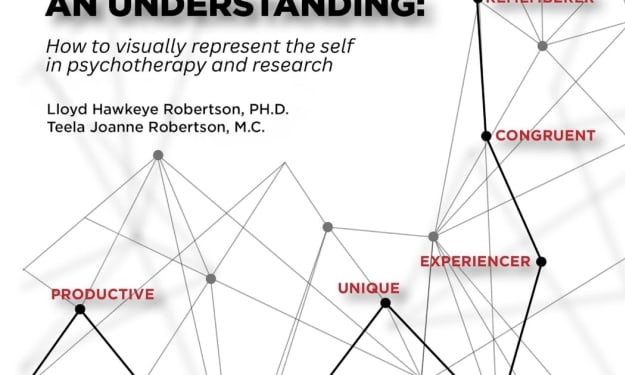
Dr. Lloyd Hawkeye Robertson and Teela Robertson, M.C., on Memetic Self-Mapping in Psychotherapy
Dr. Lloyd Hawkeye Robertson is a Canadian counselling psychologist and theorist known for “self-mapping” and the memetic self—identity as a network of culturally transmitted ideas (memes), memetic mapping. He has published work on the use of memetic maps to enhance client reflectivity and therapeutic efficacy. Robertson has served as Lead Psychologist at the University of Regina’s Collaborative Centre for Justice and Safety. He authored The Evolved Self: Mapping an Understanding of Who We Are (University of Ottawa Press, 2020) and co-authored Mapping an Understanding: How to Represent the Self in Psychotherapy and Research Visually (Pete’s Press, 2025) with Teela Robertson, for clinicians and researchers.
By Scott Douglas Jacobsen15 days ago in Education
Scaling a Business by Doing Less, Not More
Many business owners believe growth comes from adding more. More services, more markets, more tools, and more staff. While this sounds logical, it often leads to confusion and burnout. Scaling a business becomes easier and more sustainable when leaders choose to do less, but do it better.
By Darrell Hulsey5 days ago in Education
How Regulatory Rules Are Reshaping the Complexity of Modern Lending Facilities
Lending facilities are a core component of the financial system, enabling banks and financial institutions to provide liquidity, manage credit flow, and support economic stability. In today’s highly regulated financial environment, regulatory compliance, financial regulations, and lending rules have become central to how these facilities function. As oversight increases, lenders must navigate a growing web of requirements that directly affect the structure, speed, and accessibility of lending facilities.
By Eric Kleiner5 days ago in Education
Wild Card Weekend Recap: What Happens Now?
I think I figured out why I love Wild Card Weekend so much. It's because it's the first playoff anything of the calendar year. The NFL season starts in the fall, and once upon a time, the champion was crowned either on or slightly before New Year's. The evolution of the NFL schedule has resulted in the playoffs starting just into the New Year, and currently, the final week of the season falls on the first weekend of the New Year, with Wild Card Weekend coming a week after that. So yes, chronologically, the NFL's Wild Card Weekend serves as the first playoff anything of the calendar year.
By Clyde E. Dawkins4 days ago in Unbalanced



Comments
There are no comments for this story
Be the first to respond and start the conversation.