
Java vs C++: A Clear Comparison for Beginners and Professionals
Understanding the Differences in Syntax, Performance, and Use Cases
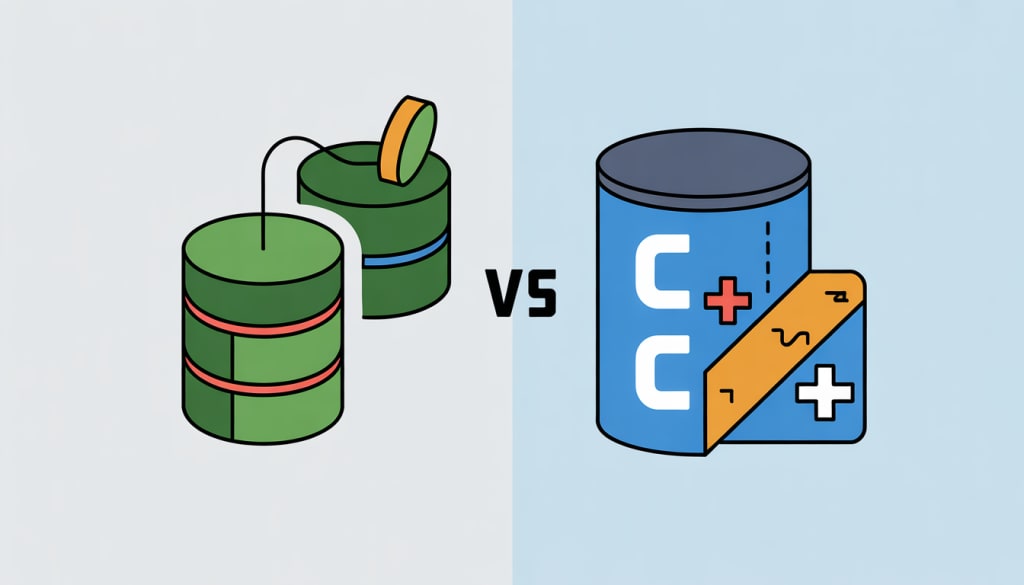
Choosing the right programming language often depends on what you want to build and how you prefer to work. Two of the most widely discussed options are Java and C++. Both languages have been around for decades and continue to play an important role in modern software development.
This article offers a practical Java vs C++ comparison, focusing on differences in syntax, performance, memory management, and real-world use cases.
Overview of Java and C++
Java and C++ were designed with different goals in mind, even though they share similar syntax.
Java was created with portability and ease of maintenance as core priorities. It allows developers to write code once and run it on multiple platforms without modification.
C++, on the other hand, was built to give developers direct control over system resources. It is commonly used where performance and low-level memory handling are critical.
Understanding this core difference makes the Java vs C++ debate easier to evaluate.
Java vs C++: Syntax and Ease of Learning
From a beginner’s perspective, syntax plays a major role in how quickly a language can be learned.
Java avoids complex features such as pointers and manual memory allocation. This reduces the chances of runtime errors and makes the code easier to read and maintain. For many learners, Java feels more structured and predictable.
C++ includes advanced features like pointers, operator overloading, and manual memory management. While these provide greater flexibility, they also increase complexity. New developers may need more time to fully understand how the language works.
In a direct Java vs C++ comparison, Java is generally considered easier for beginners, while C++ offers more control for experienced programmers.
Memory Management Differences
One of the biggest technical differences in Java vs C++ lies in how memory is handled.
Java uses automatic memory management through a garbage collector. Developers do not need to manually allocate or deallocate memory, which reduces memory leaks and crashes.
C++ requires manual memory management. Developers must allocate and free memory themselves, which allows precise control but also increases the risk of errors if not handled carefully.
Projects that prioritize safety and long-term maintenance often lean toward Java, while performance-focused applications may benefit from C++.
Performance Comparison: Java vs C++
Performance is a common factor in the Java vs C++ discussion.
C++ is generally faster because it compiles directly to machine code and has minimal runtime overhead. This makes it suitable for applications like game engines, operating systems, and real-time systems.
Java runs on the Java Virtual Machine (JVM), which adds an extra layer between the code and the hardware. However, modern JVMs are highly optimized, and in many real-world scenarios, Java performance is comparable to C++.
For most business applications, performance differences between Java and C++ are not noticeable.
Platform Independence and Portability
Java is known for its platform independence. Programs written in Java can run on any system that supports the JVM, making it ideal for cross-platform development.
C++ programs are compiled specifically for the target operating system and hardware. Porting C++ applications across platforms often requires code adjustments.
When portability is a priority, Java often has an advantage in the Java vs C++ comparison.
Use Cases and Industry Adoption
Both languages are widely used, but in different areas.
Java is commonly used for:
- Enterprise applications
- Web and backend development
- Android app development
- Large-scale systems
C++ is widely used for:
- Game development
- Embedded systems
- High-performance applications
- System-level software
Choosing between Java and C++ often depends on the type of project rather than which language is “better.”
Career Opportunities: Java vs C++
From a career standpoint, both languages offer strong opportunities.
Java developers are in high demand for enterprise systems, financial applications, and backend services. Many large organizations rely heavily on Java-based systems.
C++ developers are sought after in industries that require performance optimization, such as gaming, robotics, and hardware-related software.
Learning either language can lead to solid career growth, and understanding both can be a major advantage.
Final Thoughts
The Java vs C++ debate does not have a one-size-fits-all answer. Java focuses on portability, safety, and ease of development, while C++ emphasizes performance and system-level control.
If you are new to programming or working on cross-platform applications, Java may be a practical starting point. If your work involves performance-critical systems or low-level programming, C++ can be the better choice.
Ultimately, the best language is the one that aligns with your project goals and long-term plans.
About the Creator
Keep reading
More stories from Lennox Gray and writers in Education and other communities.
Why Your Drupal Website Needs a PWA
Website performance used to be all about how quickly a page opened. Today, it’s about how consistently a site behaves—even when the network is unreliable, the user is in a rush, or they’re browsing from a low-end device. That shift has changed the expectations people carry when they land on a Drupal website. They don’t just want information; they want an experience that feels modern, responsive, and uninterrupted. That’s where Progressive Web Apps (PWAs) come in, and why they’re becoming essential for Drupal websites that want to stay relevant.
By Lennox Gray2 months ago in Education
The Energy Pivot The State of Russia’s Oil and Gas in 2026
For decades, this was the "world's gas station": Russia's pipeline network to Europe was the veins of the world economy. By 2026, that aura is dull and those veins are rerouted out of Europe. Since the collapse of the Soviet Union, the Russian oil and gas sector is facing the largest structural change.
By Neeraj kumarabout 12 hours ago in Education
How a Bowl of Noodles Became a Global Phenomenon That Crossed Borders
A bowl of noodles is one of the most familiar meals in the world. It appears in many cultures, served in different ways, yet always recognizable. The path of how a bowl of noodles became a global phenomenon is tied to human movement, simple cooking methods, and the need for comfort food. This story explains how a basic dish grew into a worldwide favorite.
By Table to Stix Ramen3 days ago in Education
📢 Raise Your Voice Thread: 01/08/2026
Our “Raise Your Voice Threads” are hosted most alternating Thursdays at 12PM ET to offer creators more avenues to uncover exceptional stories on Vocal. As we are continuously searching for fresh creators and inspiring stories, this thread provides an opportunity to exchange and discuss the stories that have moved and motivated us on Vocal.
By Raise Your Voice by Vocal6 days ago in Resources


Comments
There are no comments for this story
Be the first to respond and start the conversation.