
"Public vs. Private Sector"
"Two Sides of the System: Government vs. Private Sector"

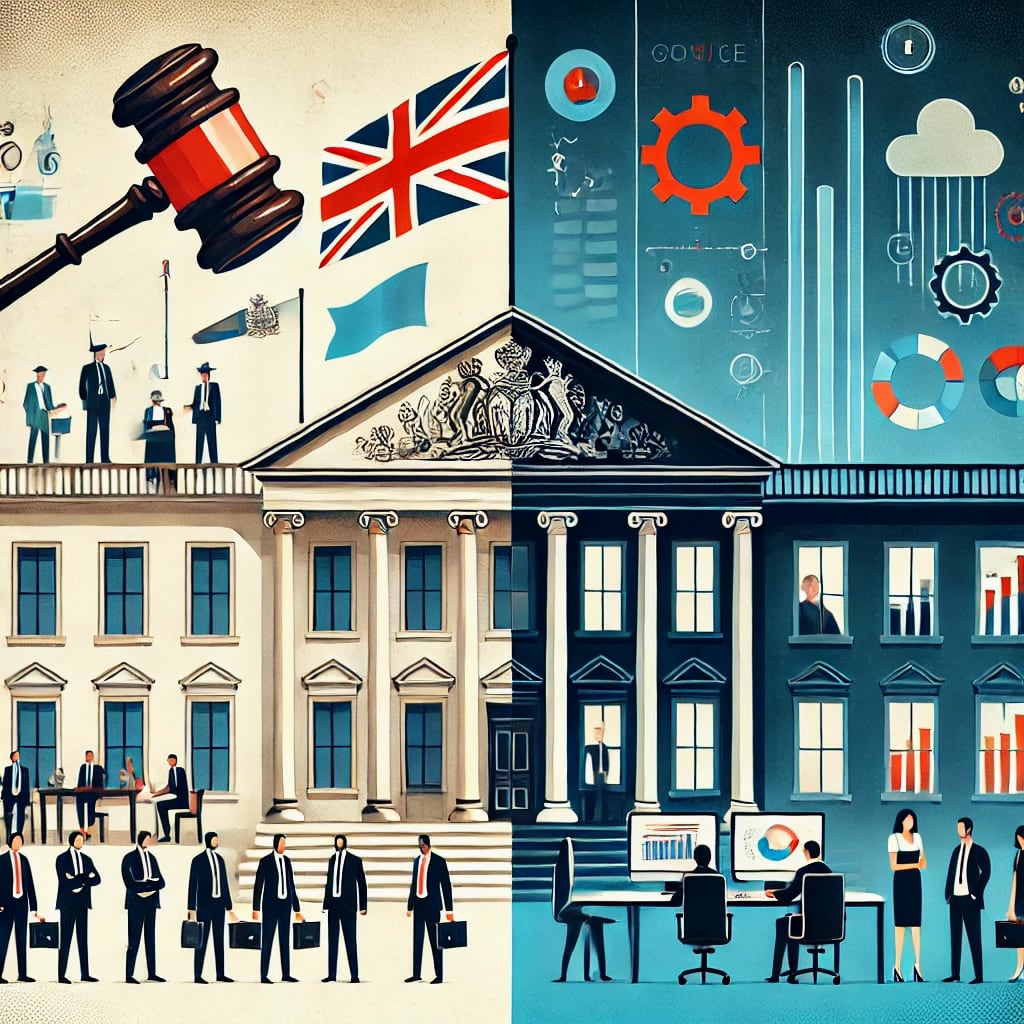
In every country, the economy and society are driven by two fundamental sectors: the public sector and the private sector. Though both serve crucial functions, they differ significantly in purpose, ownership, funding, and operation. Understanding the dynamics between these sectors helps clarify how services are provided, how jobs are created, and how economies function.
---
What is the Public Sector?
The public sector is made up of government-owned and operated services and institutions. Its primary aim is to provide essential services to citizens, often regardless of profit. These services include:
Healthcare (e.g., government hospitals)
Education (e.g., public schools and universities)
Transportation (e.g., public buses, national railways)
Law enforcement and military
Public infrastructure (e.g., roads, bridges, water supply)
Utilities in some countries (e.g., electricity, gas, and water services)
The public sector is funded through tax revenues collected from individuals and businesses. Governments plan and budget for these services to ensure they are accessible and equitable. The focus is on public welfare, not profit.
---
What is the Private Sector?
The private sector includes all businesses and organizations owned and operated by individuals or companies, rather than the government. The goal of the private sector is profit generation. It includes:
Small businesses (e.g., shops, restaurants)
Large corporations (e.g., banks, tech companies, manufacturers)
Private schools and hospitals
Private service providers (e.g., consultants, law firms, entertainment)
Private sector entities are funded through sales, investments, and private capital. They are competitive, innovative, and market-driven, focusing on customer satisfaction, productivity, and efficiency.
---
Key Differences Between Public and Private Sectors
---
Advantages of Each Sector
Public Sector:
Ensures essential services reach all citizens, including the poor.
Promotes social equality and safety nets.
Less likely to cut corners or prioritize profit over ethics.
Stable employment and pensions for workers.
Private Sector:
More competitive, leading to better quality and innovation.
Efficient due to profit motivation and fewer bureaucratic hurdles.
Offers diverse products and services.
Provides significant job creation and investment opportunities.
---
Challenges Faced by Each Sector
Public Sector:
Can suffer from inefficiency and corruption.
Limited by political influences and budget constraints.
Slower adoption of technology and innovation.
Private Sector:
Focus on profit can sometimes neglect ethics or worker rights.
May not invest in unprofitable but necessary services (like rural healthcare).
Can contribute to income inequality if unchecked.
---
Collaboration Between Public and Private Sectors
Increasingly, countries adopt Public-Private Partnerships (PPPs) to combine the strengths of both sectors. For example:
A government may fund a highway while a private company maintains it.
Public hospitals may outsource technology to private firms.
Governments can collaborate with tech companies to digitize services.
This kind of cooperation can improve efficiency, reduce costs, and provide better public services—when managed transparently and fairly.
---
Which Sector Is Better?
It's not a question of which is better, but rather, how each can best serve society. The public sector ensures fairness and essential services; the private sector drives innovation and economic growth. A healthy balance between the two leads to sustainable development, a strong economy, and a better quality of life.
The Role of Each Sector in Nation-Building
Both the public and private sectors play a significant role in nation-building and the long-term development of a country.
The Public Sector’s Role in Nation-Building:
Builds foundational infrastructure such as roads, schools, and hospitals.
Develops policies for national welfare, education, health, and defense.
Maintains law and order, and ensures justice through judicial systems.
Plays a critical role in responding to emergencies, such as natural disasters, pandemics, or wars.
Promotes economic stability through regulation and long-term planning.
The Private Sector’s Role in Nation-Building:
Drives economic growth by creating jobs, increasing productivity, and contributing to the GDP.
Encourages innovation in technology, communication, manufacturing, and services.
Expands global trade and investment, helping countries grow economically.
Fills service gaps where the government cannot reach—like private internet providers in rural areas.
Supports corporate social responsibility (CSR) initiatives, contributing to education, health, and the environment.
---
Real-World Examples of Public and Private Sector Impact
In education, public schools offer free education to all, ensuring access to basic learning. Meanwhile, private institutions often offer specialized or higher-quality programs, though at a cost.
In healthcare, government hospitals provide affordable treatment and mass vaccination programs, while private hospitals offer advanced, fast, and more personalized care options.
In transportation, governments build highways, railways, and airports, but private companies like Uber or airline carriers provide services on top of this infrastructure.
During the COVID-19 pandemic, both sectors had vital roles: governments enforced health regulations and provided emergency aid, while private firms developed vaccines, distributed supplies, and shifted to remote work solutions rapidly.
---
Final Thoughts
A country thrives when both sectors function effectively and complement each other rather than compete. Strong governance, ethical business practices, transparency, and accountability are key in maintaining this balance. For young nations especially, a collaborative approach between public investment and private innovation is the blueprint for a better future.
---
Conclusion
The public and private sectors are like two sides of the same coin. While one prioritizes the collective good and service provision, the other focuses on efficiency and profit. Both are essential, and their interaction—when wisely managed—can foster prosperity and inclusiveness. As citizens, understanding this balance empowers us to advocate for fair policies, hold leaders accountable, and support systems that benefit all.
About the Creator
Keep reading
More stories from Muhammad Huzaifa and writers in Education and other communities.
"The Journey of Pakistan"
The history of Pakistan is a profound tale of civilization, conquest, culture, and resilience. Its land is one of the oldest continually inhabited regions in the world, with archaeological sites dating back to the dawn of human settlement. This historical narrative traces Pakistan's journey from the ancient Indus Valley Civilization to the modern Islamic republic it is today, a story enriched with thousands of years of transformation, diversity, and struggle.
By Muhammad Huzaifa9 months ago in Art
Top 10 SEO Experts In Pakistan In 2026
Introduction Search optimization in 2026 no longer revolves around keywords or isolated ranking tactics. Google’s AI Overviews, entity-based indexing, and answer-first systems have changed how visibility is earned. Search engines now evaluate meaning, credibility, and contextual authority rather than mechanical signals.
By Sajid Ali Shar5 days ago in Education
Colors and Such
Before I retired in 2020, I worked as a Nursing instructor in one of the nation's largest community colleges. It was a job I thoroughly enjoyed for fifteen years because I had a heart for the students and genuinely wanted to invest in them and their futures.
By Shirley Belk7 days ago in Education



Comments
There are no comments for this story
Be the first to respond and start the conversation.