
Procurement : Resilient governance structure
Supply Chain Procurement

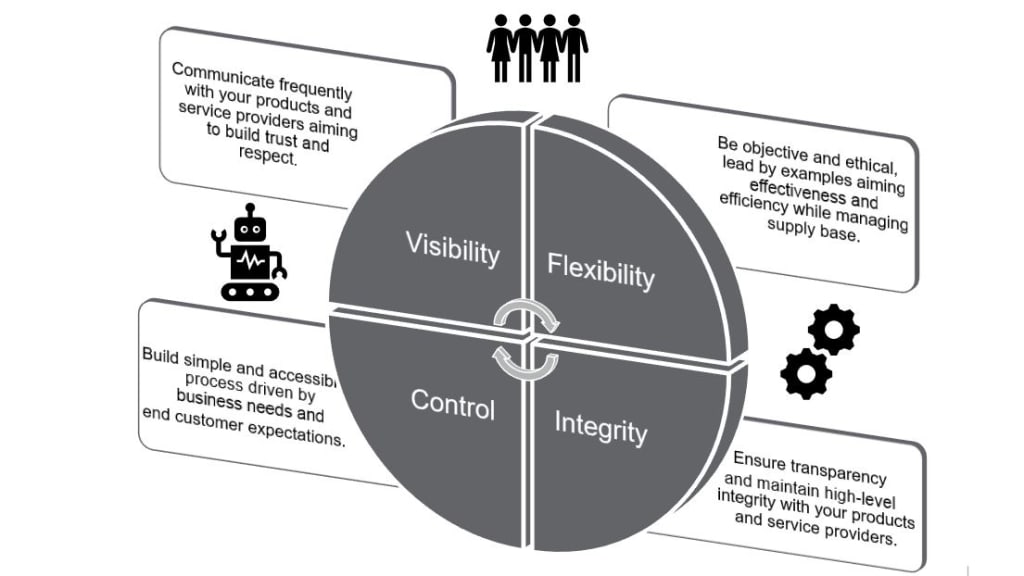
Procurement is a critical function within any organization, responsible for sourcing, purchasing, and managing the goods and services necessary for the operation of the business. In today's rapidly changing and unpredictable business environment, it is essential to have a procurement governance structure that is resilient and adaptable to disruptions and challenges.
A procurement resilient governance structure involves creating processes, policies, and procedures that enable organizations to respond quickly and effectively to unexpected events such as supply chain disruptions, economic downturns, and natural disasters. This structure requires collaboration and communication between procurement, supply chain, and other departments, as well as a focus on risk management and contingency planning.
The benefits of a procurement resilient governance structure are numerous, including increased efficiency, cost savings, and improved risk management. By creating a resilient procurement structure, organizations can better mitigate risks, respond to unexpected events, and ensure continuity of supply, ultimately enabling them to maintain their competitive edge in the marketplace.
In this article, we will explore the key components of a procurement resilient governance structure, including risk management, supplier relationship management, contract management, and technology enablement. We will also discuss the importance of leadership and culture in creating and maintaining a resilient procurement function.
Resilient governance structure
To cope up with emerging procurement landscape, a variety of governance structures are required to improve supplier collaboration. These ecosystems can deliver tremendous value if they are structured and mandated with clear expectations. This kind of governance structures are working well in different size of companies.
In order to effectively collaborate with suppliers, procurement organizations can adopt the framework of strategic supplier relationship management (SRM). Resilient procurement is characterized by four pillars and supported by distinct governance structure and key enablers, that is people, process, and technology.
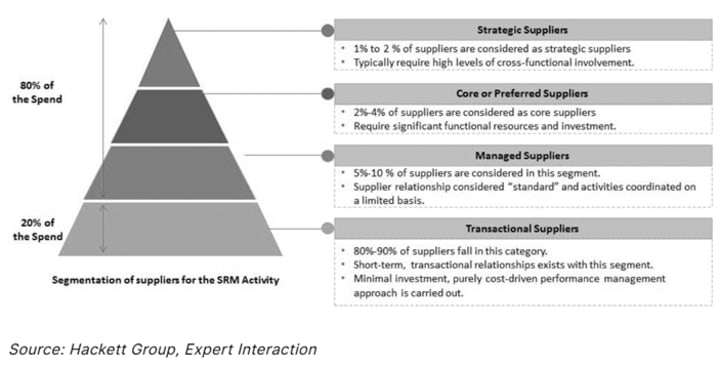
• Strategic partnership is generally made with highly critical and valued category suppliers who are core assets to the company. This 1% of supply base (refer “Segmentation of supplier for the SRM activity”) varies based on the nature of business, complexity of category portfolio and procurement maturity.
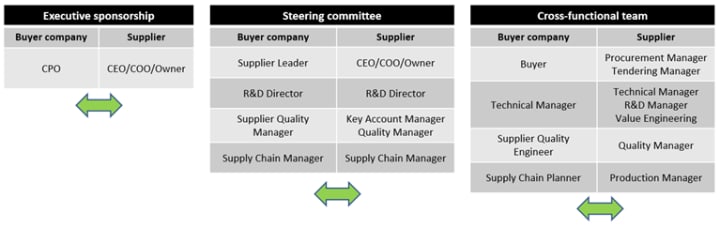
• The involvement of cross-functional governance team is needed to establish partnership management, including C-level for the strong SRM program.
• Unique scorecard for each strategic supplier should be developed and systematically updated with capturing all inputs on supplier performance measurement and then management as SRM can differ with different suppliers.
• The relationship framework (refer the following schematic) involving sponsors, steering committee and a cross functional SRM team drives the relationship between the organization and a preferred supplier.
• The level of involvement from top-level executives may vary depending upon the nature and size of the consulting project undertaken. For example: strategy and M&A consulting projects involve key executives more than any operational consulting projects.
Segmentation of supplier for the SRM activity
This is one example from Hackett Group, I am sure you are already aware of different ways of classifying the suppliers with the application of classic 80:20 rule to support SRM program.
It is important to interact and develop a close contact around the topics in which procurement team or nominated key account manager from the buyer company can interact with their suppliers. To discuss the ongoing challenges, more focus on common project objectives and priorities is needed. Also, understanding the importance of co-design development and innovation possibilities will help to work on mutual benefits.
Regular interactions and frequent communications will help to build trust. Proactive engagement of supplier lays a great foundation to achieve common goals together.
In a challenging business environment, we can experience success simply by joining hands together with our suppliers and not by being alone. We need to develop mutual trust and maintain supplier relationship which leads to a long-lasting journey.
Based on the criticality of product and service, the procurement complexity has been defined. From the following graph, you will get an idea about the idle size of suppliers placed in different classification levels.
Regardless of any size of the companies around 5% of the suppliers classified as Strategic and Preferred suppliers those who needed upmost care, their contribution to your business brings direct impact to your business continuity plans.

About the Creator
Sendil Arasu Vijaya Kumar
I attained bachelor degree in mechanical engineering and master degree in marketing management, having 21 Years of professional work experience. International exposure in Supply Chain Procurement domain. Author of "The Procurement Acumen"
Keep reading
More stories from Sendil Arasu Vijaya Kumar and writers in Education and other communities.
Why Great Customer Service Is Non-Negotiable for Modern Businesses
Excellent customer service is no longer something businesses can choose to offer later. It is a basic requirement in today’s fast-moving market. Customers expect respect, clear communication, and fast solutions. When they do not get these things, they leave. This is why excellent customer service is non-negotiable for businesses that want to survive and grow.
By Apex Service Partners7 days ago in Education
The Devil's Cut
“Comrade, finally you’re awake.” The voice was smooth, sensual. A flickering incandescent bar was all that lit the white, sterile room. All Vladimir remembered was everything going black. He tried to move his arms and found them strapped to the gurney.
By Matthew J. Fromm6 days ago in Fiction


Comments