
Prejudice and Discrimination
By: Mahpara Mukhtar

Prejudice and discrimination can be often confused what the either means or is considered the same. This has put both of them under the same spotlight though they are not the same; however, it is best to understand what they actually mean and maybe help spread awareness about the trivial matters. There has been a lot of awareness in recent years and has been common among towards a group of people who are unfamiliar with each other and their race, ethnicity or culture.
Prejudice, which is an attitude and feeling toward a person that is typically unfavorable, may arise simply from belonging to a particular social group. Prejudice is common against people who are members of an unfamiliar cultural group; or also known as preconceived opinion based on prior beliefs instead of facts. This shows that prejudice only exists in one's own mindset; creating differences between how people see themselves and may also form mental health issues. The person facing prejudice may classify themselves as someone who does not fit in, because they may think as such due to prior beliefs that are inserted to their minds. This belief and prejudice may cause many health, physical and mental health issues. Some examples of prejudice include:
- Considering that they can't perform the work, you don't want to hire a person with a disability.
- having bad preconceptions about someone who follows a different religion.
- assuming that a senior citizen is not tech savvy.
Discrimination is when someone receives a different treatment—usually a bad one—because they are a member of a particular group. acting unfairly against someone else because you perceive them to be different. Discrimination, on the other hand, is the distinction made against an individual or thing based on the group, class, or category they belong to, in contrast to basing any action on an individual's merit. This has put a huge difference in how people are treated due to their class, group, race or what part of the world they are from. What makes it different from prejudice is that discrimination classifies treatment towards one group, class, or category they are in. This discrimination derives from people who have been influenced by prejudice. Along with that discrimination against other people are also shown through actions because of the suspicion about their race. These actions include:
- requesting that a customer leave because you think that because of their race, they are unable to afford to do business there.
- making a police call because you believe a resident of color in your community has committed a crime.
- excluding a customer from your establishment because of your preconceived notions about someone who follows a different religion.
Conclusion
Though it's hard to understand the difference between prejudice and discrimination, there is only one thing to understand between them; the only distinct difference between these two is that prejudice has to do with attitude and prior beliefs, while discrimination has to do with action. This has put a lot of tension between people of different nation, class, and groups. However, it does not mean that we get to put whoever it is in danger just because of a perceived difference. As we all have to live in peace and be able to understand other people's perception and see what they might be feeling. Facing discrimination and prejudice can be hard to handle, and may be rude to others, but trying to stand up for yourself is the biggest difference that may help others get motivated. As well as an increase in self - esteem, confidence and other health problems may occur less.
References:
Learning, Lumen. “Prejudice and Discrimination | Introduction to Psychology.” Prejudice and Discrimination, 2010, courses.lumenlearning.com/waymaker-psychology/chapter/prejudice-and-discrimination/.
Gunner, Jennifer. “Difference between Prejudice and Discrimination Defined.” Grammar.yourdictionary.com, grammar.yourdictionary.com/vs/difference-between-prejudice-and-discrimination-defined.html.
“The Causes and Types of Prejudice and Discrimination - Contemporary Issues in Christianity - CCEA - GCSE Religious Studies Revision - CCEA.” BBC Bitesize, www.bbc.co.uk/bitesize/guides/zdrxbdm/revision/1.
About the Creator
Keep reading
More stories from Mahpara Mukhtar and writers in Education and other communities.
Cyberbullying
Everyone is unique in their own way and have their own way of making a living. But in no way it should be a cause to bully someone; wether the bullying is physical one-on-one person or online. The online form of bullying is known as cyberbullying. "Cyberbullying occurs when someone uses technology to demean, inflict harm, or cause pain to another person" (Abramson, 2022). "It involves the sharing or posting of private, hurtful, harmful, humiliating, or false information about a person" (Lockett, 2022).
By Mahpara Mukhtar3 years ago in Education
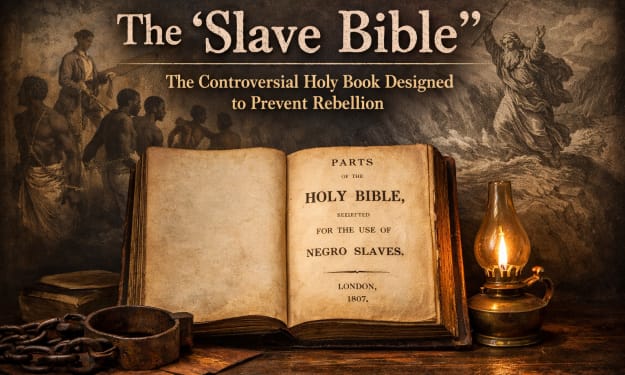
The “Slave Bible”: The Controversial Holy Book Designed to Prevent Rebellion
In the early nineteenth century, a heavily edited version of the Bible was printed with a singular and deeply troubling purpose: to control enslaved Africans and discourage rebellion. Today, this rare publication—commonly known as the “Slave Bible”—is one of the most controversial religious texts in history. Only four copies are known to exist in the world.
By Irshad Abbasi 4 days ago in Education
Metaverse in Education Market Expected to Expand Significantly, Reaching USD 99.8 Billion by 2033
Metaverse in Education Market Overview The Metaverse in Education market refers to the use of immersive virtual environments, 3D digital campuses, and interactive simulations to deliver structured learning experiences. It combines virtual reality, augmented reality, digital avatars, blockchain-based credentials, and cloud platforms to create persistent and collaborative education spaces. The global market is expected to reach USD 99.8 billion by 2033, rising from USD 3.1 billion in 2023, reflecting a strong CAGR of 41.5% from 2024 to 2033.
By Roberto Crum4 days ago in Education
"Scream 7" (2026): Running out of Fresh Screams
This is the seventh time we’ve had a Ghostface crisis. Scream 7 is the latest edition of the Scream franchise. Sydney Prescott and her family are under attack by another anonymous killer dressed in a Ghostface costume. While having issues with her daughter, Tatum, they run from the bloody murders, trying to determine who is behind it all.
By Marielle Sabbag5 days ago in Horror



Comments
There are no comments for this story
Be the first to respond and start the conversation.