
Pope Francis’s Death: The End of an Era of Reform and Compassion
"A Pope of Firsts: Latin America's Loss, the World's Loss"

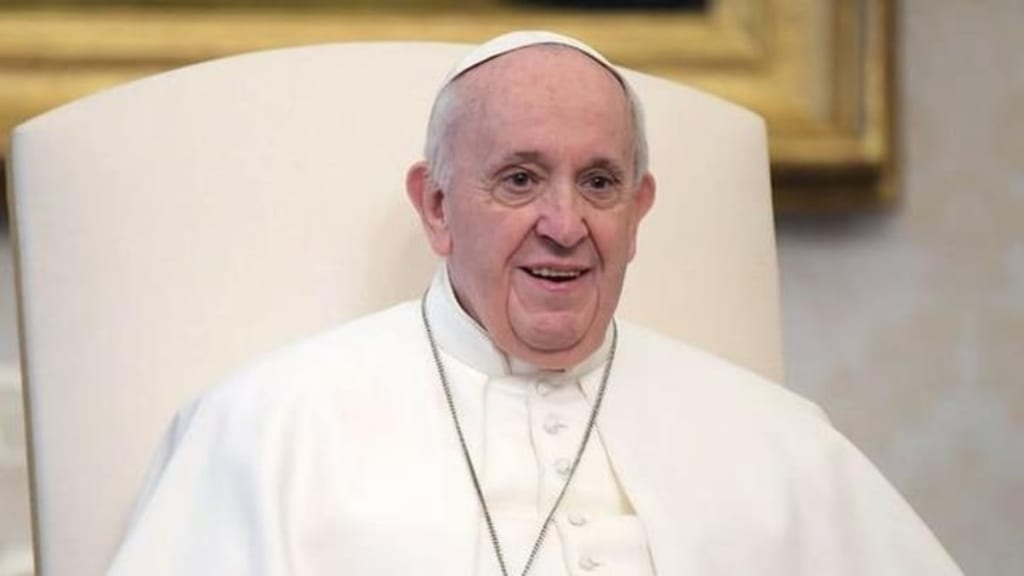
he world stood still. A hush fell over bustling cities, quiet prayers echoed in humble homes, and the news spread like wildfire: Pope Francis, the 266th Pope, had died. At 88 years old, his passing marked not just the end of a life, but the close of a significant chapter in the history of the Catholic Church, an era defined by reform and a deep, unwavering compassion.
Born Jorge Mario Bergoglio in Buenos Aires, Argentina, this son of an Italian railway worker and a homemaker would rise to become a figure of global influence. His early life was marked by simplicity and service. He worked as a chemical technician before answering a call to the priesthood, a path that led him to the Society of Jesus, the Jesuits. His time as a priest, and later as Archbishop of Buenos Aires, was characterized by his dedication to the poor, his humility, and his practical approach to faith.
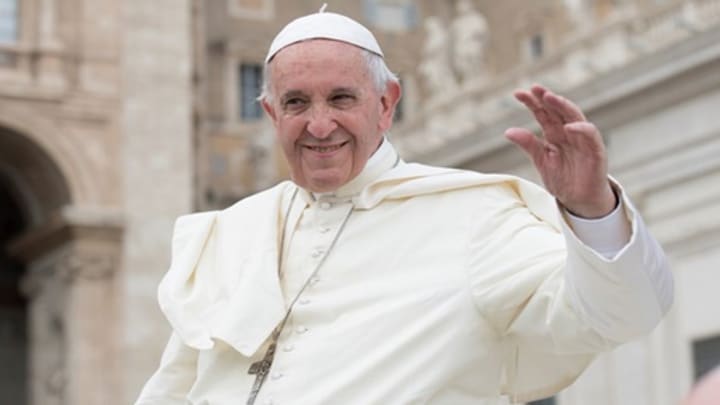
In 2013, the world watched as white smoke rose from the Sistine Chapel, signaling the election of a new Pope. The choice of Bergoglio was a surprise to many. He was the first Pope from the Americas, the first from the Southern Hemisphere, and the first Jesuit to take the Chair of Saint Peter. His choice of the name Francis, after Saint Francis of Assisi, the saint of the poor, signaled the direction he would take the Church.
Pope Francis's papacy was a time of change, challenge, and, for many, renewed hope. He stepped into a Church grappling with scandal, declining numbers, and a growing disconnect from the modern world. He immediately set a different tone. He rejected the opulent trappings of the papacy, choosing to live in the Vatican guesthouse rather than the papal apartments. He embraced the people, reaching out to the marginalized, the forgotten, and those who felt excluded.
His reforms were not always easy, and they often met with resistance. He sought to address the clergy sex abuse crisis with greater transparency and accountability. He worked to make the Vatican bureaucracy more efficient and less prone to corruption. He appointed women to key positions within the Vatican, a move that, while groundbreaking, also highlighted how much more needed to be done.
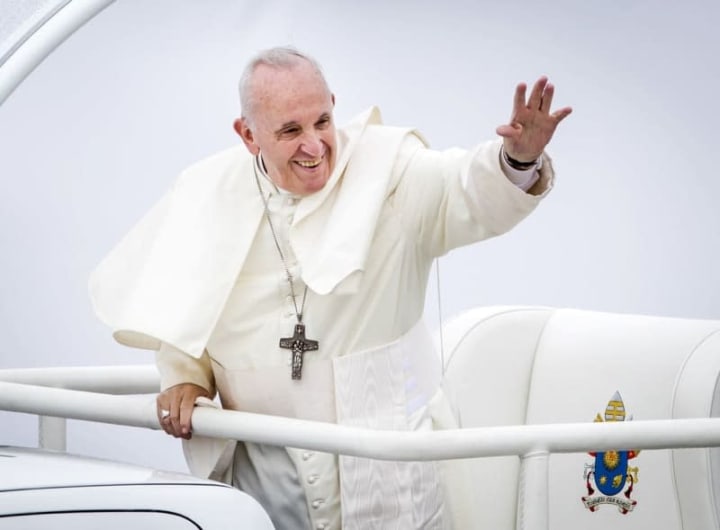
But it was his compassion that truly defined his papacy. He washed the feet of prisoners, visited refugees, and spoke out against injustice wherever he saw it. He wrote encyclicals, powerful letters to the Church and the world, on the environment ("Laudato Si'") and on human fraternity ("Fratelli Tutti"). These documents were not just theological treatises; they were calls to action, urging people of all faiths and no faith to work together to build a more just and sustainable world.
"Laudato Si’", his encyclical on the environment, was a landmark. He connected the degradation of the Earth with the suffering of the poor, arguing that the climate crisis is a moral and spiritual challenge, not just a scientific one. He challenged the world to move away from a throwaway culture and embrace a more sustainable way of living.
"Fratelli Tutti," his encyclical on human fraternity, was another powerful message. In a world often divided by nationalism, populism, and fear, he called for a globalization of love and solidarity. He reminded us that we are all brothers and sisters, children of the same God, and that we have a responsibility to care for one another.
He reached out to other religions, meeting with Jewish leaders, Muslim leaders, and leaders of other Christian denominations. He sought to build bridges, to foster dialogue, and to promote peace. He traveled the world, visiting countries torn by conflict, poverty, and natural disasters. He spoke truth to power, challenging world leaders to put the needs of the poor and the planet before profit and political gain.
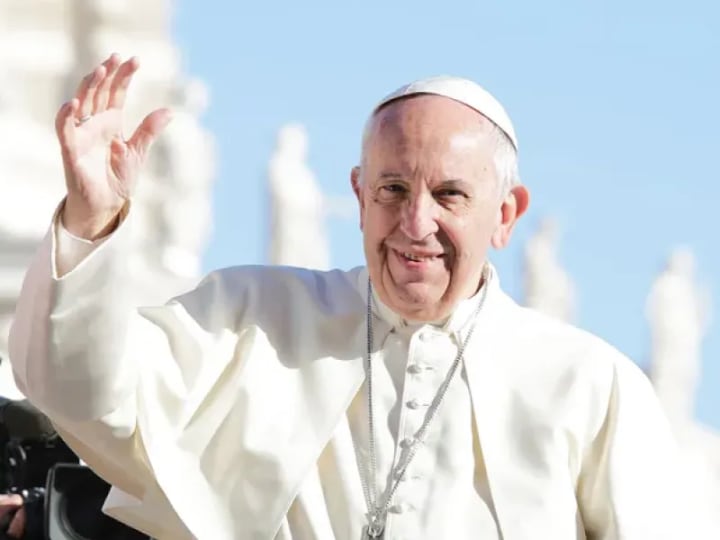
Pope Francis's papacy was also marked by his willingness to address difficult and controversial issues. He spoke about the need to welcome migrants and refugees, even when it was unpopular. He called for an end to the death penalty. He spoke about the need for the Church to be more inclusive of LGBTQ+ people, though his views on these issues were complex and sometimes seen as insufficient by those seeking more radical change.
His words and actions often challenged both conservatives and progressives within the Church. Some saw him as too radical, as undermining tradition. Others felt he didn't go far enough, that he was too slow to change. But through it all, he remained steadfast in his commitment to the Gospel, to the poor, and to a Church that was both holy and human, both ancient and modern.
The news of his death spread quickly, carried on the wings of social media and traditional news outlets. World leaders offered their condolences. People gathered in St. Peter's Square to pray. The world mourned the loss of a man who had touched so many lives.
The legacy of Pope Francis is complex and multifaceted. He was a man of contradictions, a man of deep faith and profound humility, a man who challenged the world and the Church to be better. He was a pastor, a prophet, and a reformer. He reminded us that the Church is not just an institution, but a community of people called to love God and to love their neighbor.
As the world looks to the future, the question of who will succeed him looms large. The cardinals will gather in conclave to elect a new Pope, a new leader for a Church facing immense challenges and opportunities. But whoever he is, he will inherit a Church shaped by the legacy of Pope Francis, a Church that has been challenged to be more compassionate, more inclusive, and more committed to the work of justice and peace.
The era of Pope Francis may be over, but his influence will continue to be felt for generations to come. He reminded us of the power of humility, the importance of compassion, and the enduring truth of the Gospel. He showed us that even in the darkest of times, there is always room for hope, and that even the most powerful institution can be a force for good in the world. His death is not an end, but a beginning. The seeds he planted will continue to grow, and his legacy of reform and compassion will continue to inspire us to build a better world, a world that is more just, more peaceful, and more loving.
About the Creator
Creating a Calm and Confident Path Toward Retirement
Retirement planning often feels intimidating, especially when people imagine complex calculations and uncertain outcomes. However, when you approach the process with clarity and patience, it becomes far more manageable. Instead of focusing on stress, thoughtful planning helps you feel confident about the future you are building.
By Michael Petruska6 days ago in Education
The Night of Mi‘rāj: A Journey Beyond Time, Space, and Human Imagination
Mi‘rāj — A Night That Reshaped Human Understanding Among all the extraordinary events recorded in Islamic tradition, Mi‘rāj stands as one of the most profound. It is not merely a journey; it is a moment when the boundaries of time, space, and perception were transcended by the Prophet Muhammad ﷺ through the will of God.
By Muhammad Islam khan swati6 days ago in Education




Comments
There are no comments for this story
Be the first to respond and start the conversation.