
PLC Online Training course-BES
PLC Training courses in Lahore
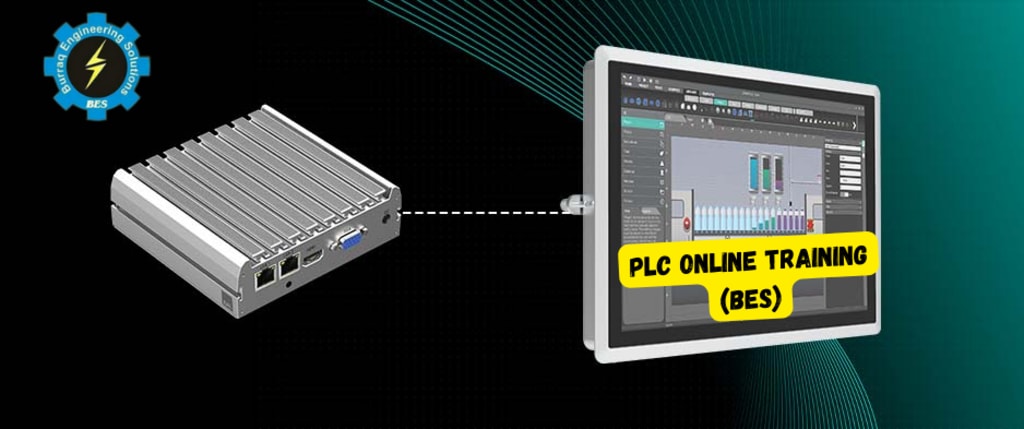
The PLC takes input from sensors or other devices, processes it based on programmed rules, and then activates the outputs. Depending on the input and output, the PLC can do a wide variety of tasks, including keeping tabs on machine performance and temperature, beginning and ending processes on their own, sounding alarms in the event of a malfunction, and so on. Burraq Engineering solutions is an Engineering institute that provides PLC Online Training courses in Lahore. PLCs are an adaptable and dependable control solution suitable for a wide variety of uses. The PLC's central processor is responsible for storing and processing the program data, but the PLC's input and output modules are what allow it to communicate with the rest of the machine and provide the central processor with the data it needs to take action.
SCADA system
Sensors, switches, and counters are all examples of input devices, while relays, lights, valves, and actuators are all examples of output devices. Users can create the optimal setup for their task by combining input/output modules available in a programmable logic controller. Interfaces The PLC's functionality is not limited to merely recording data from the I/O devices; it may also need to communicate with other systems, such as a supervisory control and data acquisition (SCADA) system that keeps tabs on all of the connected devices.
Communication ports and protocol
To guarantee compatibility with these additional devices, the PLC provides a number of communication ports and protocols. In connecting humans and machines a human-machine interface is required for users to have real-time interaction with the PLC (HMI). Either a small reading screen and keyboard or a large touch panel like those found on consumer electronics devices, both types of operator interfaces allow users to see and enter data into the PLC in real-time. In most cases, a PC is used to create the PLC program, which is then transferred to the controller.
Programming languages
Ladder Logic and C are two of the most common programming languages available in PLC software. In the world of computers, the classic language is ladder logic. Logic "bars" read from left to right mimic the appearance of a circuit diagram. Each line denotes a distinct operation that the PLC manages, beginning with a set of inputs or inputs (pins) and ending with an output (coil). Ladder Logic's visual nature makes it potentially less daunting to use than other languages. C language programming is a newer innovation. Unitrans currently has a number of powerful PLC product lines available to accommodate a variety of system needs.
PLC and panel communications
Miniature yet revolutionary, these controllers revolutionize the industry by doing away with time-consuming tasks like wiring and setting up PLC and panel communications, resulting in immediate cost savings. Unitrans' revolutionary software makes it possible to program the Ladder control, create the HMI, and handle all hardware configuration and communication in a single, straightforward software environment, lending support to the all-in-one concept. A microprocessor-based device or a central processing unit (CPU) that processes data and makes operational decisions. The input voltage from the wall outlet is reduced to a safe level of DC power by the power supply unit.
Communication networks
The desired program is input into the processor's memory via the programming unit. The microprocessor's control actions, along with the input data and the output data, are processed by the memory unit containing the program. There's an I/O port where the CPU can take data from and send data to peripherals. The communication interface is used for receiving data from and sending data to other remote PLCs over communication networks. In most cases, a modular PLC will take the form of a rack into which individual modules can be installed. This multiplies the system's scalability and gives the PLC more functionality, such as an increased capacity for input/output units. Because each module in a modular PLC functions separately from the others, operators can easily isolate the source of a problem.
About the Creator
Keep reading
More stories from irfan akram and writers in Education and other communities.
ETAP Online Training-BES
The ETAP software uses a tabbed interface that organizes functions into easily accessible groups. With just a few clicks, users can get all the tools they need to create a simple power system diagram. Case studies, set-up, and modification toolbars are also available for detailed analysis of the system model. This tutorial explains each of these points. If you want to ETAP Training course then Burraq Engineering solutions is an Engineering institute that provides the best ETAP Online Training courses in Pakistan. ETAP Online Training is best for all Pakistani Engineering students. You can learn more Engineering Training courses from Burraq Engineering solutions. Online and Physical classes are available. ETAP is a kind of analysis software used in a variety of applications to study power systems. Power system analysis involves checking the reliability of individual parts of the power grid, looking for problems with the way things work, and gathering all the relevant information for a detailed study.
By irfan akram3 years ago in Education
Guiding While Growing: How Mentorship Shapes Modern Leadership
Leadership today looks very different from what it did a generation ago. Authority alone is no longer enough to inspire trust, loyalty, or growth. The most effective coaches understand that leadership is not about standing above others but about growing alongside them. Mentorship has emerged as one of the most powerful expressions of leadership, especially when coaches are willing to remain learners themselves.
By Thomas Kuriakose, MD6 days ago in Education
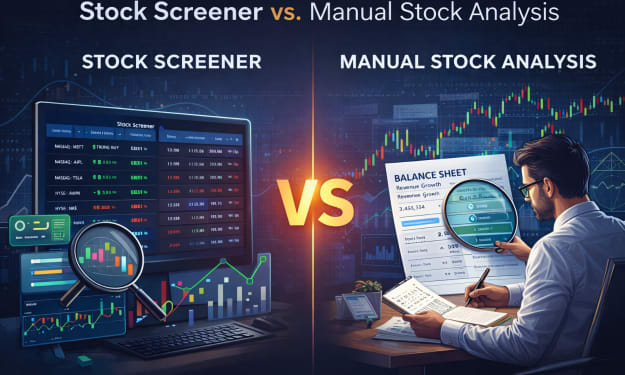
Stock Screener vs Manual Stock Analysis: Which Works Better?
Finding the right stocks in a crowded market is a challenge for every investor. With thousands of publicly traded companies and constant price fluctuations, investors rely on different methods to narrow down opportunities. Two of the most common approaches are using a stock screener and performing manual stock analysis. While both aim to identify profitable investments, they differ significantly in speed, depth, and practicality. Understanding how each method works can help investors choose the right approach—or combination—for their trading and investment goals.
By Alven Smithabout 13 hours ago in Education



Comments
There are no comments for this story
Be the first to respond and start the conversation.