
Paradoxes : The logical mirrors
Black or White or Grey?


Paradoxes simply mean a logically self-contradictory statement or a statement that runs contrary to one's expectation.
Literary those are logical mirrors which initially seems like the answer is logical pretty forward, and then the mirror image of the logic also comes into play.
For an example, following is a paradox.
o Second statement is correct
o First statement is wrong
According to above, both the above statements are neither correct nor false. Then according to definition, it’s a paradox.
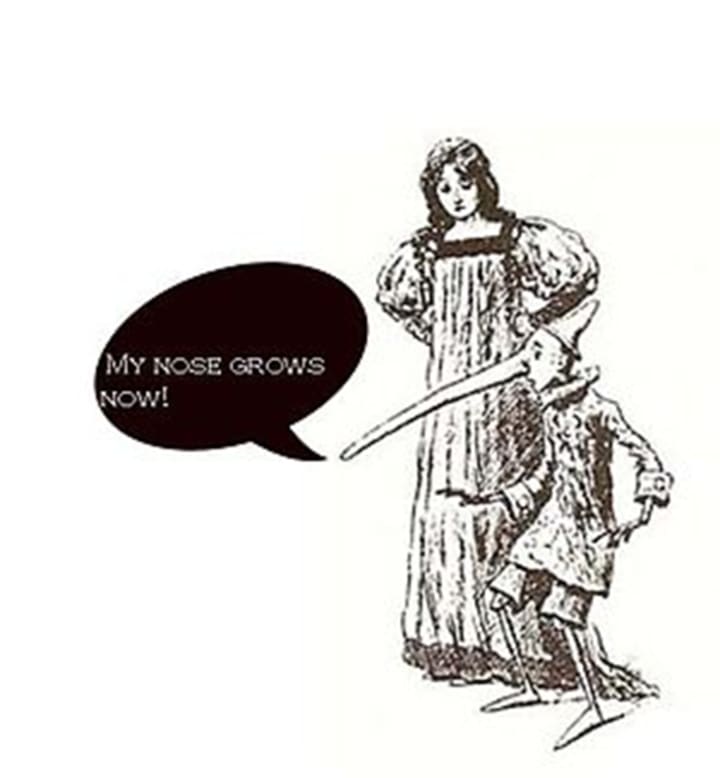
In another way, ‘PARA’ in Greek means ‘distinct from’ and ‘DOX’ means our opinion. So collectively, paradox is simply translated as distinct from our opinion. It means that a paradox is oppose to our opinion in most of time, It is neither correct nor wrong.
Paradoxes can be divided into 3 main categories. Here, in 1969 American logician and philosopher Willard Van Orman Quine outlined those 3 categories of paradoxes. They are as follow,
o Veridical paradox
o Falsidical paradox
o Antinomy paradox
Veridical paradox.
The paradox which that initially seems to be absurd, but it is logically proven to be true.
For an example, we can explain about the monty hall paradox. Consider a game show which you are allowed to choose one door out of 3 doors to win a prize

Here, if you want to get the vacation provided that you choose 3rd door which has dead, the presenter opens the 1st door and shows that it has the car (it should note that the presenter shoes the wrong door in order to keep the game show more interesting). Now you are asked just one more time to change your choice according to your wish if you want to. You might think it won’t be a matter at all since it has 50% chance to win whatever happen. But it doesn’t. In this is case, it’s better to change the choice since then you double the chance that you can win the vacation tour.
At the beginning, it 33.33% to each door to have the vacation tour, but when presenter opens the 1st door, there I is no any more chance to 1st door to have the vacation tour. So, then the 33.33% of probability of 1st door is add up to 2nd door. So eventually 2nd door has 66.66% to have the vacation tour than the 3rd door. It sounds weird but it is logically proven to be true. Hence called as a veridical paradox.
Falsidical paradox.
It is the paradox which establish a result not only seems to be wrong, in fact it is wrong due to a fallacy in its demonstration.
For an example, we can consider about Arrow paradox which is dreamed by Greek philosopher Zeno of Elea.
Consider an arrow fired at a certain target which is ‘L’ distance away. After it travels half of the distance, it still has to travel ‘L/2’ distance. After it travel half of the remaining distance, it still has to travel ‘L/4’ distance ([L/2]/2=L/4). After it travel half of remaining distance, it still has to travel ‘L/8’ distance and so on. To arrow to reach the target, the remaining distance should be zero. But according to above, it never be zero. So according to this, the arrow won’t reach the target. But it is false. Hence called a falsidical paradox.
Another example is Achilles and tortoise paradox which is also dreamed by the same philosopher and same as arrow paradox.
Here it tells that the Achilles (the fastest runner in the world by that time) couldn’t catch a tortoise in a race where tortoise has a start ahead (as arrow can never reach the target). But the philosopher also knew that it couldn’t happen. Hence called a falsidical paradox.
Antinomy paradox.
The paradox which gives us a contradictory result even by correctly applying the accepted forms of logical reasoning.
For this, we can consider well known ‘Grandfather Paradox’ which is a time travel paradox.
Imagine you created a time travelling machine and went to past to kill your grandfather. So then your father won’t born and you also won’t born either. Provided that you are not born, you can’t create a time machine and hence you travel to past to kill your grandfather. So your father was born and as a result you too. So, you can create a time machine and go into past. As a result, the same scenario will occur. So, at here, even we apply our logics correctly, it doesn’t make a sense at all. So called an antinomy paradox.

Further, paradoxes are also known to be kind of brain teasers.
Following are some interesting paradoxes.
Liar’s Paradox or the Epimenides’ paradox.
Once an Old Greek philosopher Epimenides made a famous statement as “All Cretans are lairs”, ironically, he himself was a Cretan. So, was he lying or telling truth?
The God’s paradox.
We all know that God is omnipotent, and nothing is impossible for him.
So, can he make a stone which no one can lift including God?
The ship of Theseus paradox.
Suppose that you bought a wooden ship. Due to some damages, you replace some wooden planks in ship. Over time due to repairs, each of all wooden planks got replaced by a new one. Now is it the old ship you bought or new one similar to old ship?
Barber paradox.
Imagine that there is one barber in your village which is located at middle of a forest. In the village, only barber knows to shave. So who shave the barber provided that the barber is a person who shaves people who do not shave themselves? If he shaves himself, he won’t be a barber anymore.
The heterological paradox.
The word heterological means those words which cannot be defined. Like yellow, red etc. So, the paradox is that can you define the word heterological?
As it means something that cannot be defined, so if we define it, then it would become a word which can be defined, thus, losing its meaning by gaining its meaning.
The court paradox.
It is said that the famous sophist Protagoras once took on a pupil, Euathlus, on a condition that he will pay his fees after he had won his first case. But his pupil was unable to find a case which he could win. Protagoras became impatient and accused his pupil that he is deliberately not winning a case. So, he sued him for in order to receive his fees.
If the pupil wins this case, does he need to pay the fees to his teacher?
As according to the original contract, he needed to pay the money only after he wins his first case but at the same time, he has also won the case which means he should not pay the amount.
However collectively paradoxes are really useful to us to seek knowledge on what don’t know exactly. Until today certain paradoxes are not solved (time travel paradoxes). Being trying to solve them, we can get a better understanding on different streams.
Also, those paradoxes take us to wonderful and more realistic thinking area where we not only see Yes or Not answers, but also to a more moderate thinking state where we see other possibilities.
Not only black and white, but also grey.
Written by,
Sanithu Sithwan.
About the Creator
Sanithu Sithwan
A radical thinker
Passionate on science
Keep reading
More stories from writers in Education and other communities.
Vanishing Colors: The Fight to Protect Endangered Butterflies and Moths
Across fields and forests, butterflies and moths once moved in vibrant waves of color. Today, however, many of these species struggle to survive. Scientists continue to document population declines in multiple regions. As natural habitats shrink, these insects lose the resources they need to complete their life cycles. Consequently, ecosystems grow quieter and less diverse.
By Akito Kawahara6 days ago in Education
I was in a Toxic Relationship, with my Workplace
“You got that?” My ex yelled. His hands were balled into fists at his side. At six foot three, he towered over me. A normal person would have been afraid, but I looked up a video of George Lopez repeatedly saying, “I got this,” and showed it to him. I had grown used to this treatment, so much so that I didn’t blink when he ripped the phone from my hand and threw it across the room.
By Jade M.3 days ago in Confessions




Comments
There are no comments for this story
Be the first to respond and start the conversation.