
Out With the Old in with the New
Diverse Students Diverse Teaching Styles
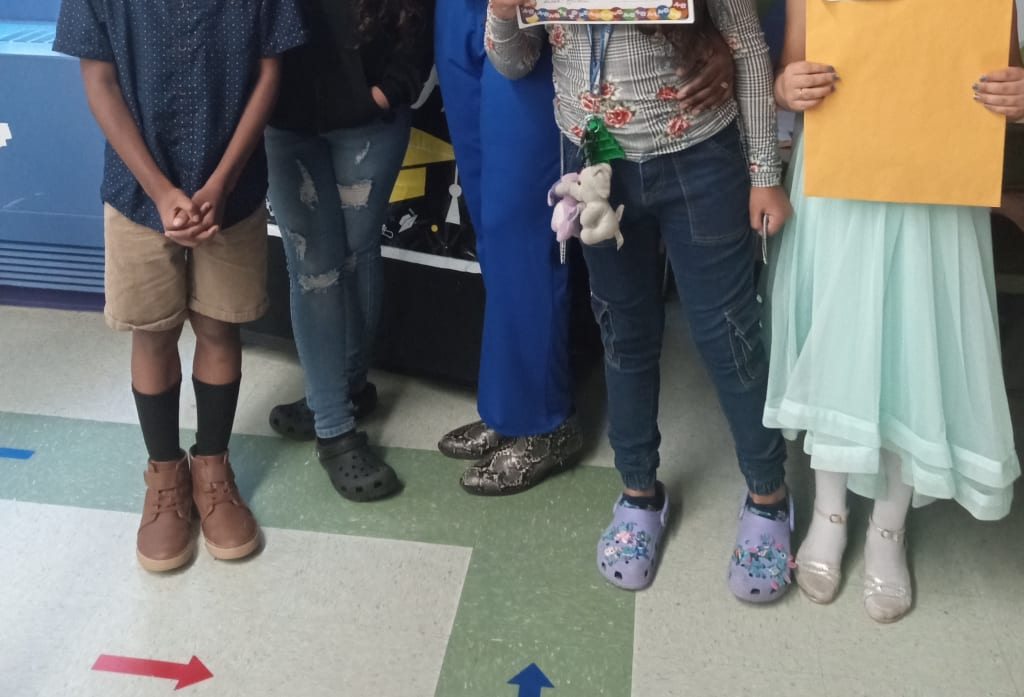
As educators, we exert a powerful influence over classroom norms, it is important to make explicit those values that are most often implicit and profoundly affect students in our classrooms.
I am currently reflecting on my education as a student in elementary school. From grade one to six I was usually in a classroom of at least thirty students. Although we all shared similar cultural backgrounds, we were different in academic abilities, interests, and learning styles. Despite these differences, we were all taught in the same way. Mostly whole group teach using the same curriculum. I learned a number of things through songs and rote learning or memorization. Most of us learned the content well. However, there were those who were always behind because they could not read as well or could not read as fast.
Each term we were given an end of term assessment. It was usually pen and paper test. The questions were varied. They were usually multiple choice, short answers, fill in the bank and simple essay types. We were usually placed according to our scores on the tests. Whoever got the highest score was first place while the one with the lowest score was placed last. Most times it was the same student who occupied the last ten positions. I was usually somewhere from 4th to 10th.
Looking back at the whole experience and knowing what I know now about reworking the curriculum and differentiated instruction, I believe a number of my classmates who had problems learning in whole group would have done much better if our teacher had differentiated the instruction and adapt the curriculum to meet their learning needs.
According to Tomlinson (2019) at its simplest, differentiation consists of the effort of teachers to respond to variance among learners in the classroom. Teachers can differentiate content, product, process and learning environment. It can be done with any age students and in any classroom. Teachers can differentiate content by allowing buddy reading, providing students with easier reading materials, using audio visuals and by meeting students in small groups or as individuals to either reteach what was not grasp or advance the knowledge of those who have mastered and could manage more difficult content. This differentiation of content would have helped my elementary classmates who were behind to get the assistance they needed. There were many who were interested in reading but needed the help of a buddy or needed just a little extra time in smaller groups. The more advanced learners could have been given additional and more advanced content. In differentiating the process students could have been given manipulates or be allowed extra time on tasks and different levels of support as needed.
My childhood classroom looks nothing like the classroom I now teach in. Not only are my students different in interest and academic abilities. They are different in language, culture, and race. To address this need or rework the curriculum to suit students’ needs, Universal Design in education can help be used. Through universal design, students can be allowed many different options for reading. (CAST, 2023) There can be digital print as well as text. Students are given regular feedback. Through reflection, the students can say whether they have met their goals and what might help them to do so. The classroom is designed in a way so that students who need a quiet environment can have it either through the use of headphones or by being assigned a special area in the classroom. There are also spaces for small groups or large groups to work.
Back when I went to elementary school there was not much technology in the classroom. Teachers mostly used charts and chalkboards to display content and students mostly showed their work through pencil and paper. Nowadays with the advancement of technology both teachers and students have lots of options. Students have many ways by which to complete their assignments. CAST (2023) suggests that students can use podcasts, a video or even draw a comic strip to show what they know.
These are only a few of the ways that teachers can use to rework the curriculum to suit the needs of diverse learners. Teachers who know their students’ names, background, learning styles, interests, strengths and weaknesses and are interested in catering to their needs are more likely to create a diverse and inclusive classroom environment for them.
About the Creator
Nette Reid
Variety is the spice of life. That's what I believe. Life is made up of a mix. One topic, one genre, can never adequately cover. Family, fact, fun, food, drama, poetry, you name it, we can talk about it. Guaranteed to please.
Keep reading
More stories from writers in Education and other communities.
The Duelist
The rays of a dying red sun flashed against the onrushing blade. The grey beards say the key to dueling lies in size, speed, reach, righteous fury, whatever the person in front of them pays them to say. Matteo knew better than any it was none of these and had an undefeated record on these sands to prove it.
By Matthew J. Fromm5 days ago in Fiction



Comments
There are no comments for this story
Be the first to respond and start the conversation.