
Observing the Universe: Telescopes
Telescopes are an important tool in space and astronomy research. This text details the history, types and uses of telescopes, optical, radio and space telescopes, and future telescope projects. While this text provides an overview for those interested in astronomy, it can be a useful resource, especially for understanding how telescopes work and what we can observe.

İNTRODUCTORY
Definition and History of Telescopes
Telescopes are scientific instruments that are used to observe and study celestial objects such as planets, stars, galaxies, and nebulae. They work by gathering and focusing light from these objects, allowing us to see them in greater detail than with the naked eye.
The earliest known telescopes were invented in the early 17th century in the Netherlands. These were simple refracting telescopes consisting of a convex lens at one end and a concave eyepiece at the other. They were originally used for terrestrial observations, but quickly proved useful for astronomical observations as well.
One of the most famous early astronomers to use a telescope was Galileo Galilei. In 1609, he used a refracting telescope to observe the moon, Jupiter, and other celestial objects. His observations provided evidence for the heliocentric model of the solar system, in which the planets orbit around the sun.
Over the centuries, telescopes have continued to improve in design and functionality. Refracting telescopes gave way to reflector telescopes, which use mirrors to gather and focus light. More recently, telescopes have been launched into space to observe celestial objects without the distortions caused by Earth's atmosphere.
Today, telescopes continue to play a crucial role in our understanding of the universe. They allow us to study the properties and behavior of celestial objects in great detail, and have led to countless discoveries and insights into the nature of the cosmos.
Importance and Usage Areas of Telescopes
Telescopes are incredibly important scientific instruments that have been used for centuries to observe and study the universe. They have allowed us to expand our understanding of the cosmos, from the solar system to distant galaxies and beyond.
One of the most significant uses of telescopes is in astronomy. By studying the light emitted by celestial objects such as stars, galaxies, and nebulae, astronomers are able to learn about their composition, temperature, and other physical properties. This has led to many important discoveries, including the existence of black holes, dark matter, and dark energy.
Telescopes are also used in other scientific fields, such as atmospheric science and planetary science. By observing the atmosphere of other planets and moons, scientists can learn about their climate and weather patterns. Telescopes can also be used to study the sun, allowing us to better understand the processes that drive solar activity and space weather.
In addition to their scientific uses, telescopes also have cultural and educational significance. They allow us to see the beauty and wonder of the universe in a way that is not possible with the naked eye, inspiring awe and curiosity in people of all ages.
Overall, telescopes are essential tools for exploring and understanding the cosmos. They have led to countless discoveries and have opened up new frontiers in our understanding of the universe. As technology continues to improve, telescopes will continue to play a critical role in scientific research and exploration.
OPTİC TELESCOPES
Refracting Telescopes
Refracting telescopes, also known as refractors, are a type of optical telescope that uses lenses to gather and focus light. They were the first type of telescope to be invented and were used extensively in astronomy in the 17th and 18th centuries.
The basic design of a refracting telescope consists of two lenses: an objective lens at the front of the telescope, which gathers and focuses the light, and an eyepiece at the back, which magnifies the image formed by the objective lens. The objective lens is typically a convex lens, while the eyepiece is a smaller concave lens.
One of the advantages of refracting telescopes is that they produce high-quality images with excellent contrast and sharpness. This is because the lenses are able to focus all colors of light at the same point, reducing chromatic aberration (color distortion) and producing clear images. Refractors are also relatively easy to use and maintain, making them a popular choice for amateur astronomers.
However, there are also some disadvantages to refracting telescopes. One is that they can be quite large and heavy, especially for larger apertures. This can make them difficult to transport and set up, particularly for remote observations. Additionally, the cost of high-quality lenses can be quite expensive, making larger refractors more expensive than similarly sized reflectors.
Despite these drawbacks, refracting telescopes continue to be used today for a variety of applications, including astronomy, terrestrial observation, and photography. They remain an important tool for observing the universe and continue to inspire scientists and amateur astronomers alike.
Reflecting Telescopes
Reflecting telescopes, also known as reflectors, are a type of optical telescope that uses mirrors to gather and focus light. They were first invented in the 17th century and have since become the most common type of telescope used in astronomy.
The basic design of a reflecting telescope consists of a curved primary mirror at the back of the telescope, which gathers and reflects light, and a secondary mirror at the front, which directs the light to the eyepiece or camera. The primary mirror is typically a concave parabolic shape, while the secondary mirror can be either flat or curved.
One of the main advantages of reflecting telescopes is that they can be much larger than refracting telescopes. This is because mirrors are much easier and cheaper to manufacture than lenses, allowing for larger apertures and better light-gathering ability. Reflectors are also less affected by chromatic aberration than refractors, making them a good choice for observing faint and distant objects.
However, there are also some disadvantages to reflecting telescopes. One is that they can be more difficult to use and maintain than refractors, as the mirrors must be regularly cleaned and adjusted to maintain their accuracy. Additionally, the secondary mirror can create an obstruction in the path of light, which can reduce image quality and contrast.
Reflecting telescopes are commonly used in both amateur and professional astronomy, as well as in other fields such as microscopy and industrial inspection. They have enabled astronomers to make many important discoveries, including the detection of exoplanets and the study of distant galaxies and black holes. With advances in technology and manufacturing, reflectors continue to play an important role in the exploration and understanding of the universe.
Catadioptric Telescopes
Catadioptric telescopes, also known as compound telescopes, are a type of optical telescope that use a combination of lenses and mirrors to gather and focus light. They were first invented in the early 20th century and have since become a popular choice for both amateur and professional astronomers.
The basic design of a catadioptric telescope consists of a curved primary mirror at the back of the telescope, a corrector plate at the front, and a secondary mirror in the center of the corrector plate. The corrector plate is a thin lens that corrects for the spherical aberration that would normally occur with a single curved mirror. The secondary mirror is usually mounted on the back of the corrector plate, reflecting the light back through a hole in the center of the primary mirror.
One of the main advantages of catadioptric telescopes is that they can be more compact and portable than reflecting telescopes of similar aperture. This is because the light path is folded, allowing for a shorter overall length. They also have a wider field of view than refracting telescopes of similar aperture, making them well-suited for observing large objects like the moon and planets.
However, there are also some disadvantages to catadioptric telescopes. One is that they can be more expensive than other types of telescopes due to their complex design and construction. They can also be more difficult to collimate and maintain, as the corrector plate and secondary mirror must be precisely aligned with the primary mirror.
Catadioptric telescopes are commonly used in both visual and astrophotography applications, as well as in other fields such as surveillance and reconnaissance. They have enabled astronomers to make many important discoveries, including the detection of exoplanets and the study of distant galaxies and black holes. With advances in technology and manufacturing, catadioptric telescopes continue to be a popular choice for those looking to explore and understand the universe.
Radio Telescopes
Radio telescopes are a type of telescope that use radio waves to observe and study celestial objects. Unlike optical telescopes that use visible light, radio telescopes can detect and analyze the weak signals emitted by stars, galaxies, and other objects in the universe.
Radio telescopes consist of several key components, including a large dish or array of dishes that collect radio waves, a receiver that amplifies and processes the signals, and a computer system that analyzes the data. The dish or array is usually made of metal and is designed to reflect and focus radio waves onto the receiver.
One of the main advantages of radio telescopes is that they can detect and study objects that are invisible to optical telescopes, such as cold gas and dust in space. They are also not affected by atmospheric distortion, allowing for clear and accurate observations even in poor weather conditions.
Radio telescopes can be used in combination with other types of telescopes, such as optical telescopes, to provide a more complete picture of the universe. For example, radio telescopes can be used to study the structure and composition of galaxies, while optical telescopes can be used to observe their visible light emissions.
Additionally, radio telescopes can be used in conjunction with other instruments, such as spectrometers and interferometers, to further analyze the data collected. Spectrometers allow astronomers to study the composition of celestial objects by analyzing the wavelengths of the radio waves they emit, while interferometers allow multiple radio telescopes to work together to provide higher resolution images.
Radio telescopes have played a key role in many important discoveries in astronomy, including the discovery of pulsars, the detection of the cosmic microwave background radiation, and the study of black holes and other exotic objects. They continue to be an important tool in the exploration and understanding of the universe, and advancements in technology and data analysis techniques are expected to lead to even more exciting discoveries in the future.
Space Telescopes
Space telescopes are a type of telescope that are placed in orbit around the Earth or other celestial bodies to observe and study objects in space. They are designed to overcome the limitations of ground-based telescopes, such as atmospheric distortion and light pollution, and to provide clearer and more accurate observations of the universe.
Space telescopes consist of several key components, including a primary mirror or lens, detectors that capture and process the light, and a system for transmitting the data back to Earth. The primary mirror or lens is usually larger than those used in ground-based telescopes, allowing for more light to be collected and higher resolution images to be produced.
One of the main advantages of space telescopes is that they can observe objects across the entire electromagnetic spectrum, from radio waves to gamma rays. This allows astronomers to study a wide range of celestial objects, from distant galaxies and black holes to nearby planets and asteroids. Space telescopes can also observe in wavelengths that are blocked or absorbed by Earth's atmosphere, such as ultraviolet and X-ray radiation.
Space telescopes can be used in conjunction with other types of telescopes, such as ground-based optical and radio telescopes, to provide a more complete understanding of the universe. For example, the Hubble Space Telescope, one of the most famous space telescopes, has been used in combination with ground-based telescopes to study distant galaxies and to search for exoplanets.
In addition to providing high-quality observations, space telescopes have also led to many important discoveries in astronomy, including the discovery of dark energy, the study of gravitational waves, and the detection of the first exoplanets. They have also enabled astronomers to study the early universe and to make important observations of nearby celestial objects, such as our own Solar System.
However, space telescopes also have some disadvantages. They are expensive to build and launch, and they require regular maintenance and repairs. They are also limited by their orbit, and cannot observe objects that are blocked by the Earth or by other celestial bodies.
Despite these challenges, space telescopes continue to be a critical tool in the exploration and understanding of the universe. New space telescopes, such as the James Webb Space Telescope, are currently under development and are expected to provide even more exciting and groundbreaking discoveries in the years to come.
Future Telescopes
The field of astronomy is constantly evolving, and scientists and engineers are always working on new and innovative telescopes to push the boundaries of what we can observe and understand about the universe. Here are some of the most promising future telescopes currently in development:
The James Webb Space Telescope (JWST): This space telescope is set to launch in 2021, and will be the largest and most powerful telescope ever sent into space. The JWST will observe in the infrared spectrum, and will be able to see farther back in time than any other telescope, allowing astronomers to study the early universe and the formation of galaxies.
The Extremely Large Telescope (ELT): The ELT is a ground-based telescope currently under construction in Chile. When it is completed in 2025, it will be the largest optical and infrared telescope in the world, with a primary mirror 39 meters in diameter. The ELT will be able to study exoplanets in unprecedented detail, and will help astronomers to understand the formation and evolution of galaxies.
The Large Synoptic Survey Telescope (LSST): The LSST is a ground-based telescope currently under construction in Chile. It will be able to survey the entire sky every few nights, and will be able to detect faint objects that are too dim to be seen by other telescopes. The LSST will be used to study dark matter, dark energy, and the structure of the universe.
The Square Kilometer Array (SKA): The SKA is a radio telescope currently under construction in Australia and South Africa. It will be the largest and most sensitive radio telescope ever built, and will be able to observe the early universe and study the properties of dark matter and dark energy.
The Nancy Grace Roman Space Telescope: This space telescope, named after the first female astronomer to work at NASA, is set to launch in the mid-2020s. It will study dark matter, dark energy, and exoplanets, and will be able to detect and study small, rocky planets around nearby stars.
These telescopes represent just a small sample of the many exciting new telescopes currently under development. As technology continues to advance, we can expect even more powerful and innovative telescopes in the future, which will allow us to explore and understand the universe in ways that we can only imagine.
I tried to explain the telescopes as much as I could, I hope you like it, see you in another article.
About the Creator
OmerFaruk
"I'm a creative soul passionate about arts since childhood. Art is not just a hobby, but a lifestyle. Currently pursuing a career in where I'm able to utilize my creativity. I always strive to learn, grow and progress in life."
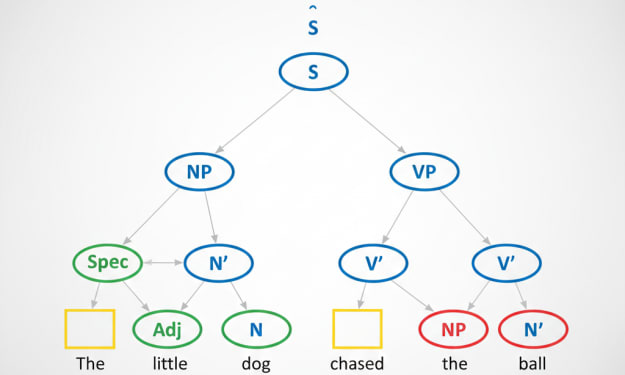
Mastering X-Bar Theory in Grammar in 10 Minutes
Grammar can often feel like a maze of confusing rules, especially when we dive into syntax — the study of sentence structure. One of the foundational tools in modern linguistics is X-Bar Theory, a framework that helps explain how words and phrases combine to form sentences. While it might sound intimidating, understanding X-Bar Theory can become straightforward if approached step by step.
By Games Mode On2 days ago in Education
Smart phones, Humans and Aliens.
WARNING. I will be tapping into one of your favorite creative tensions: The absurdity of humans worshipping their glowing rectangles as if they were tiny oracles. There’s something deliciously poetic about that contradiction, and it lends itself beautifully to an instructive proviso.
By Novel Allen4 days ago in Poets



Comments
There are no comments for this story
Be the first to respond and start the conversation.