
NVMe vs. SATA: A Deep Dive into Storage Technology
Which Storage Technology is Right for You?
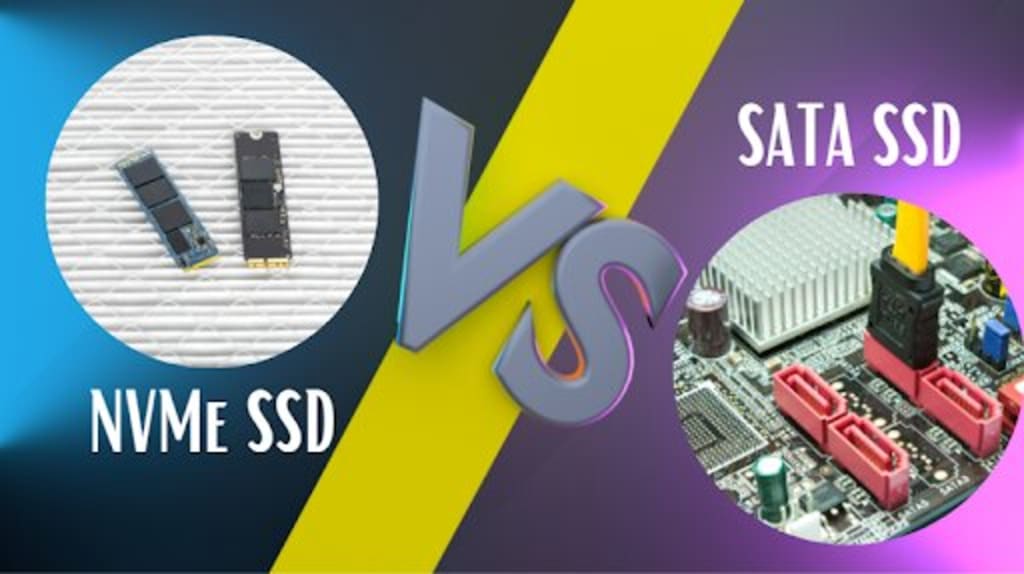
In the realm of data storage, the choice between NVMe and SATA drives has become a critical decision for system builders and enthusiasts alike. These acronyms represent two distinct storage technologies that offer varying levels of performance, efficiency, and cost. This blog post will delve into the key differences between NVMe and SATA, helping you understand their strengths and weaknesses to make informed decisions for your specific needs.
In the realm of computer hardware, storage technology has evolved rapidly over the years. Two prominent contenders in this arena are Non-Volatile Memory Express (NVMe) and Serial Advanced Technology Attachment (SATA). These technologies play a crucial role in determining the overall performance and responsiveness of your system. In this comprehensive guide, we'll delve into the intricacies of NVMe and SATA, exploring their key differences, advantages, and disadvantages to help you make an informed decision.
Understanding SATA
SATA, introduced in 2001, has been the standard interface for connecting storage devices to computers for many years. It's a serial interface that supports both hard disk drives (HDDs) and solid-state drives (SSDs). SATA has been instrumental in improving data transfer rates compared to its predecessor, Parallel ATA (PATA).
Understanding NVMe and SATA
NVMe (Non-Volatile Memory Express): NVMe is a high-performance storage protocol designed specifically for solid-state drives (SSDs). It offers significantly faster transfer speeds, lower latency, and improved power efficiency compared to traditional SATA drives. NVMe leverages the PCIe bus, which provides more parallel data paths and reduced overhead, resulting in exceptional performance for demanding workloads.
SATA (Serial ATA): SATA is a widely adopted interface standard for connecting storage devices to a computer system. While SATA has been the go-to option for many years, its performance limitations have become more apparent as technology has advanced. SATA drives typically rely on a serial cable and a slower interface, resulting in slower data transfer rates and higher latency compared to NVMe.
Key Differences
Performance:
NVMe: Offers significantly faster read and write speeds, making it ideal for demanding applications like gaming, video editing, and data-intensive workloads.
SATA: Provides decent performance for general-purpose tasks but may struggle with intensive workloads.
Interface:
NVMe: Uses the PCIe bus, which offers more parallel data paths and reduced overhead, resulting in higher bandwidth and lower latency.
SATA: Uses a serial cable, which can limit performance compared to PCIe.
Form Factor:
NVMe: Typically comes in M.2 form factor, which is smaller and more efficient than traditional 2.5-inch SATA drives.
SATA: Can be found in both 2.5-inch and 3.5-inch form factors.
Power Consumption:
NVMe: Generally more power-efficient than SATA drives, especially when idle.
SATA: May consume slightly more power, particularly when under heavy load.
Cost:
NVMe: Typically more expensive than SATA drives, especially for higher-capacity options.
SATA: Offers a more affordable option for general-purpose storage needs.
When to Choose NVMe
Demanding Workloads: If you frequently handle large files, run resource-intensive applications, or prioritize fast boot times, NVMe is the way to go.
Gaming: NVMe drives can significantly improve game loading times and overall performance, especially for titles with large open worlds or frequent save/load operations.
Content Creation: Video editors, graphic designers, and other creative professionals will benefit from the faster data transfer speeds and lower latency offered by NVMe.
Data-Intensive Tasks: If you work with large datasets or perform frequent data analysis, NVMe can accelerate your workflows and improve productivity.
When to Choose SATA
Budget Constraints: If you're on a tight budget and don't require the absolute fastest performance, SATA drives can be a viable option.
General-Purpose Storage: For everyday tasks like storing documents, photos, and videos, SATA drives offer sufficient performance at a lower cost.
Legacy Systems: If you're using older systems that don't support NVMe, SATA remains the primary choice for storage.
Conclusion
The choice between NVMe and SATA ultimately depends on your specific needs and budget. NVMe offers superior performance and efficiency, making it ideal for demanding workloads, while SATA provides a more affordable option for general-purpose storage. By understanding the key differences between these technologies, you can make an informed decision and select the storage solution that best suits your requirements.
About the Creator
Keep reading
More stories from Casper LAWRENCE and writers in Education and other communities.
DNS Lookup: The Unsung Hero of the Internet
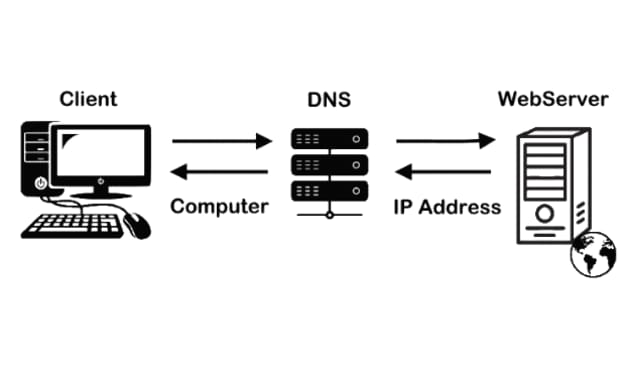
Have you ever wondered how your web browser seamlessly transforms a domain name like google.com into an IP address like 142.250.186.142? The magic behind this transformation lies in a fundamental Internet protocol known as the Domain Name System (DNS). In this blog post, we'll delve into the intricacies of DNS, exploring its core concepts, the lookup process, and its crucial role in the modern digital landscape. Learn what is dns lookup command and what it is used for.
By Casper LAWRENCEabout a year ago in Education
A brief history of chess
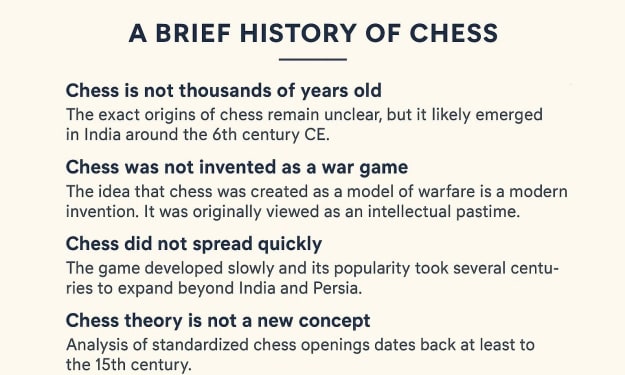
The attacking infantry advances steadily, their elephants already having broken the defensive line. The king tries to retreat, but enemy cavalry flanks him from the rear. Escape is impossible. But this isn’t a real war– nor is it just a game. Over the roughly one-and-a-half millennia of its existence, chess has been known as a tool of military strategy, a metaphor for human affairs, and a benchmark of genius. While our earliest records of chess are in the 7th century, legend tells that the game’s origins lie a century earlier.
By Munesh Yadavabout 16 hours ago in Education
The life of a british maid
It's just before dawn on a Saturday in summer 1906, and 16-year-old Alice Sutton’s mind is already spinning— tonight’s plans could cost her her job. But for now, there's work to do. Alice gets ready slowly, thinking about how her life has changed. Only a week ago, she was the lone servant in a modest home. Now she’s an under-housemaid at Wroxton Abbey in Oxfordshire, England, the grand estate of Sir John and Lady Ann Ashby-Blythe. As one of the lower-ranking indoor servants, she reports to the housemaids
By Munesh Yadavabout 18 hours ago in Education


Comments
There are no comments for this story
Be the first to respond and start the conversation.