
Noumena vs Phenomena
Is it Possible to Know a World Outside of Our Senses?

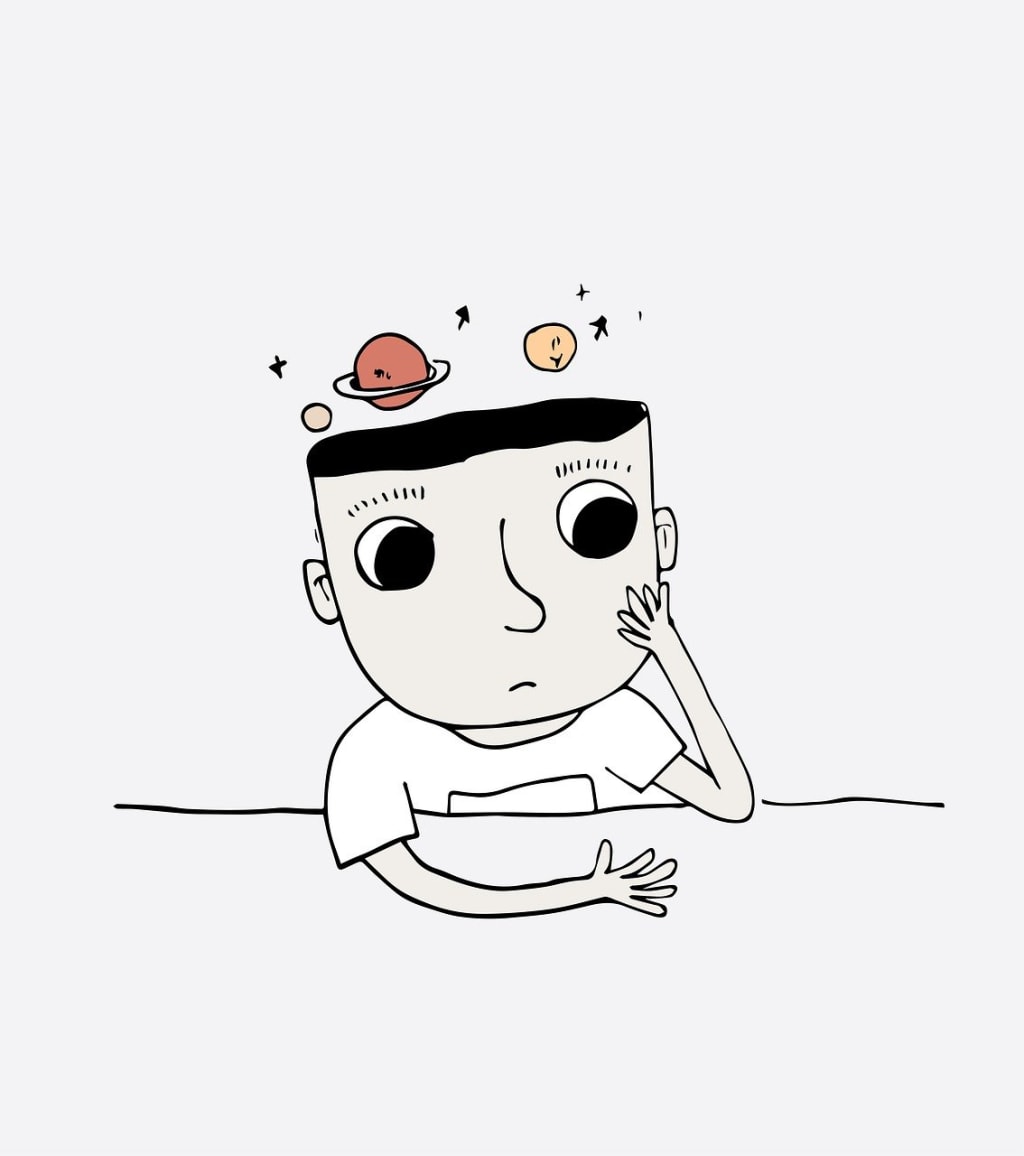
Kant was a curious man in the sense that while he believed our truths only resided in the “land of pure understanding” (B294), he still found interest and necessity outside of it in the “stormy ocean” where uncertainty was the only certainty. The necessity he finds comes as a way of showing us how our knowledge is limited as well as uncovering the false truths we’ve been led to believe. Kant does this by explaining the differences between phenomena and noumena, where the former exists in the sensible and the latter exists—or possibly doesn’t—unbeknownst to us. While there’s only a single way Kant views phenomena, he separates noumena into two types: concepts of objects outside of the sensible and concepts of objects within other types of intellect. This distinction makes it clearer for us to understand how sensibility plays a primary role in the knowledge that humans are able to attain. As for myself, it sparked curiosity regarding several beliefs I have where the evidence is based more so on the ideas of divine intellects rather than my own knowledge and understanding.
The purpose of this essay is to explain Kant’s reasoning behind the noumenon and phenomenon distinction using his definitions of the two terms, his “one world” and “two worlds” interpretations, and his stormy ocean metaphor. I also intend to explain his concepts of the types of noumena i.e., positive noumena and negative noumena. After doing so, I will explain the necessity of noumena and why Kant doesn’t believe humans have a way of knowing what is outside of sensible knowledge. Not only will I utilize Kant’s own words from Critique of Pure Reason, but I’ll also use my notes.
While I’m sure that many have heard the term phenomena in regular conversation, we must look further into what it truly is by Kant’s definition. “Appearances, to the extent that as objects they are thought in accordance with the unity of the categories, are called phaenomena” (A249.) By this, he means that they refer to the empirical—the things which appear to us under sensible conditions. As I mentioned in my previous paper, “Sensibility is our minds’ ability to receive representations to the extent that it’s affected” while “‘the faculty for bringing forth representations itself, or the spontaneity of cognition, is the understanding’ (A51/B75)”. So, in a sense, phenomena are the way we perceive things. Something which is referred to as a phenomenon can only be a conditioned object—because if the circumstances were to alter, then it would no longer hold the same appearance. As discussed in a lecture, since they are only known to us under certain conditions, they are finite objects of knowledge—in shorter terms, they are limited (A251.) A notable, natural phenomena would be a tornado. A tornado would only appear under very specific conditions where there’s a mix of warm, moist air and dry, cool air. Without these conditions, you could possibly have something else like a cool day, a thunderstorm, or maybe even just experience the sun being out. This is because the empirical existence of a tornado is limited to very specific weather conditions. I want to emphasize that Kant isn’t just referring to natural phenomena but rather all things that occur in the sensible.
“For if the senses merely represent something to us as it appears, then this something must also be in itself a thing, and an object of a non-sensible intuition, i.e., of the understanding, i.e., a cognition must be possible in which no sensibility is encountered, and which alone has absolutely objective reality, though which, namely, objects are represented to us as they are, in contrast to the empirical use of our understanding, in which things are only cognized as they appear” (A249.) Deriving from the Greek term ‘nous’, noumena is the object of reason. Kant considered the idea that since we have objects that appear to us through our sensible cognization, then there must be some form of the object that just is. I mean that our reality isn’t the true perception of the object but the finite version of it, and these objects of reason are greater—though unattainable—as Kant considered this type of knowledge as divine intellect. Therefore, it’s the infinite knowledge which we would assume God to have.
If we were to take away the sensible usage of the understanding, then we would be left with the transcendental version of it, i.e., the pure understanding of concepts—pure in a sense that it is a priori i.e., prior to experience or sensibility. While Kant believed that this understanding was impossible for us to know, because our perception of knowledge is only through the combination of understanding and sensibility (A258/B314), otherwise known as a posteriori, he considered—not believed—that our version of truth may not be the only one. “For this will always remain unknown to us, so that it even remains unknown whether such a transcendental (extraordinary) cognition is possible at all, at least as one that stands under our customary categories…if we separate [understanding and sensibility], then we have intuitions without concepts, or concepts without intuitions” (A258/B314.) If someone were to attempt to make sense of these types of concepts or objects, Kant believed that it would be problematic and unjustifiable because any attempt to explain an object without sensible understanding is essentially a void as “one cannot think up any way in which they could be given” (B315.) However, this doesn’t confirm that noumena are non-existent nor does it deny it—it only acknowledges that we are unsure.
Where humans’ knowledge is can be referred to as the “land of pure understanding” (A235) which is a limited encasement of understanding that cannot be changed or debated by alteration. He referred to everything outside of what we could confirm through reasoning as illusions—which is where noumena would be. This area outside of the land of understanding was “a broad and stormy ocean, the true seat of illusion, where many a fog bank and rapidly melting iceberg pretend to be new lands and, ceaselessly deceiving with empty hopes…” (A236/B295.) To venture out into this ocean, man must be able to look at the land of truth and consider if everything that we know to be is satisfiable to us, because everything external could be guesses, myths, theories without strong support, fables, and anything else along these lines where the claim cannot be confirmed nor denied or is built upon false pretenses where one is led astray. The point of looking back at what we understand before venturing off into these ideas and thoughts that are of themselves is because it’ll show the difference in evidence. What I mean by evidence is that the understanding which we have as truth will be able to be confirmed by action, testing, all in all by utilizing the senses to cognize. This is opposed to the case that it’ll be shown to man that outside of land, in the “ocean”, there isn’t any reason that can truly be confirmed because “the use of the categories can by no means reach beyond the boundaries of the objects of experience” (B308.)
To better show the distinction between noumena and phenomena, Kant gives an interpretation of two-worlds and of one world. In the instance where there’s the “two-worlds” interpretation, the noumenon causally effect the phenomenon. Noumenon, which would be of its own world, have a way of grounding the appearances, which are of the phenomenal world. In this case, there are the things we know and the things we don’t know where the latter are separate as things in themselves. The best way that I could describe it would be if the term vehicle had never been known to man—yet in itself, it was defined as what we know car to be defined as. In this case, the meaning of vehicle would ground the concept of what a car is, as a way of transport. I chose the two terms because while they can mean the same thing, vehicle is a broader term that can be used for several other terms in the sensible world like truck, motorcycle, boat, etc. Only I would never even be able to give this description because “vehicle” would be unknown to me. It’s pretty difficult attempting to explain this, because how can you explain something which is unknown and non-existent in space and time?
Now, in the case of one world, it’s broken down into two possible interpretations. The first consisted of noumena and phenomena existing together. They were mentioned in the lecture as “two aspects of one object: either ‘epistemic’ or ‘metaphysical”—epistemic relating to validated knowledge and metaphysical relating to the transcendental. This was a concept used by Leibniz where appearances were “things in themselves” (A264/B320.) On one hand, an object could be explained by use of knowledge in the physical world where matter was of concern, and on the other it’s metaphysical aspects i.e., it’s transcendental sense or form, could be used. Now, it seems similar to the two-worlds concept, however in this interpretation, the noumena doesn’t affect the phenomena—it simply is the other part of the phenomena.
The second interpretation of the one-world distinction is where there is only the world of phenomenon. In this case, only as we search for knowledge can we realize that there are concepts that we simply cannot know and have no way of knowing, e.g., that God exists, the ontological argument, or that we have souls. It’s possible for us to think of things that don’t exist, so by that reasoning, simply thinking of something doesn’t necessarily make it true or existent—even if it isn’t contradictory. This is because our truth lies in our understanding which would require more than just thoughts—they would require intuitions as well. According to Kant, “if we remove our own subject or even only the subjective constitution of the senses in general, then all the constitution, all relations of objects in space and time, indeed space and time themselves would disappear and as appearances they cannot exist in themselves, but only in us” (A42/B59.) So, without the sensible, our intuitions in matter, our understanding and relation to objects would be lost in void that isn’t comprehendible by us. To better explain this, in my previous paper I used an example about orange pants and the concept of orange.
“For instance, if a person had seen a pair of pants that were orange, they would know it’s relation to the color without having a name or concept for orange. The difficulty with this here, is that without that conception of orangeness, it wouldn’t be orange. All things orange would still exist containing that physical appearance, yet the word orange would no longer hold that same correlation that it would if orangeness had been defined as being orange. Now if other beings perceived the pants as something entirely different, they would associate that appearance with the pants instead. However, all things with that appearance would still be correlated by the concept of what it is” (Watkins, 4-5.)
Therefore, the best outcome is to accept that we cannot know what is outside of the phenomenal because then our entire world of understanding will come crumbling down along with it.
I mentioned earlier that Kant discusses two conceptions of noumenon—positive and negative. He refers to positive noumenon as when we “apply the categories to objects that are not considered as appearances, then we would have to ground them on an intuition other than the sensible one” (B308.) The objects that result from this are the positive noumena. When he says an intuition that isn’t different from a sensible one, Kant is referring to an “intellectual intuition” (B307), which humans do not have. So, while this could be thought of as divine intellect, or the knowledge of God, we still cannot confirm if that actually is the case—it’s only a possibility, or concept. In the case of limitations with positive noumena, this sort of knowledge is of no use to us. It isn’t necessarily a limit to us, but more so limited to beings that have a way of knowing outside of human sensibility. Therefore, we have no access to positive noumena.
Negative noumena are the concepts of objects insofar as it isn’t of our sensible intuition. So, the difference from positive noumena is that this isn’t placing the concepts in the scope of another sort or intuition i.e., intellectual intuition, but instead is showing us that it’s something we don’t know. “The concept of noumenon is therefore merely a boundary concept, in order to limit the pretension of sensibility, and therefore only of negative use. But it is nevertheless not invented arbitrarily, but is rather connected with the limitation of sensibility, yet without being able to posit anything positive outside of the domain of the latter” (A255/B311.) They show us that we have limits to our knowledge—just as the latter “one world” concept showed us. Some objects are beyond what we can confirm through our ways of judgement, so rather than assuming something or someone else may know the way of discovering it’s truth, we just accept that we lack something. As I’ve mentioned before, this would be conceptions similar to the start of the universe. While there are several theories when asked how the universe came to be, a man, who isn’t interested in dialectics or things concerning the stormy ocean, will acknowledge that he genuinely doesn’t know.
The theory of noumena comes after metaphysics because it allows for further explanation of metaphysical concepts being entirely beyond our scope of knowledge. When Kant utilizes synthetic a priori concepts, he’s utilizing concepts that still would only be relevant to our empirical world e.g., mathematics and science. These are still within the world of phenomenon as opposed to true metaphysical concepts that may leave us more confused than we had started. The point of dedicating a portion of his critique to metaphysics was to show how the psychological, cosmological, and theological ideas fail in supporting the theory of metaphysics. These ideas would require transcendental logic—true a priori concepts—that simply cannot be attained by man.
“For a cognition is false if it does not agree with the object to which it is related even if it contains something that could well be valid of other objects…but it is clear that since with such a criterion one abstracts from all content of cognition…truth cannot possibly be provided” (A59/B83.) These types of beliefs reach beyond the phenomena and into noumena territory where questions and false explanations of souls, the nature of the world, and God’s existence occur. Placing the theory of noumena after metaphysics creates a stronger argument against metaphysical beliefs by showing that it’s not even possible for man to simulate a scenario where truth can arise from something outside of the sensible world. The theory of noumena shows that we have limits to what can be known or discovered, which in turn highlights metaphysics being in that stormy ocean Kant mentions as opposed to the land of truth.
Kant does think that the consideration of noumena allows man to know his limits of knowledge, however attempting to know what’s beyond those limits is futile because of the way we determine truth. We are only capable of knowing things by our relation to them (A19/B33) so, objects that are outside of that simply can’t be justified as true. As he says to close out the phenomena and noumena section,
“The concept of pure, merely intelligible objects is entirely devoid of all principles of its application, since one cannot think up any way in which they could be given, and the problematic thought, which leaves a place open for them, only serves, like an empty space, to limit the empirical principles, without containing and displaying any other object of cognition beyond the sphere of the latter” (A260/B315.)
As a final word, objects which appear to us under sensible conditions are phenomena which play a vital role in the way we perceive the world. They consist of what we deem as true by way of relating to the objects we perceive to understand them. The collection of all these objects we come to know, is essentially what creates our intellect and ongoing learning. Noumena, however, are outside of the possibility of our knowledge as they are objects of reason, void of our empirical knowledge. I have utilized Kant’s definitions and further elaborations of the terms, his stormy ocean metaphor, the distinction of “one world” and “two-worlds”, as well as explained why Kant disagreed with the idea of noumenon and metaphysics in hopes of clarifying the difficulty in objects of reason. They are difficult in explaining as there is no certainty of what is beyond man’s understanding of the world.
About the Creator
Temple Watkins
Welcome to my humble abode! I’m here to give you insight on not only thought provoking topics, but a wide range of tips, recipes, short stories, and reviews. All over the place, right? That’s the best part. There’s something for everyone!
Keep reading
More stories from Temple Watkins and writers in Education and other communities.
To Mourn is to Acknowledge Our Existence
While the majority experience grief or loss in some form, there is no set rule for how we experience it. In Butler’s essay, they claim that while we strive to be individuals, the existence of grief ties us together once again no matter how much we desire independence. We can do our best to distinguish ourselves from one another, but the case is this—when we lose something or someone, we lose part of ourselves (20.) From birth to death, we are exposed over and over and we become susceptible to the actions of those external. The actions committed by others, whether good or bad, leave a mark that transforms us. This essay aims to elaborate on Butler’s opinions on grief, mourning, embodiment, and how we distinguish our views of one another based on our ability to empathize through grief. I will do so by defining the following: ecstatic, embodiment, grief, and agency. To do so, I will draw from Butler’s essay Violence, Mourning, Politics (2004) in hopes of providing a sound explanation. It is also important to note that while I mention “we” throughout this paper, I am utilizing the tense spoken by Butler in their essay and am not speaking for the whole of humanity myself.
By Temple Watkinsabout a year ago in Education
Starting Strong: Learning the Basics of Investment Management
Investment management involves managing money set aside to grow over time. It is about deciding how and where to put money so that it earns more in the future. This process includes choosing among options such as stocks, bonds, or real estate. It also involves planning how long to hold these investments and how to react when markets change. For beginners, learning about investment management is the first step toward gaining control over their financial future.
By Winston Feng8 days ago in Education
My Journey Exploring Panasonic Avionics Corporation
When I first dove into the world of aerospace technology, one company kept popping up again and again: Panasonic Avionics Corporation (PAC). Over the years, I’ve learned that this organization isn’t just another supplier it’s a powerhouse in in-flight entertainment and communication systems (IFEC) that has quietly shaped how millions of passengers experience air travel.
By Beckett Dowhan6 days ago in Education



Comments
There are no comments for this story
Be the first to respond and start the conversation.