
To Mourn is to Acknowledge Our Existence
An Analysis of Judith Butler’s Take on Grief


While the majority experience grief or loss in some form, there is no set rule for how we experience it. In Butler’s essay, they claim that while we strive to be individuals, the existence of grief ties us together once again no matter how much we desire independence. We can do our best to distinguish ourselves from one another, but the case is this—when we lose something or someone, we lose part of ourselves (20.) From birth to death, we are exposed over and over and we become susceptible to the actions of those external. The actions committed by others, whether good or bad, leave a mark that transforms us. This essay aims to elaborate on Butler’s opinions on grief, mourning, embodiment, and how we distinguish our views of one another based on our ability to empathize through grief. I will do so by defining the following: ecstatic, embodiment, grief, and agency. To do so, I will draw from Butler’s essay Violence, Mourning, Politics (2004) in hopes of providing a sound explanation. It is also important to note that while I mention “we” throughout this paper, I am utilizing the tense spoken by Butler in their essay and am not speaking for the whole of humanity myself.
“To be ecstatic means, literally, to be outside oneself, and thus can have several meanings: to be transported beyond oneself by a passion, but also to be beside oneself with rage or grief” (24.) Butler defines ecstatic as feeling so strongly about something that it has a way of transporting us into the depth of our emotions. They mention that feelings of ecstasy were usually associated with the “feminist and lesbian/gay movement” (24), though there’s reason to believe that everyone experiences ecstasy more often than it’s acknowledged. The feelings that cause us to be displaced through emotions come after being exposed or vulnerable to the world (25.) I would also say, just as Butler mentions later, that humanity is often exposed therefore it’s a valid response to claim that being ecstatic goes far beyond the LGBTQ+ and feminist movement. It’s experienced in everything from extreme acts of terror to simply losing a best friend of several years.
Butler thought that there were two reasons our being’s embodiment is tied to being ecstatic, i.e., we are constantly exposed to the world, and we have a recurring bodily dependency. To be human is to experience emotions, and to experience emotions is to risk the possibility of feeling so strongly that “we're undone by each other. And if we're not, we're missing something” (23.) We are fundamentally relational, so our being is impacted and molded by factors around us. If we were to look at it in simpler terms, often the guardians we are raised by place beliefs within us that mold our personalities into whom we become. So, while some people may dehumanize other races, others may view everyone as human no matter their differences. There are also instances where those beliefs alter over time, but that often comes from interacting with new people who allow us to see the world through different eyes. So, it remains that we are impacted by the people outside of ourselves, thus we can never truly be independent of all.
In the previous paragraph, I mentioned that our lives are so intertwined with the world around us. The intertwinement we experience implies that we aren’t necessarily independent. On page 26, Butler states, “Although we struggle for rights over our own bodies, the very bodies for which we struggle are not quite ever only our own. The body has its invariably public dimension. Constituted as a social phenomenon in the public sphere, my body is and is not mine.” The moment we became three-dimensional beings was the moment that we became exposed to alteration. Butler mentions that while the ego may give us the false sense of having always had autonomy, that simply isn’t true for “individuation is an accomplishment, not a presupposition, and certainly no guarantee” (27.) We aren’t like animals in the wild that begin to roam free of their parents only weeks or months after being born—we require food, shelter, and housing to do the bare minimum of surviving in our years of youth. However, when we look at nature it's apparent that while the wild may not always rely on a pack or their parents, they do rely on nature for other things, i.e., prey to hunt, signs of life to determine safety, and even mating partners. So, even if we were living like wildlife, we’d still be dependent on others. When we determine ourselves to have free will or autonomy, we begin to see ourselves as an individual rather than how we relate to others. This isn’t saying that we have full autonomy though because we still are vulnerable to others whether that’s emotionally, financially, or physically.
Now that I’ve defined ecstatic and our being’s embodiment, I will define what Butler means when they discuss grief along with how it relates to the previous two topics. To experience grief is to experience sorrow from the loss of someone. Loss isn’t simply losing an individual though, because when we lose someone “something about who we are is revealed, something that delineated the ties we have to others, that shows us that these ties constitute what we are, ties or bonds that compose us” (22.) If we grieve someone, it is usually because there is some form of relational tie between us, so to grieve “you” (22) only as opposed to also grieving the part of “I” (22) that was lost is downplaying the severity of the experience. When we lose someone, e.g., a close family member, it’s as if we’re losing the moments shared, the dreams or desires they had that can no longer be lived out, the inside jokes we held, the secrets we were meant to share, etc. are all lost as well. That form of grief doesn’t come from something totally separate from ourselves.
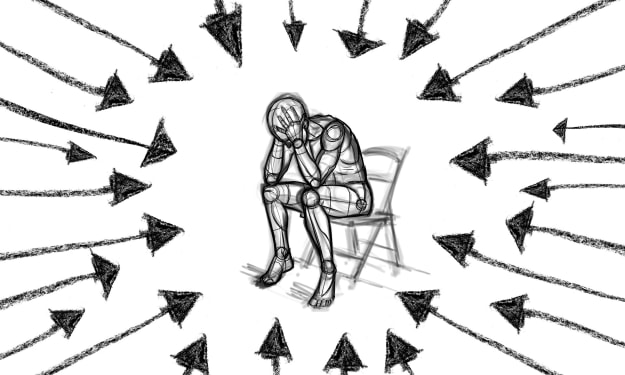
While grief can arise in various forms, sometimes it’s an impulse to want to resolve or get rid of the grief immediately rather than going through it (29.) Just recently I read a story about a woman who lost her husband during a break-in. Rather than processing, maybe attending therapy or allowing herself to cry, the woman put her house up for sale and remained busy nonstop to avoid having to think about him. If we avoid exposing our grief, then we close ourselves off from being vulnerable to others. Not only do we begin to feel alone, but others who may have experienced something similar may also feel alone. Accepting our vulnerable state means being allowed to grieve, or even be rageful about our loss of others and loss of selves. If we can allow ourselves to see what grief looks like when we’re beside ourselves, then seeing it in others will become more apparent around us. Grief is still often caught up in our desires to feel safe and secure, so for the woman in the story, ignoring the trauma altogether allowed her to feel safer rather than confronting it. I want to acknowledge that while the woman in the story did avoid exposing her grief to the world, her avoidance could also be considered her grieving in her own way. Therefore, it can sometimes be difficult to notice the signs of being ecstatic in others because there are so many ways of showing it.
Using the story of the woman from the previous paragraph, I want to touch briefly on our ability to self-govern, or our agency. When we’ve developed a sense of self and declared ourselves as independent, we have a solid sense of agency. Once grief enters, however, we lose that security. When Butler mentions being ecstatic, they say that we are outside ourselves. So, when we’re grieving, our agency is undermined by the strength of grief. The woman in the story was no longer able to make decisions like the ones that she made before the loss of her husband. Our choices are now motivated by a new set of rules that will continue to rule until we accept our loss and vulnerability.
Butler did believe that we had agency. To have a body “implies mortality, vulnerability, agency: the skin and flesh expose us to the gaze of others, but also to touch, and to violence...”(26.) I agree that we do have agency, though it’s often covered in a film of rules and judgments given by others. While we can make choices, sometimes people find it easier to do as the majority does—whether that’s judging citizens of countries during the war or wearing trendy clothes because it’s easier than developing your sense of style—as opposed to truly making every single choice on our own.
I mentioned citizens during the war because of Butler’s take on the journalist Daniel Pearl in contrast to the Palestinians that weren’t published in the San Francisco Chronicle (37.) Daniel was murdered during the war, and while Americans mourned him so dearly as if he were their brother, the vast number of Palestinian lives lost were ignored or viewed as casualties of war (37.) When we grieve, it’s because we feel as if we’ve lost a part of ourselves, so it’s easier to grieve someone who’s recognized as a human so like themselves than it is to grieve numbers on a list. Just as I mentioned earlier, a lot of how we view people during our upbringing can determine how we recognize them as humans. It makes sense that someone racist wouldn’t grieve the loss of someone that’s the race they hate while someone raised differently may grieve every poor loss they learn of.
To alter the way we mourn, we must learn to experience exposure to others, i.e., we must learn of others’ names, cultures, faces, and differences to better recognize them like ourselves (48.) In the case of the Palestinians, recognizing that they also experience war and terror they didn’t ask for allows us to relate as well. Cutting off the other forces us to view them as alien, or even a danger to our way of being even if they’re harmless. We must learn to experience our true emotions rather than the limited ones we’ve been exposed to. It’s only then that we can begin to empathize with the other and see them as a part of us.
About the Creator
Temple Watkins
Welcome to my humble abode! I’m here to give you insight on not only thought provoking topics, but a wide range of tips, recipes, short stories, and reviews. All over the place, right? That’s the best part. There’s something for everyone!
Keep reading
More stories from Temple Watkins and writers in Education and other communities.
The Joy in Other’s Misfortune
Abstract The purpose of this essay is to explain how the influence of media has given the audience a new form of entertainment that thrives on the pain, drama, and lack of comfortability of others. While interacting online with others can be a thrilling and lighthearted experience, it’s as if there’s also another side to being online. By this other side, I’m referring to the lack of moral responsibility that allows users to dehumanize others, themselves to be dehumanized for attention, and even place themselves in the chairs of critics. The need for attention from online users has led to a sort of masochistic belief system where it’s okay to be mistreated so long as benefits arise from it. While it is possible to see this desire for fame and fortune face-to-face, the occurrence is grander online due to the immediate access to millions of people all over the world. It’s also easier to lose a moral conscience because the consequences are less worrisome due to online anonymity than if individuals had acted in person where their identity is known. There’s a difficulty in understanding how and who all are morally responsible because of the various factors involved, however, it is clear that multiple individuals are indeed at fault.
By Temple Watkinsabout a year ago in Education
What Market Volatility Means for Your Investment Plan and Financial Future
Market volatility is a common but often misunderstood feature of investing. It refers to the unpredictable and sometimes dramatic changes in asset prices over short periods. These fluctuations are driven by factors such as economic data, corporate earnings, geopolitical events, and investor sentiment. For many, volatility can cause anxiety, but with the right knowledge and strategy, it becomes something to navigate, not fear.
By Winston Fenga day ago in Education
Reinventing the Silver Screen: How Virtual Filmmaking is Transforming Cinema
In an era marked by rapid digital advancement, the way films are created is undergoing a fundamental transformation. Traditional filmmaking methods that relied on physical sets, practical effects, and location shoots are increasingly being replaced by virtual technologies that offer unprecedented flexibility and creative control. As technology continues to evolve, virtual filmmaking is no longer a futuristic novelty but a powerful tool shaping cinema today.
By Nigel Sinclaira day ago in Education
The Path to Salvation
The late autumn evening air filled the monk's lungs, but it wasn't the season that chilled his bones. The heavy-handed presence of evil he had sensed upon entering the woods surrounding this mountain village had not bothered to conceal itself from him.
By Made in DNA6 days ago in Fiction


Comments
There are no comments for this story
Be the first to respond and start the conversation.