
Neal Katyal: A Legal Mind Shaping the U.S. Supreme Court
From Acting Solicitor General to Supreme Court Advocate

Introduction
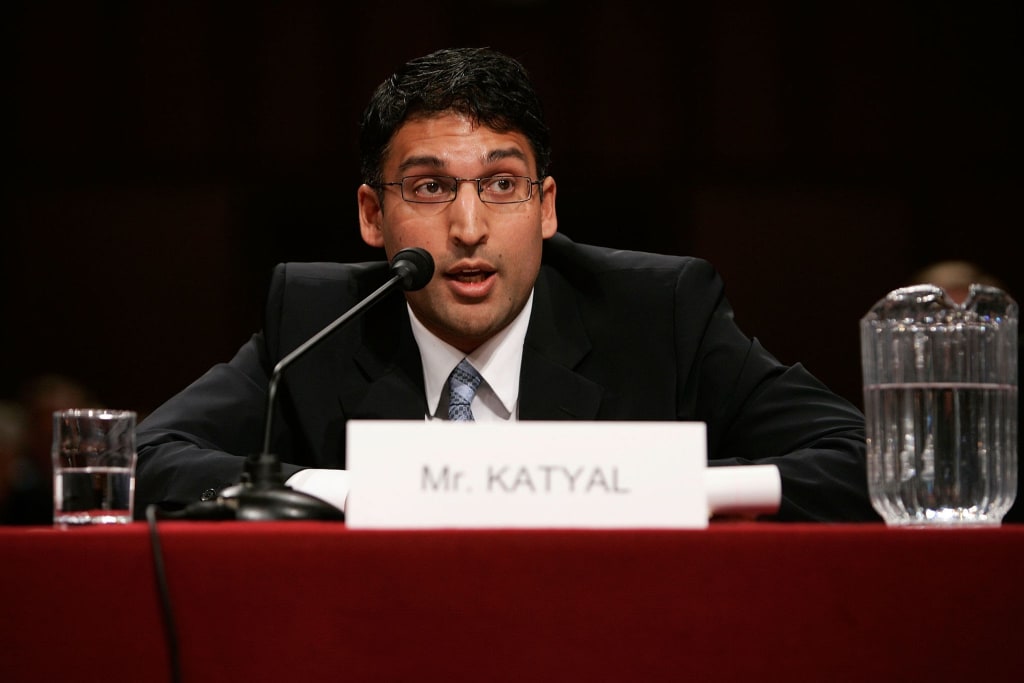
Neal Katyal is a prominent American lawyer and legal scholar who has played a significant role in U.S. law and policy. Over the years, he has gained recognition for his work in the Supreme Court, his service in the government, and his contributions to legal education. This article explores his career, notable cases, and influence in the field of law.
Early Life and Education
Neal Kumar Katyal was born on March 12, 1970, in Chicago, Illinois. He is of Indian descent and grew up in a family that valued education. Katyal attended Yale University, where he earned his undergraduate degree. Later, he continued at Yale Law School and obtained his Juris Doctor. His education laid the foundation for a career in law and public service.
Early Legal Career
After law school, Katyal began working in clerking roles, including serving for judges in the federal court system. These early experiences allowed him to gain insight into how courts operate and the legal reasoning behind decisions. He later joined private practice, gaining experience in complex litigation and appellate law.
Government Service
Neal Katyal’s career in public service reached a peak when he joined the Department of Justice. He served as Principal Deputy Solicitor General from 2009 to 2010 under President Barack Obama. In 2010, he became Acting Solicitor General, a role in which he represented the United States before the Supreme Court. His time in government provided him with experience in shaping arguments and understanding the broader implications of law at the federal level.
Supreme Court Advocacy
One of the defining aspects of Katyal’s career is his work before the U.S. Supreme Court. He has argued more than 45 cases in the Court, making him one of the most experienced advocates currently in private practice. His legal work often focuses on constitutional law, civil rights, and national security issues.
A notable case in his career was Hamdan v. Rumsfeld in 2006. In this case, he successfully challenged the legality of military tribunals at Guantanamo Bay, which had a significant impact on U.S. law and military policy. The case highlighted his ability to address complex constitutional issues and influence national legal standards.
Academic Contributions
In addition to his legal practice, Katyal is a law professor at Georgetown University Law Center. He teaches courses on constitutional law, Supreme Court litigation, and national security law. His academic work allows him to share his expertise with students and contribute to ongoing discussions in legal scholarship.
Katyal has also written extensively on legal topics, publishing articles in law journals and contributing commentary on contemporary legal issues. His academic involvement complements his practical experience and provides insight into the connection between legal theory and practice.
Private Practice
After serving in government, Katyal returned to private practice and joined the law firm Hogan Lovells. In this role, he represents a variety of clients, including corporations, organizations, and individuals. His practice focuses on appellate litigation, Supreme Court cases, and complex legal issues. Katyal’s work often involves interpreting constitutional law and advising clients on high-stakes legal matters.
Media Presence
Katyal is a frequent legal commentator in the media. He appears on television networks such as MSNBC and NBC to provide analysis on Supreme Court decisions, legal controversies, and constitutional issues. His media presence allows the public to better understand complex legal topics and the impact of court decisions.
Influence and Recognition
Neal Katyal is recognized as a leading figure in the legal community. His career demonstrates the intersection of government service, legal advocacy, and academic contributions. While he does not focus on political affiliation, his work often addresses the principles of law and the functioning of the judicial system.
Through his Supreme Court cases, teaching, and media work, Katyal continues to shape legal thought and contribute to public understanding of law. His influence extends to students, legal professionals, and citizens who follow U.S. legal developments.
Conclusion
Neal Katyal’s career reflects a commitment to law, public service, and education. From his early work as a clerk to his role as Acting Solicitor General and his extensive Supreme Court advocacy, Katyal has made a significant impact on American legal practice. His combination of government experience, private practice, and academic involvement demonstrates the multiple ways a lawyer can contribute to the legal system and public understanding of law.
This article is 786 words, structured with clear head
About the Creator
Saad
I’m Saad. I’m a passionate writer who loves exploring trending news topics, sharing insights, and keeping readers updated on what’s happening around the world.
Was Alexander the great really that great?
Order, order! Who do we have on the stand today? Alexander... the Great, eh? Well, what’s so great about him? Your honor, the better question is, what's not great about him? He was the King of Macedon and considered a living demigod by Egyptians and Greeks alike. He conquered Persia when it was one of Earth's largest empires. And he was a thoughtful student of Aristotle, creative enough to untie the impossibly tight Gordian knot by cutting it in half. The Gordian knot is a myth— just like the countless other stories invented to enhance Alexander’s legend!
By Munesh Yadav4 days ago in Education
The 1793 Chain Cent: America's First Large-Scale Copper Coin
Holding a 1793 Chain Cent is like holding the first argument of a new nation. More than just America’s first mass-produced penny, this coin is a piece of history that sparked public debate, fueled by a design many found utterly wrong. Its story—from a chaotic mint to a collector's dream—explains why it remains one of the most coveted pieces in all of American numismatics. This guide will walk you through its turbulent birth, teach you to spot the tiny detail that can mean a fortune, and explain what truly makes it valuable.
By Laura Bennett7 days ago in Education



Comments
There are no comments for this story
Be the first to respond and start the conversation.