
NASA's Ambitious Plans for the Moon: A New Era of Lunar Exploration and Beyond
The Artemis Program: Returning to the Moon

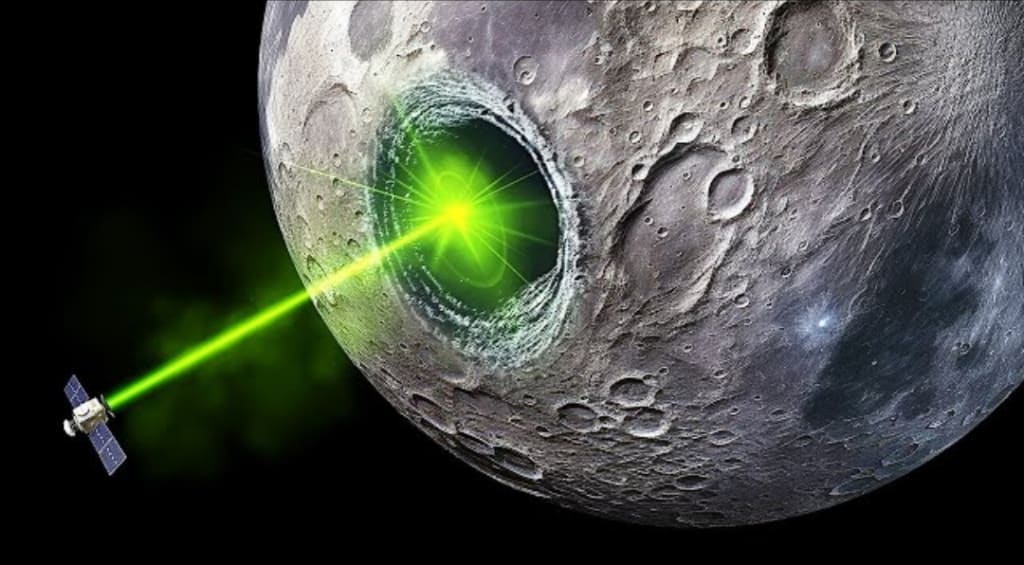

NASA is preparing to revisit the Moon after decades of absence, with the first crewed mission expected in 2025 as part of the Artemis program. These missions aim to establish a more permanent presence, starting with a base camp at the Moon's South Pole. This would support longer stays than previous missions, breaking the existing record of 74 hours, 59 minutes, and 38 seconds. Over time, the camp will expand, potentially allowing astronauts to remain for weeks or months, setting the stage for future space exploration. The base will also function as a launch point for missions deeper into space, possibly even preparing for human trips to Mars.
NASA’s plans include building a small base to begin with, though it will grow in size and complexity. This will be a place for astronauts to live and work while carrying out experiments and preparing for future missions. To help with mobility, a lunar rover similar to the ones used during the Apollo missions will be deployed. There is also a concept for an RV-like vehicle, known as the Habitable Mobility Platform, that would provide a pressurized environment, enabling astronauts to travel without their space suits. This would increase their comfort and efficiency, allowing them to live and work inside for up to two weeks.
The Moon’s South Pole is chosen for several reasons. First, it receives up to two months of continuous sunlight each year, which will provide abundant solar power for the camp. NASA is working on a solar array that can be deployed 30 feet above the surface to make full use of the sunlight. Secondly, the South Pole has deep craters, known as permanently shadowed regions, which have remained in darkness for billions of years. In these craters, scientists have detected signs of water ice, a resource that could be crucial for astronauts' survival, as it can be converted into drinking water and oxygen.
NASA's Viper (Volatiles Investigating Polar Exploration Rover) will play a key role in exploring these areas. This mobile robot is scheduled to arrive at the lunar South Pole in 2024 and will help map out the distribution of water ice and other resources. It will operate autonomously, avoiding hazards like rocks and craters, and assist in collecting data for future missions. The Lunar Terrain Vehicle (LTV), expected in 2025, will be another important tool for astronauts, allowing them to traverse the lunar surface safely and remotely.
One of the main challenges astronauts will face on the Moon is radiation. Without a protective atmosphere like Earth’s, the Moon is exposed to harmful solar flares and cosmic rays. To shield astronauts, experts suggest that up to six feet of lunar soil may be needed. In addition to shielding from radiation, lunar materials will also be used to extract oxygen and metals like aluminum, making the base more self-sufficient and reducing the reliance on supplies from Earth.
The Moon’s weak gravity—about one-sixth of Earth’s—presents another challenge. While it makes movement easier, prolonged exposure can lead to muscle and bone degradation. To counteract this, an artificial gravity system may be developed for the lunar base. This would help astronauts maintain their health during extended stays.
In terms of construction, NASA is exploring modular and inflatable habitats for the lunar base. These structures would be compact, lightweight, and easy to transport, making them ideal for use on the Moon. Additionally, 3D printing technology could be employed to create structures directly from lunar materials like soil and rock, reducing the need for materials brought from Earth. A prototype of a 3D printer is currently being tested in Houston.
As the Moon base grows, it could become a hub for further space exploration, providing a staging point for missions to Mars. The development of lunar infrastructure will make it easier and more affordable to build and maintain colonies on the Moon, which are more accessible than Mars. The Moon’s proximity to Earth means astronauts could travel back and forth in just three days, unlike the months-long journey to Mars.
NASA’s ambitious lunar program will not only push the boundaries of space exploration but also lay the groundwork for human expansion beyond our planet. With plans to extract resources, build habitats, and test life-support technologies, the Moon may become a key stepping stone for humanity’s journey into deep space. As the base develops, it could offer valuable insights into how we can sustain life on other planets, making the dream of living on Mars more achievable.
The next few decades will likely be a transformative period in space exploration, as the Moon serves as the testbed for technologies and strategies that will eventually be applied to the exploration of Mars and beyond. The Artemis program and its associated missions represent a major leap forward in our quest to explore and colonize other worlds, turning science fiction into science fact.
About the Creator
Nora Ariana
Empowering through stories and sound igniting purpose, sparking growth, and awakening the power within.
Keep reading
More stories from Nora Ariana and writers in Education and other communities.
A goal is a dream with a deadline
A goal is a dream with a deadline. This powerful quote reminds us that without action, dreams remain just that wishes floating in our imagination. But when we set a timeline and commit to achieving them, they evolve into goals, bringing clarity, direction, and purpose. Many people go through life holding on to dreams, hoping they will come true someday. But someday is not a day on the calendar. Dreams without structure often fade with time or get buried under the weight of daily responsibilities. Turning a dream into a goal is what separates those who achieve from those who continue to wish.
By Nora ArianaExclusive • 11 months ago




Comments
There are no comments for this story
Be the first to respond and start the conversation.