
Scientists Turn Undersea Cables into Microphones to Track Orcas
Beyond Orcas: A Window into the Ocean

For more than a century, undersea fiber-optic cables have quietly crisscrossed the world’s oceans, carrying phone calls, internet data, and financial transactions between continents. Lying on the seafloor, these cables form the invisible backbone of global communication. Recently, however, scientists have discovered an unexpected second life for this infrastructure: turning undersea cables into vast networks of microphones capable of listening to the ocean itself. Using this innovative technique, researchers are now able to detect and track marine life including orcas, also known as killer whales over enormous distances. This breakthrough is transforming marine biology, oceanography, and conservation science.
How Undersea Cables Can “Hear”
At the heart of this innovation is a technology known as distributed acoustic sensing (DAS). Fiber-optic cables transmit information as pulses of light. When the cable is disturbed by vibrations from earthquakes, ship traffic, or even animal vocalizations the light scattering within the fiber changes slightly. DAS systems can detect these tiny changes and convert them into acoustic data, effectively allowing the cable to act like a continuous string of microphones.
Instead of placing thousands of physical hydrophones (underwater microphones) on the seafloor a process that is expensive, time-consuming, and environmentally disruptive scientists can now tap into existing fiber-optic cables. A single cable can provide acoustic sensing over tens or even hundreds of kilometers, with data points every few meters. This creates an unprecedented listening array, offering high-resolution insights into underwater activity.
Listening to Orcas
Orcas are among the most vocal and socially complex animals on Earth. They communicate using clicks, whistles, and pulsed calls, which they employ for hunting, navigation, and social bonding. Each pod has distinct vocal patterns, sometimes described as dialects, passed down through generations. Tracking these sounds helps scientists understand orca behavior, population dynamics, and migration routes.
By using undersea cables as acoustic sensors, researchers can detect the unique frequency ranges and rhythmic patterns of orca calls. These sounds travel efficiently through seawater, often over many kilometers. When an orca pod passes near a fiber-optic cable, its vocalizations create vibrations that DAS systems can record. Scientists can then analyze the timing, intensity, and frequency of these signals to identify the presence of orcas and estimate their movement.
In some cases, this approach allows scientists to track orca pods in near real time, something that was previously extremely difficult. Traditional methods such as tagging whales with satellite transmitters or conducting ship-based surveys are costly, limited in coverage, and can be stressful for the animals. Cable-based listening, by contrast, is passive and non-invasive.
Advantages Over Traditional Monitoring
Turning undersea cables into microphones offers several major advantages for marine research. First is scale. The global network of fiber-optic cables spans more than a million kilometers, crossing deep oceans, coastal waters, and remote regions rarely visited by research vessels. This provides access to habitats that are otherwise difficult or impossible to monitor continuously.
Second is cost efficiency. Building and maintaining dedicated underwater listening networks requires substantial funding. By reusing existing telecommunications infrastructure, scientists can drastically reduce expenses while expanding coverage. This democratizes access to ocean data, enabling more institutions and countries to participate in marine monitoring.
Third is continuous observation. Many marine studies rely on short-term expeditions, offering only snapshots of ocean life. Fiber-optic cables, however, operate 24 hours a day, seven days a week. This allows scientists to observe long-term patterns, such as seasonal migrations, daily activity cycles, and responses to environmental changes.
Implications for Conservation
The ability to track orcas using undersea cables has profound implications for conservation. Many orca populations are threatened by pollution, overfishing, climate change, and noise from ships and industrial activities. Understanding where orcas travel, feed, and communicate is essential for protecting them.
For example, real-time acoustic monitoring could help reduce ship strikes by alerting vessels when orcas are nearby. It could also inform decisions about shipping lane placement, offshore construction, and naval exercises, minimizing harmful noise in sensitive habitats. Over time, data from undersea cables can reveal how orcas respond to increasing ocean noise and warming waters, helping policymakers design more effective protection strategies.
Beyond Orcas: A Window into the Ocean
While tracking orcas is a compelling application, the potential of undersea cable listening goes far beyond a single species. The same technology can detect other whales, dolphins, fish schools, storms, landslides, and even underwater earthquakes. In fact, DAS was initially developed for geophysical monitoring, and its expansion into biology represents a powerful example of interdisciplinary science.
By combining biological data with physical measurements such as temperature, currents, and seismic activity scientists can build a more holistic picture of ocean systems. This integrated approach is especially valuable as climate change accelerates, altering marine ecosystems in complex and unpredictable ways.
Challenges and Ethical Considerations
Despite its promise, this technology is not without challenges. Access to undersea cables often involves collaboration with private telecommunications companies, raising questions about data ownership, security, and privacy. Although the focus is on environmental sounds, not human communications, clear regulations and agreements are necessary to ensure ethical use.
There are also technical challenges. Distinguishing between different sound sources such as orcas, ships, and natural background noise requires sophisticated algorithms and machine learning tools. As datasets grow larger, managing and analyzing the information becomes increasingly complex.
A New Era of Ocean Listening
The transformation of undersea cables into microphones marks a new era in how humans study the ocean. What was once purely a communication tool has become a powerful scientific instrument, enabling researchers to listen to the rhythms of marine life on a global scale. For orcas, this means being seen or rather, heard in ways never before possible, offering insights into their lives while minimizing human intrusion.
As technology continues to advance and collaboration between scientists and industry deepens, the ocean may no longer be as silent or mysterious as it once seemed. By listening carefully through the fibers that connect our world, we are learning not only about orcas, but about the living, dynamic planet we share with them.
About the Creator
Keep reading
More stories from writers in Earth and other communities.
Trump Signs Order to Limit Wall Street Investors in Single-Family Housing
In a move signaling renewed focus on housing affordability, former President Donald Trump has signed an executive order intended to limit Wall Street investors’ ability to buy single-family homes. The announcement comes amid growing public concern over the role of large investment firms in driving up home prices and reducing access to affordable housing for everyday Americans. Advocates say the order could help restore balance to the housing market, while critics question whether the measure will be effective or face legal challenges.
By Muhammad Hassan8 days ago in Earth
A Teenager’s Death on an Untamed Island Has Put the Spotlight on Its Inhabitants
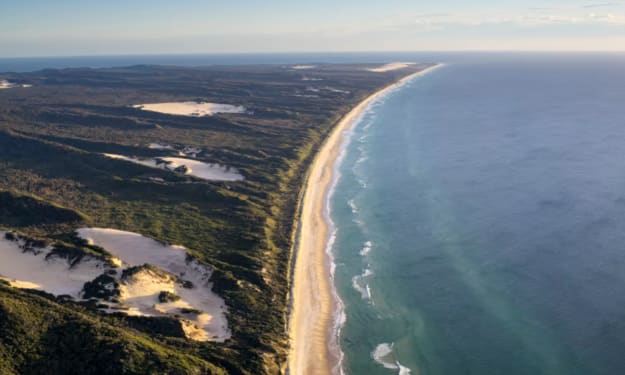
The death of a teenager on a remote, untamed island has sent shockwaves far beyond its shores. What was once seen as a place of raw beauty, adventure, and ecological wonder is now at the center of a difficult conversation about human safety, wildlife conservation, and the true cost of nature-based tourism.
By Muhammad Hassan5 days ago in Earth



Comments
There are no comments for this story
Be the first to respond and start the conversation.