
MPU and Occasional Cannabis Use: What the Law Expects from You in 2025
When “Just Sometimes” Isn’t Enough: How Germany Treats Occasional THC Consumption in Traffic Law
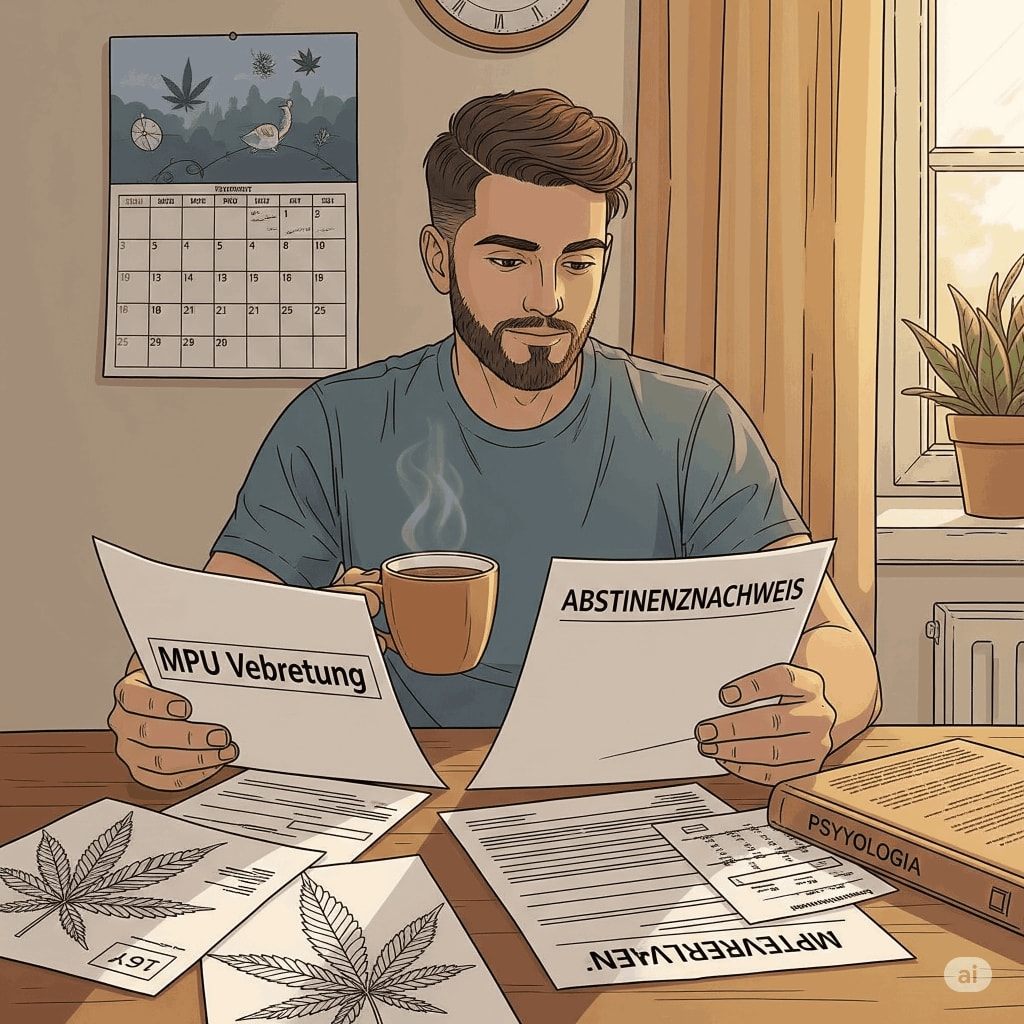
If you think using cannabis occasionally won’t affect your driver’s license in Germany, think again. This detailed blog breaks down how gelegentlicher Konsum of THC is interpreted under traffic law, what thresholds trigger a mandatory MPU, and how to meet the abstinence, behavioral, and psychological expectations — even if you’re not a daily user. Essential for anyone caught in the legal gray area of cannabis and driving in 2025.
Introduction: The New Reality of Cannabis and Driving in Germany
In 2025, Germany’s evolving cannabis policies continue to spark confusion — especially among occasionally consuming drivers. While recreational use may be legal in private contexts, driving under its influence remains strictly regulated.
Even one-time or casual use can lead to:
- Police roadside checks
- Blood tests
- Driving bans
- And, often, a required MPU (Medical-Psychological Assessment)
This article explains what gelegentlicher Konsum (occasional cannabis use) means legally, how it’s measured, and how to prepare for an MPU if you’re flagged.
1. Is Occasional Cannabis Use Legal for Drivers? The Short Answer: No
While German law now permits certain levels of personal cannabis possession, driving under the influence of THC remains illegal — even if your usage is occasional and not chronic.
Why? Because THC can:
- Impair reaction time
- Cause delayed decision-making
- Stay detectable long after the high wears off
And the Blutgrenzwert (blood threshold) is low: typically 1.0 ng/ml active THC in serum.
If your blood test exceeds this limit, you may be classified as:
- ungeeignet zum Führen von Kraftfahrzeugen (unfit to drive)
- Required to undergo an MPU
- Required to prove abstinence, even if you’re not a regular user
2. Gelegentlicher Konsum: What the Law Really Means
Legally, gelegentlicher Konsum refers to repeated but non-daily use of cannabis — typically defined as two or more uses within a time window.
However, when it comes to driving law, the term is less important than the consequences. Even if you smoked a joint last weekend and got stopped today, the THC in your blood may lead to legal classification as a risk.
You can be ordered to take an MPU if:
- You admitted to repeated cannabis use
- You tested above the threshold while driving
- Police suspect long-term consumption
- You have other legal infractions (driving under influence, accidents)
3. What the MPU Demands from Occasional Users
A) Abstinence vs. Controlled Use
Here’s the twist: occasional users are often required to become abstinent — even if their usage was legal and infrequent.
If the authority determines that your cannabis use and driving overlapped (or could again), they will expect:
- Proof of complete abstinence
- A clear behavioral change
- Psychological insight during MPU
B) Abstinence Duration
- At least 6 months for occasional users
- Sometimes 12 months if additional infractions exist
This includes random urine tests or hair samples done under certified conditions.
4. Psychological Expectations: Insight and Control
The psychological evaluation during your MPU will focus on your attitude and understanding of your cannabis use. They’ll ask:
- Why did you use?
- Did you ever drive after using?
- How do you judge the risks now?
- Have you changed your lifestyle?
- How will you avoid mixing cannabis and driving again?
Avoiding or minimizing the issue leads to failure. Successful candidates admit the past, understand the risks, and show control.
5. Medical Requirements: Proving You’ve Stopped
Even if you weren’t addicted, you’ll be asked to prove that you’ve stopped — because the Verkehrspsychologen (traffic psychologists) don’t care how often you used; they care how responsibly you behave now.
Required medical evidence includes:
A) Urine Screenings
Random and unannounced over 6+ months.
B) Hair Analyses
Max. 3 cm of hair = ~3 months of proof. Not accepted if you shaved or bleached your hair.
All tests must be done through certified MPU laboratories to be valid.
6. What Happens If You Ignore the MPU Order?
Some occasional users think they can wait it out or avoid the MPU. But here’s what happens:
- You stay banned from applying for a license
- Your Führerscheinstelle (licensing office) will not process your application
- Reapplication without MPU proof gets automatically rejected
You’ll remain in a kind of legal limbo — unable to drive, and unable to move forward.
7. The Role of THC Nachweisbarkeit (Detectability)
One of the most confusing parts of cannabis-related MPU cases is the detectability of THC in the blood or hair.
Substance & Detectability Time (Average)
Active THC - Up to 24 hours
THC-COOH (inactive) - Up to 3 weeks
Hair - Up to 3–6 months
If you're a gelegentlicher user but tested positive for high inactive metabolites, authorities may still suspect chronic use and demand a 12-month abstinence proof.
8. Common Mistakes Occasional Users Make During MPU
- Claiming they are safe because they “only used once”
- Failing to take abstinence proof seriously
- Underestimating the psychological interview
- Assuming cannabis reform means MPU is not enforced
- Showing defensive or dismissive behavior
Passing the MPU is less about your cannabis habit and more about your behavioral accountability.
________________________________________
9. How to Prepare as an Occasional User: Your Step-by-Step Plan
Start Abstinence Immediately
Every day counts — the earlier you start, the faster you qualify for MPU.
Enroll in MPU Vorbereitung (Preparation)
Find counselors or courses that specialize in cannabis-related MPUs.
Get Your Tests Done at Certified Labs
Don’t risk being rejected for using the wrong provider.
Practice Psychological Questions
Work with experts to formulate honest and insightful answers.
Document Everything
Keep logs of appointments, tests, consultations — it’s all useful during your MPU.
10. Final Thoughts: Your Rights, Your Responsibility
The takeaway is simple: MPU and cannabis don’t care how little you used — only how seriously you take it.
Occasional users are often caught off guard because they assume that infrequent use equals no consequence. But under German traffic law, the standard is strict. THC in your bloodstream = risk.
By approaching the MPU process with honesty, preparation, and behavioral awareness, you can clear your name, regain your license, and show that you take your role as a driver seriously — even if you only ever “smoked a little, sometimes.”
Conclusion: From Casual Use to Careful Accountability
Germany’s current system puts the full weight of responsibility on drivers — even those who consume cannabis casually or legally. The MPU process may feel unfair to occasional users, but the logic is clear: Safety over frequency.
By learning what the law expects, showing meaningful change, and completing all medical and psychological steps, you can move from the shadow of a failed roadside test to the freedom of a fully reinstated driving license.
About the Creator
Where Ownership Meets Impact: Exploring the Powerful Connection Between Equity and Giving
The relationship between equity and philanthropy in modern society reflects a growing awareness that wealth, ownership, and social responsibility are deeply interconnected. As economic systems evolve, individuals and organizations are increasingly recognizing that equity is not only a financial instrument but also a powerful lever for positive change. Philanthropy, once seen as separate from ownership and investment, is now being shaped by equity-driven thinking that prioritizes long-term impact over short-term relief.
By John Olin Killgore4 days ago in Education
Why MEP BIM Is Essential for Modern Commercial Construction
Modern commercial construction projects are defined by density, complexity, and risk. Mechanical, electrical, and plumbing (MEP) systems now consume a significant portion of construction budgets and coordination effort, especially in sectors such as healthcare, data centers, mixed-use developments, airports, and large commercial facilities.
By Matt Sharon3 days ago in Education



Comments
There are no comments for this story
Be the first to respond and start the conversation.