
Motor Control Panels: Types, Working & It’s Components
What Is the Difference Between Motor Control Panels and Variable Frequency Drives?
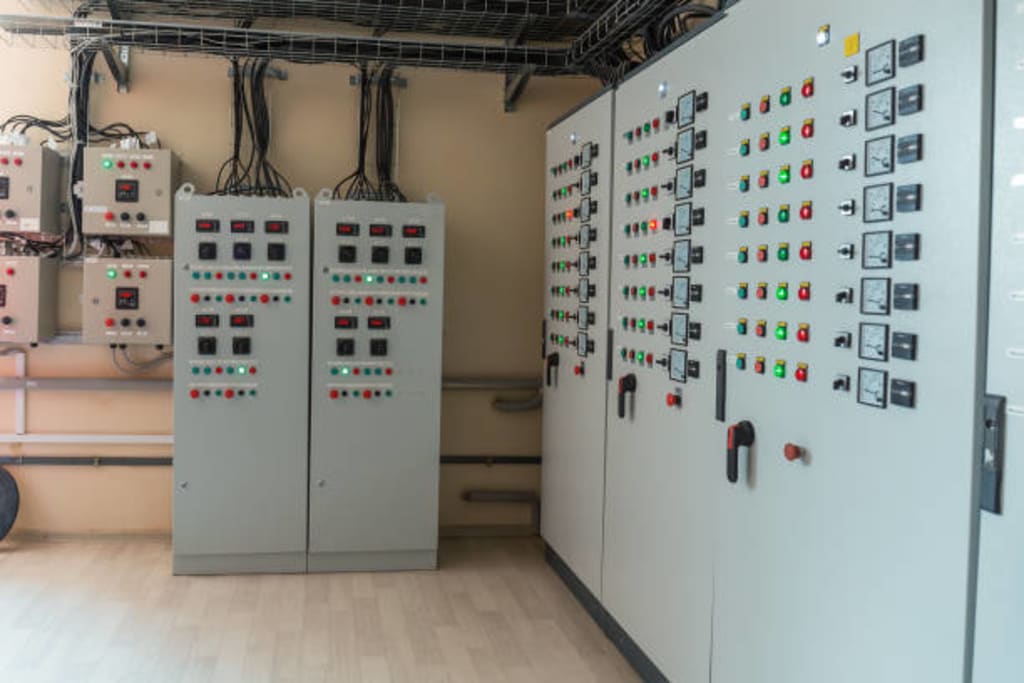
Electrical control systems like a Motor Control Panel (MCP) and a Variable Frequency Drive (VFD) are employed in a variety of industrial and commercial applications. However, they have distinct functions and diverse uses.
Electric motor starting, stopping, and rotational direction are managed centrally via a motor control panel. It is made to safeguard the motor and the electrical system against harm from overloading, short circuits, and ground faults and normally comprises motor starters, circuit breakers, fuses, and control wiring.
On the other hand, a variable frequency drive is an electrical device that regulates the frequency of the power delivered to an AC induction motor in order to control the speed and torque of the motor. Altering the motor's speed to match the system's load requirements enables precise control of the motor's speed and contributes to energy conservation. Additionally, soft start and stop, over-current protection, and fault detection features are all provided by VFDs.
In conclusion, a VFD is used to regulate the speed and torque of AC induction motors and increase their energy efficiency, whereas an MCP is mostly used to protect motors and control their starting and stopping.
How to Select the Appropriate Motor Control Panel for Your Use
To ensure that your motor system functions safely and effectively, it's crucial to select the appropriate motor control panel (MCP) for your application. When choosing an MCP, take into account the following factors:
Voltage and Current Requirements: Inspect the MCP to make sure it is rated for the voltage and current demands of your motor system.
Motor Type: Make sure the MCP is compatible with the motor type you intend to use by taking it into consideration.
Environmental Considerations: Take into account the temperature, humidity, and any potential exposure to dust, moisture, or corrosive materials in the location where the MCP will be mounted.
Control Circuit Requirements: Choose the control circuit type that you require, such as direct-on-line (DOL) starters, star-delta starters, soft starters, or variable frequency drives (VFDs).
Protective Devices: Make sure the MCP has the right protection devices for your application by taking into account the kind of protective devices you require, such as circuit breakers, fuses, or overload relays.
System Requirements: Think about your system's overall requirements, such as whether you need a remote control, monitoring, or communication capabilities.
Space Considerations: Make sure the MCP will fit in the available space by taking into account the space needs of the MCP, including the physical dimensions and mounting requirements.
Cost: To make sure you are getting the best return on your investment, take into account the MCP's price and compare it to your spending plan.
To assist you in choosing the ideal MCP for your application, it's a good idea to speak with a certified electrical engineer or a technical expert in motor control panels.
Utilizing a Motor Control Panel Has Many Advantages
A Motor Control Panel (MCP) is a crucial element in many industrial and commercial applications due to its many advantages. Among the advantages are:
Increased Safety: An MCP offers a central place for managing and safeguarding the motor system, lowering the danger of electrical mishaps and guaranteeing the system's safe operation.
Improved Reliability: An MCP offers a centralized control system that can keep track of the motor system and react to any issues, increasing the system's overall dependability.
Better Energy Efficiency: Energy-saving features like soft start and stop can be added to MCPs to lower the amount of energy used by the motor system.
Increased Control: An MCP offers a centrally located control system that can manage the motor's starting, stopping, and rotational direction, enabling accurate management of the motor system.
Simplified Maintenance: An MCP makes it simpler to maintain the motor system by offering a centralized location for monitoring, troubleshooting, and diagnosing issues.
Space Savings: Many of a motor system's electrical parts can be consolidated into a single area using an MCP, freeing up space and minimizing the system's overall footprint.
Cost Savings: An MCP can increase a motor system's energy efficiency, lowering energy expenditures and making system maintenance simpler, lowering maintenance expenses.
Overall, an MCP offers a convenient and centralized location for managing and safeguarding the motor system, enhancing its performance, dependability, and energy effectiveness.
The Value of Regular Motor Control Panel Maintenance
A Motor Control Panel (MCP) must be properly maintained in order to function safely and effectively. The following are some arguments in favor of proper maintenance:
Improved Safety: Regular maintenance can spot potential safety risks like worn or damaged parts and fix them before they become an issue.
Increased Reliability: Equipment failures can be avoided with routine maintenance, which also improves the MCP's overall reliability.
Better Energy Efficiency: Regular maintenance can increase the MCP's energy efficiency, lowering energy expenses and extending the equipment's lifespan.
Compliance with Standards: The National Electric Code (NEC) and other industry standards, as well as MCP compliance, can be helped by routine maintenance.
Early Detection of Problems: Regular maintenance can identify possible issues before they result in equipment failure, minimizing downtime and boosting the MCP's overall availability.
Prolonged Equipment Life: By reducing wear and tear and fixing issues as soon as they arise, routine maintenance can extend the life of the equipment.
Cost Savings: By lowering energy expenses, minimizing downtime, and extending the life of the equipment, routine maintenance can lower the total cost of ownership.
In conclusion, routine maintenance is critical to a Motor Control Panel's safety, dependability, and efficiency, as well as to extending the equipment's lifespan and lowering expenses. To create a maintenance strategy that addresses the unique requirements of your system, it is a good idea to talk with a competent electrical engineer or a technical specialist in motor control panels. Keep reading.
About the Creator
Keep reading
More stories from carlo wilson and writers in Education and other communities.
Comprehensive Guide on Capacitor Bank Installation, Testing, and Maintenance
The following steps are part of the capacitor bank installation methods and procedures: Planning: Based on the demands of the electrical system, local laws and regulations, and manufacturer recommendations, choose the placement and size of the capacitor bank.
By carlo wilson3 years ago in Education
What Is Truly Passive Income
“Passive income” is one of the most talked-about ideas in personal finance. Scroll through social media or business blogs and you’ll see claims that anyone can make money while they sleep. While that sounds appealing, the reality is more nuanced. Truly passive income exists—but it’s rarely effortless. Most passive income streams require **time, money, or skill upfront** before they start generating consistent returns.
By AnthonyBTV34 minutes ago in Education
Generosity Without Boundaries: Advancing Equity Through Philanthropy
Philanthropy has always played a meaningful role in shaping societies and improving the lives of individuals in need. From supporting educational programs to funding healthcare initiatives, acts of giving have helped communities overcome many challenges. In today’s diverse world, however, philanthropy is taking on a deeper purpose. It is increasingly focused on equity—ensuring that resources and opportunities are distributed fairly among people from different backgrounds and circumstances.
By John Olin Killgore4 days ago in Education
Hottest in the Office
Dear Rafi, You’re very distracting to work around. For the first second I saw you the other day, I thought you were some type of executive. It took a moment to realize no, you were just the new guy, dressed up for the job he wants. Be still, my heart.
By Gabriel Shames6 days ago in Pride



Comments
There are no comments for this story
Be the first to respond and start the conversation.