
Mesopotamia: The Birthplace of Urban Civilization
The Indus Valley: A Model of Urban Planning

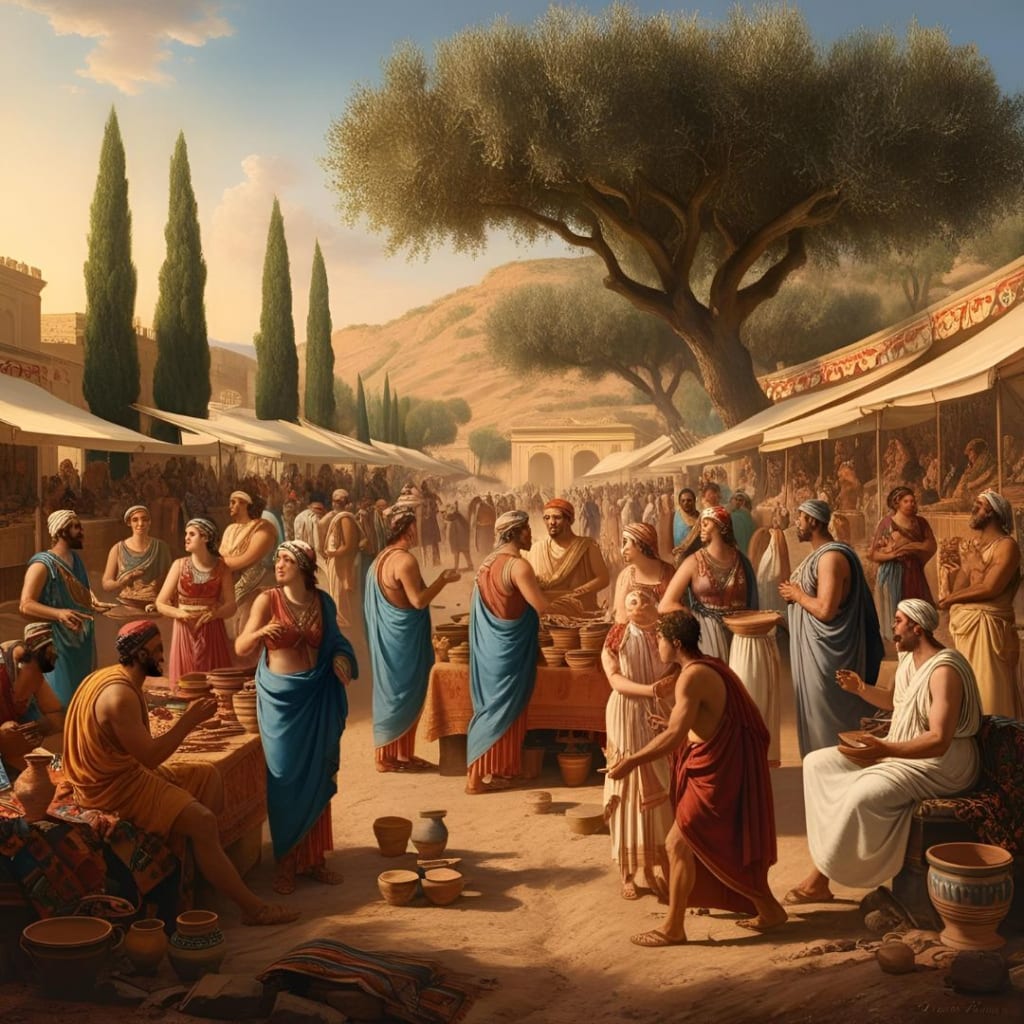
Here's a detailed 1essay on the History of Ancient Civilizations, covering major regions and developments:
The History of Ancient Civilizations:
The history of ancient civilizations is the foundation upon which modern society is built. From the development of writing and governance to the birth of science, philosophy, and religion, ancient civilizations laid the groundwork for human progress. These early cultures emerged in fertile river valleys and strategic locations, developing complex societies with distinct cultural, technological, and political achievements. Among the most influential ancient civilizations were those of Mesopotamia, Egypt, the Indus Valley, China, Mesoamerica, and the Mediterranean world, including Greece and Rome.
Mesopotamia: The Cradle of Civilization:
Often referred to as the "Cradle of Civilization," Mesopotamia emerged around 3500 BCE in the fertile region between the Tigris and Euphrates rivers in modern-day Iraq. This area, known as the Fertile Crescent, supported the growth of city-states such as Ur, Uruk, and Babylon.
Mesopotamians are credited with numerous firsts in human history: they developed cuneiform, one of the earliest writing systems; created sophisticated legal codes, such as the Code of Hammurabi; and built ziggurats, massive temple complexes that symbolized their religious devotion. Mesopotamian society was deeply hierarchical and polytheistic, with gods associated with natural forces and cities.
Economically, Mesopotamia thrived through agriculture, facilitated by irrigation, and trade with neighboring regions. Politically, it saw the rise and fall of several empires, including the Akkadian, Babylonian, and Assyrian empires. The region's enduring legacy lies in its early innovations in writing, law, and urbanization.
Ancient Egypt: The Gift of the Nile:
To the southwest of Mesopotamia, Ancient Egypt developed along the banks of the Nile River around 3100 BCE. The predictable flooding of the Nile provided fertile soil for agriculture and supported a stable, centralized civilization for over three millennia.
Egyptian civilization is perhaps best known for its monumental architecture, particularly the pyramids built during the Old Kingdom (c. 2686–2181 BCE). These structures served as tombs for the pharaohs, who were considered divine rulers. The Great Pyramid of Giza, constructed during the reign of Pharaoh Khufu, remains one of the most impressive architectural feats in history.
Egyptians developed hieroglyphics, a complex writing system that combined logographic and alphabetic elements. Religion was central to Egyptian life, with a pantheon of gods such as Ra, Osiris, and Isis. Belief in the afterlife led to the practice of mummification to preserve bodies for eternity.
Politically, Egypt saw periods of unity and fragmentation, including the Old, Middle, and New Kingdoms, interspersed with intermediate periods of instability. Notable pharaohs like Ramses II and Cleopatra VII played key roles in Egypt's long history. Egypt’s cultural and artistic contributions have had a lasting impact on human civilization.
The Indus Valley Civilization: Urban Planning and Trade:
The Indus Valley Civilization (c. 2600–1900 BCE) developed in what is now Pakistan and northwest India. It was one of the largest ancient civilizations, covering over a million square kilometers. Key cities like Harappa and Mohenjo-Daro were remarkable for their advanced urban planning.
These cities featured grid layouts, sophisticated drainage systems, public baths, and uniform building materials. The level of civic organization suggests a highly coordinated government, although little is known due to the undeciphered Indus script.
The civilization thrived on agriculture and long-distance trade, notably with Mesopotamia. Artifacts such as seals, jewelry, and pottery indicate a rich material culture. Interestingly, there is little evidence of warfare or social stratification, suggesting a relatively peaceful society.
By around 1900 BCE, the Indus Valley Civilization began to decline, possibly due to climate change, shifting river patterns, or internal social factors. Despite its mysterious end, its achievements in urban planning and social organization remain impressive.
Ancient China: Dynasties and Philosophies:
In East Asia, Ancient China emerged around 2000 BCE, with the earliest historical dynasty being the Shang Dynasty (c. 1600–1046 BCE). The Shang developed oracle bones used for divination, an early form of Chinese writing, and practiced ancestor worship.
The Zhou Dynasty (c. 1046–256 BCE) followed, introducing the concept of the Mandate of Heaven, which justified the ruler’s authority as divinely sanctioned. This idea influenced Chinese politics for centuries. During the Eastern Zhou period, Confucianism, Daoism, and Legalism emerged, laying the philosophical foundations of Chinese society.
The Qin Dynasty (221–206 BCE) unified China under Emperor Qin Shi Huang, who standardized currency, weights, and measures, and began construction of the Great Wall. The Han Dynasty (206 BCE–220 CE) followed, marking a golden age of Chinese culture, science, and expansion.
Technological innovations such as papermaking, the compass, and seismographs emerged during this period. China's dynastic model, bureaucratic governance, and philosophical traditions had a profound and lasting impact on East Asia and the world.
Mesoamerican and Andean Civilizations:
While ancient civilizations were flourishing in the Old World, the New World saw the rise of advanced societies in Mesoamerica and the Andes.
In Mesoamerica, the Olmecs (c. 1500–400 BCE) are considered the "mother culture" of later civilizations like the Maya and Aztecs. They are known for their massive stone head sculptures and influence on Mesoamerican religion and iconography.
The Maya Civilization (c. 2000 BCE–1500 CE) developed in present-day Mexico, Guatemala, and Honduras. They built impressive city-states with temples and pyramids, developed an advanced calendar system, and a complex writing system composed of glyphs.
In the Andes, the Chavín, Moche, and Nazca cultures laid the foundation for the Inca Empire (c. 1438–1533 CE), which became one of the largest and most powerful empires in the Americas. The Inca developed extensive road networks, advanced agricultural terraces, and built architectural marvels like Machu Picchu.
These civilizations, although isolated from Eurasia, demonstrated impressive achievements in architecture, agriculture, astronomy, and art.
Ancient Greece: Philosophy, Democracy, and Art:
The Greek civilization (c. 800–146 BCE) had an outsized impact on Western thought and culture. Emerging from the remnants of the Mycenaean civilization and the Greek Dark Ages, city-states like Athens, Sparta, and Corinth became centers of political and cultural development.
Athens pioneered democracy, where free male citizens could vote on laws and policies. Greek thinkers such as Socrates, Plato, and Aristotle laid the foundations of Western philosophy and science.
Greek contributions to art, drama, architecture, and literature (e.g., the epics of Homer) remain influential. The Parthenon is a testament to their architectural skill and aesthetic sensibilities.
Following the conquests of Alexander the Great in the 4th century BCE, Greek culture spread across the Middle East and Asia in what became known as the Hellenistic Era, blending with local traditions and influencing a wide range of civilizations.
Ancient Rome: Law and Empire
The Roman civilization (c. 753 BCE–476 CE) began as a monarchy, transitioned into a republic, and eventually became a powerful empire that controlled vast territories across Europe, North Africa, and the Middle East.
Roman society was defined by a structured legal system, which influenced modern legal codes. The Roman Republic emphasized civic duty, governance by elected officials, and checks and balances—a model that would inspire later democracies.
The Roman Empire, especially under leaders like Augustus, saw a flourishing of architecture (e.g., Colosseum, Pantheon), engineering (roads, aqueducts), and literature (Virgil, Cicero). Latin, the Roman language, became the basis for the Romance languages.
Rome also played a central role in the spread of Christianity, which began in the 1st century CE and eventually became the dominant religion of the empire and much of the Western world.
Despite internal strife, economic challenges, and invasions, the legacy of Rome endured long after the Western Roman Empire fell in 476 CE, shaping the development of medieval and modern Europe.
Legacy of Ancient Civilizations:
The ancient civilizations discussed here were not isolated. Through trade, warfare, and migration, they influenced each other and laid the foundation for the modern world. Innovations such as writing, law, philosophy, and religion spread and evolved across regions and centuries.
These civilizations also left behind rich cultural heritages—art, literature, architecture, and political systems—that continue to be studied, admired, and built upon today. While many eventually declined due to environmental changes, economic difficulties, or military defeats, their achievements have become part of a shared human legacy.
Conclusion:
The history of ancient civilizations is a story of human ingenuity, resilience, and cultural richness. From the banks of the Nile to the plains of Mesopotamia, the valleys of the Indus, and the mountains of the Andes, early societies shaped the trajectory of history. Understanding these civilizations provides insight into the origins of modern institutions, ideas, and values—and reminds us of the enduring power of human creativity.
About the Creator
Kazi Mirajul Islam
I am expert in digital Marketing .I am also E- book writer & story writer. I am committed to delivering high-quality content.Also create social media account like Facebook,twitter account ,Instagram ,you tube account create and mained.
Keep reading
More stories from Kazi Mirajul Islam and writers in Education and other communities.
The Rise of Greek Democracy and Philosophy
Details piece exploring the world around 2,500 years ago — which takes us to roughly 475 BCE — a fascinating time filled with philosophical breakthroughs, powerful empires, and cultural developments across the globe.
By Kazi Mirajul Islam9 months ago in Education
Image-to-text technology, also known as Optical Character
Image-to-text technology, also known as Optical Character Recognition (OCR), has transformed the way we interact with visual information. It allows machines to extract text from images, enabling various applications across multiple industries. From digitizing printed documents to reading text from scanned images, OCR plays a vital role in making printed content accessible, editable, and searchable. The need for such technology has grown exponentially with the increasing reliance on digital data and the rapid shift from physical to digital content in nearly all sectors of life. As the digital world continues to expand, image-to-text technology has paved the way for more seamless workflows, enabling businesses and individuals alike to save time, effort, and resources.
By Alexander Jackson5 days ago in Education




Comments (1)
Very interesting ancient of history and well written