
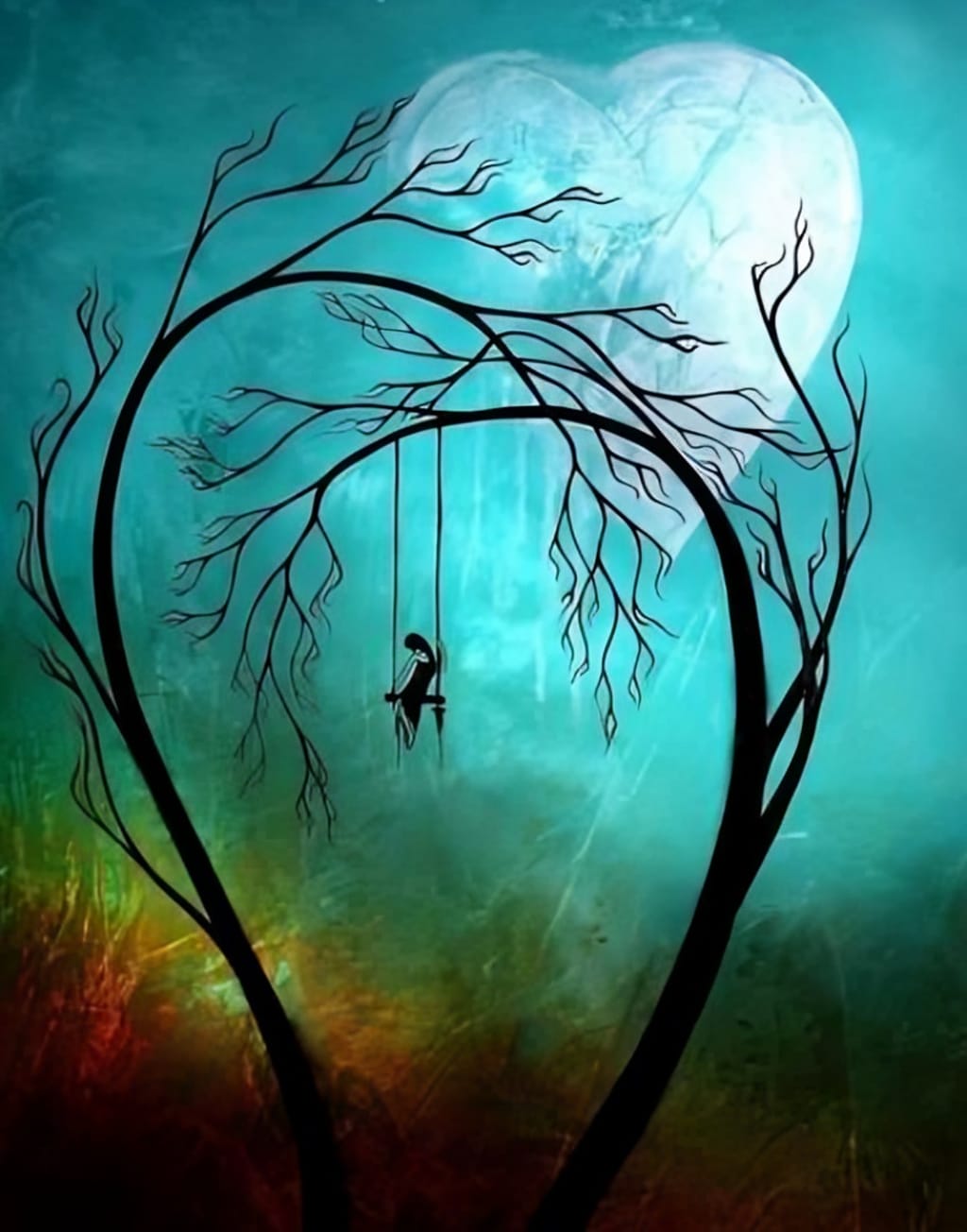
Melancholy Dwells With Beauty
"Melancholy" is a deep, complex emotion — it's often described as a quiet sadness, a reflective sorrow, or a kind of beautiful gloom. Unlike sharp grief or acute depression, melancholy tends to be more muted and enduring. It’s that bittersweet feeling you might get when thinking about the past, contemplating the impermanence of life, or recognizing the unreachable nature of some hopes and dreams.
Here are some angles on melancholy:
Philosophical: Historically, melancholy was seen as a temperament. Ancient Greek medicine (like Hippocrates') described it as one of the four humors — an excess of "black bile" — thought to cause a thoughtful, introverted, and sometimes poetic character.
Literary and Artistic: Melancholy inspires countless works of art, poetry, and music. Writers like John Keats, Edgar Allan Pe, and even painters like Caspar David Friedrich have captured its mood — reflective, beautiful, tinged with longing.
Psychological: Today, we might view melancholy as a mild, persistent sadness that’s distinct from clinical depression. It can sometimes be a healthy part of life, helping people process complex emotions.
Spiritual: In some traditions, melancholy is connected to an awareness of life's deeper realities — like mortality, loss, and the limitations of human experience — and can even lead to greater wisdom or compassion.
A famous quote that captures the feeling is by Victor Hugo:
"Melancholy is the happiness of being sad."
Melancholy is not just sadness — it’s a sadness that thinks.
It’s often tied to beauty, memory, art, even love. When you feel melancholy, you're usually caught between the sweetness of what was (or could have been) and the quiet acceptance that it's unreachable now. It's a deep, rich emotion, full of layers.
Some aspects of melancholy:
Memory:
Melancholy often arises from remembering something lost — a place, a time, a person, or even a version of yourself. It carries nostalgia but tinged with awareness that you can never return fully.
Beauty:
There's a strange, aching beauty in melancholy. Think of a sunset, beautiful exactly because it is ending. Melancholy teaches us to notice what we love, because we sense its fragility.
Creativity:
Many great works of art, music, and poetry are born from melancholy. It opens a space inside the artist where reflection and depth can grow. Melancholy can fuel creativity in ways pure happiness or pure grief often can't.
Isolation:
It often comes with a sense of being alone, but not necessarily lonely. It's like standing by yourself in a vast, quiet world and feeling the weight — and wonder — of existence.
Acceptance:
At its heart, melancholy is a form of acceptance. It's not a desperate clinging to the past; it’s a tender acknowledgment that everything beautiful is also fleeting.
Here’s a small original reflection for you:
Melancholy-
is the music of the soul when it remembers
how even the brightest summers
must fall into silent autumns.
It is a slow, golden ache —
not a wound,
but a door
to something deeper.
Melancholy in Literature and Philosophy:
Some thinkers and writers embraced melancholy as a vital part of being human:
Aristotle supposedly said, "All men who have achieved greatness in philosophy, poetry, or the arts have been melancholic."
Robert Burton, in The Anatomy of Melancholy (1621), called melancholy not just a disease, but a universal condition of thoughtful people. He almost admired it.
Emily Dickinson's poems often shimmer with a quiet, luminous melancholy — recognizing the beauty and sadness of mortality.
Shakespeare too played with melancholy, especially in characters like Hamlet, whose sadness is deeply tied to reflection, intelligence, and moral questioning.
Melancholy as a Landscape of the Soul
Imagine melancholy not as a mood, but as a place you can visit.
It might look like:
A half-forgotten garden where vines curl over broken statues.
A lonely seashore at twilight, the tide pulling away old footprints.
A small, dim room lit by a single candle, where dust motes dance in the still air.
In this landscape, everything is alive — but faded.
Everything matters — but nothing clings.
Melancholy reveals a world where things are precious because they are fragile.
A world where beauty isn't perfect, but worn and weathered by time — and therefore even more real.
🌑 Melancholy and Time:
Time is at the heart of melancholy.
Melancholy doesn't exist in the moment of pure joy or pure grief.
It blooms in the afterglow — when we realize:
The summer is over.
The laughter has faded.
The loved one is gone — or never fully ours.
The golden days are not coming back.
The Gift of Melancholy:
Though melancholy may be heavy, it carries gifts that nothing else can give:
Depth of feeling.
It shows you to feel things more fully, to listen to the silent music between moments.
Compassion.
Knowing your sadness helps you recognize it in others, and offer kindness.
From the soil of melancholy, poetry, art, music, and philosophy grow.
(Without melancholy, we might have no Keats, no Tarkovsky.)
In this regards, melancholy is a sacred sorrow — not something to escape, but something to cherish, to learn from, and to let soften you.
About the Creator
What Real Residents Reveal About Co-Living in New York City
Finding housing in New York City can be overwhelming, especially for students, interns, and professionals moving from different parts of the world. While listings and pricing matter, real-life experiences often give the clearest picture of what living in a shared space is actually like. Looking at resident reviews can help uncover what truly makes a co-living experience successful—or challenging.
By Ausfab Groupabout 16 hours ago in Education
Top 10 Essential Skills for Success in 2026
By 2026, the job market is no longer driven only by degrees or titles. Technology, especially Artificial Intelligence (AI), automation, and remote work, has changed how companies operate and how people work. Many routine tasks are now handled by machines, while humans are expected to do work that requires thinking, judgment, creativity, and emotional understanding. This shift means that skills — not just education — determine success. The following 10 skills are considered essential for 2026 because they combine technology awareness with human intelligence. Let’s understand them one by one, step by step.
By Talha khan7 days ago in Education
The Devil's Cut
“Comrade, finally you’re awake.” The voice was smooth, sensual. A flickering incandescent bar was all that lit the white, sterile room. All Vladimir remembered was everything going black. He tried to move his arms and found them strapped to the gurney.
By Matthew J. Fromm5 days ago in Fiction




Comments
There are no comments for this story
Be the first to respond and start the conversation.