
Mastering Process Improvement with DMAIC
A Proven Framework
Mastering Process Improvement with DMAIC: A Proven Framework
As a Six Sigma Certified professional with practical experience, I use the DMAIC framework to enhance process efficiency. This structured, data-driven approach focuses on defining issues, measuring performance, analyzing root causes, implementing improvements, and maintaining control to achieve sustainable, consistent, and impactful process optimization.
What is DMAIC?
DMAIC is a systematic, data-driven approach designed to improve existing processes. It helps organizations identify problems, analyze root causes, implement effective solutions, and maintain improvements. The methodology is iterative, meaning you can revisit phases as needed to refine solutions and ensure lasting success.
Think of DMAIC as a roadmap for process improvement. It guides teams step-by-step from identifying issues to achieving measurable results.
Define: Setting the Stage for Improvement
The first phase of DMAIC is all about clearly defining the problem, setting goals, and understanding customer requirements. Without a clear definition, improvement efforts can become unfocused and ineffective.
Key Activities in the Define Phase:
- Identify the problem: What’s the issue you’re trying to solve? Be specific.
- Set project goals: What are you aiming to achieve? Define success in measurable terms.
- Understand customer needs: What do your customers expect? This ensures improvements align with customer satisfaction.
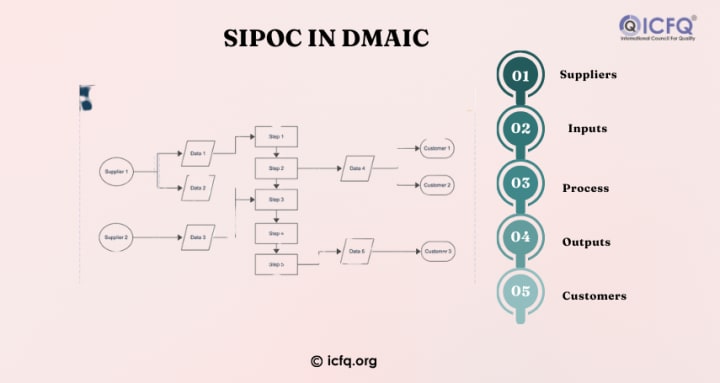
- Map the process: Use tools like SIPOC (Suppliers, Inputs, Process, Outputs, Customers) diagrams to visualize the process flow.
Example:
Imagine a call center struggling with long customer wait times. The problem might be vague if you say, "We need to improve customer service." Instead, define it clearly:
"Our goal is to reduce average customer wait times from 10 minutes to 4 minutes within the next three months."
Measure: Gathering Data to Understand the Problem
Once the problem is defined, it’s time to measure the current performance. This phase focuses on collecting accurate data to understand the scope of the issue and establish a baseline for improvement.
Key Activities in the Measure Phase:
- Data collection: Gather relevant data, such as process times, defect rates, or customer feedback.
- Identify key metrics: Determine which metrics will help you track progress.
- Establish a baseline: Understand current performance to measure the impact of improvements.
Example:
In the call center scenario, measure key metrics like:
- Average wait time per call
- Call abandonment rate
- First-call resolution rate
Analyze: Identifying the Root Cause
With data collected, the next step is to analyze it to uncover the root causes of the problem. This phase goes beyond surface-level issues to identify what’s truly causing the inefficiencies.
Key Activities in the Analyze Phase:
- Identify patterns and trends: Look for recurring issues or anomalies in the data.
- Root cause analysis: Use tools like the 5 Whys, Fishbone Diagrams (Ishikawa), or Pareto Analysis to dig deeper.
- Hypothesis testing: Formulate and test hypotheses about what’s causing the problem.
Example:
Analysis of the call center data might reveal that long wait times are due to:
- Insufficient staffing during peak hours
- Inefficient call routing systems
- Lack of proper training for new agents
Improve: Developing and Implementing Solutions
Now that you know the root causes, it’s time to develop and implement solutions. This phase focuses on creating actionable plans to address the identified issues.
Key Activities in the Improve Phase:
- Brainstorm solutions: Involve cross-functional teams to generate ideas.
- Evaluate options: Assess potential solutions based on feasibility, cost, and impact.
- Pilot and test: Implement solutions on a small scale to test their effectiveness.
- Standardize improvements: Once successful, roll out the changes across the organization.
For the call center, possible solutions might include:
- Adding temporary staff during peak hours
- Upgrading the call routing system to distribute calls more efficiently
- Providing additional training for new agents
- Pilot testing these solutions during peak hours could help determine which approach yields the best results.
Control: Sustaining the Gains
The final phase ensures that the improvements are maintained over time. Without proper control mechanisms, it’s easy to revert to old habits.
Key Activities in the Control Phase:
- Develop control plans: Create documentation, standard operating procedures, and guidelines to maintain improvements.
- Monitor performance: Use dashboards or key performance indicators (KPIs) to track ongoing results.
- Implement regular audits: Periodically review the process to identify any deviations.
- Continuous improvement: Encourage a culture where feedback leads to ongoing enhancements.
Example:
After implementing the call center improvements, set up a dashboard to monitor wait times, staffing levels, and customer satisfaction regularly. Conduct monthly audits to ensure the changes are sustained.
Why DMAIC Works
DMAIC’s effectiveness lies in its structured, data-driven approach. Here’s why it’s so powerful:
- Data-Driven Decisions: Decisions are based on facts, not assumptions.
- Root Cause Focus: Tackles the underlying issues, not just symptoms.
- Sustainable Improvements: Emphasizes long-term control, not temporary fixes.
Flexibility: Can be applied across industries—from manufacturing to healthcare to finance.
Real-World Applications of DMAIC
- Manufacturing: Reducing production defects and improving machine uptime.
- Healthcare: Enhancing patient flow, reducing medication errors, and improving wait times.
- Finance: Streamlining transaction processes and reducing fraud incidents.
- Customer Service: Improving response times and customer satisfaction.
I highly recommend pursuing a Six Sigma certification for professionals looking to enhance their process improvement skills and drive measurable results. This certification equips you with powerful methodologies like DMAIC, enabling you to analyze data, optimize processes, and lead projects that deliver sustainable, high-impact improvements. It’s a valuable asset for career growth and organizational success.
About the Creator
yamini k
I’m Yamini, a Digital Marketing Executive at Eflot. I specialize in SEO, social media, and content creation, using data-driven strategies to boost traffic, engagement, and conversions, helping businesses grow their digital presence.
How Meteorites Differ from Meteors: Understanding Space Rocks Before and After They Hit Earth
The Simple Difference: Stage of the Journey The easiest way to understand the difference is this: • Meteoroid – A small rocky or metallic object traveling through space.
By shahkar jalalabout 3 hours ago in Education
9 Predictive Control Systems In the AI-Enhanced Computer
The future of computing lives inside predictive control systems. These smart systems act like a brain for your machine. They do not just react to your clicks. They guess what you need before you even know it. This shift marks a massive leap in how we use technology today. Traditional computers wait for a command. AI-enhanced computers look at patterns. They study your habits and learn your rhythm. This makes the machine feel like an extension of your own mind. We are moving away from static tools toward active partners. These systems manage power and speed, and data with incredible precision.
By Olivia Barn6 days ago in Education
📢 Raise Your Voice Thread: 02/19/2026
Our “Raise Your Voice Threads” are hosted most alternating Thursdays at 12PM ET to offer creators more avenues to uncover exceptional stories on Vocal. As we are continuously searching for fresh creators and inspiring stories, this thread provides an opportunity to exchange and discuss the stories that have moved and motivated us on Vocal.
By Raise Your Voice by Vocal4 days ago in Resources




Comments
There are no comments for this story
Be the first to respond and start the conversation.